New Year's Day at the White House used to be the biggest party in D.C.

Add Axios as your preferred source to
see more of our stories on Google.
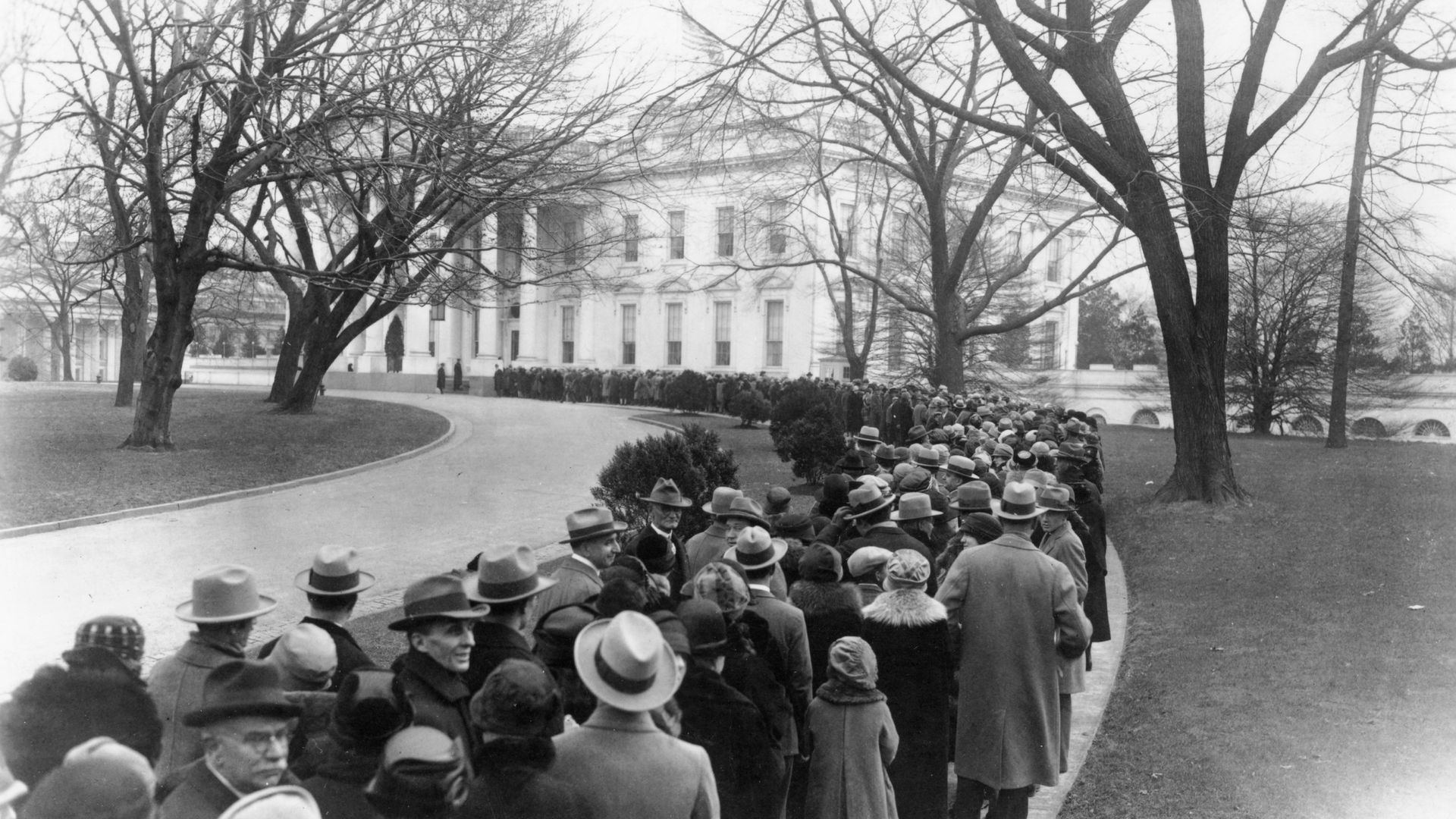
The lines for Calvin Coolidge's 1927 New Year's Day reception. Photo: courtesy of Herbert E. French, White House Historical Assocation.
For over a century, the White House hosted the biggest holiday gathering in D.C. — an annual New Year's Day reception, and everyone in Washington was invited.
At the party's peak in the early 1900s, the New York Times detailed over 8,000 people filing through the doors at 1600 Pennsylvania Avenue to greet President Roosevelt, his Cabinet and family, with well-wishes for the new year — dignitaries, diplomats, high-ranking military, society hobnobs, and common citizens alike.
Why it matters: The idea of a massive presidential open house is unfathomable today, but "The People's House" existed true to name through the early 20th century — and changed the way presidents interacted with the public.
Flashback: John Adams, first to inhabit the Executive Mansion in the new nation's capital, kicked things off on New Year's Day, 1801.
- George Washington had already established a tradition of entertaining at Mt. Vernon and beyond. "Adams believed it was the 'people's' house, and it was incumbent upon him, its first resident, to extend hospitality," writes presidential historian Feather Schwartz Foster.
Details: The White House was a bit drab. "The place was cold and damp, basically unfurnished other than what Adams brought himself," writes Foster. Adams invited the fledgling United States Marine Band for entertainment, establishing a tradition of "The President's Own" playing at White House functions that continues today.
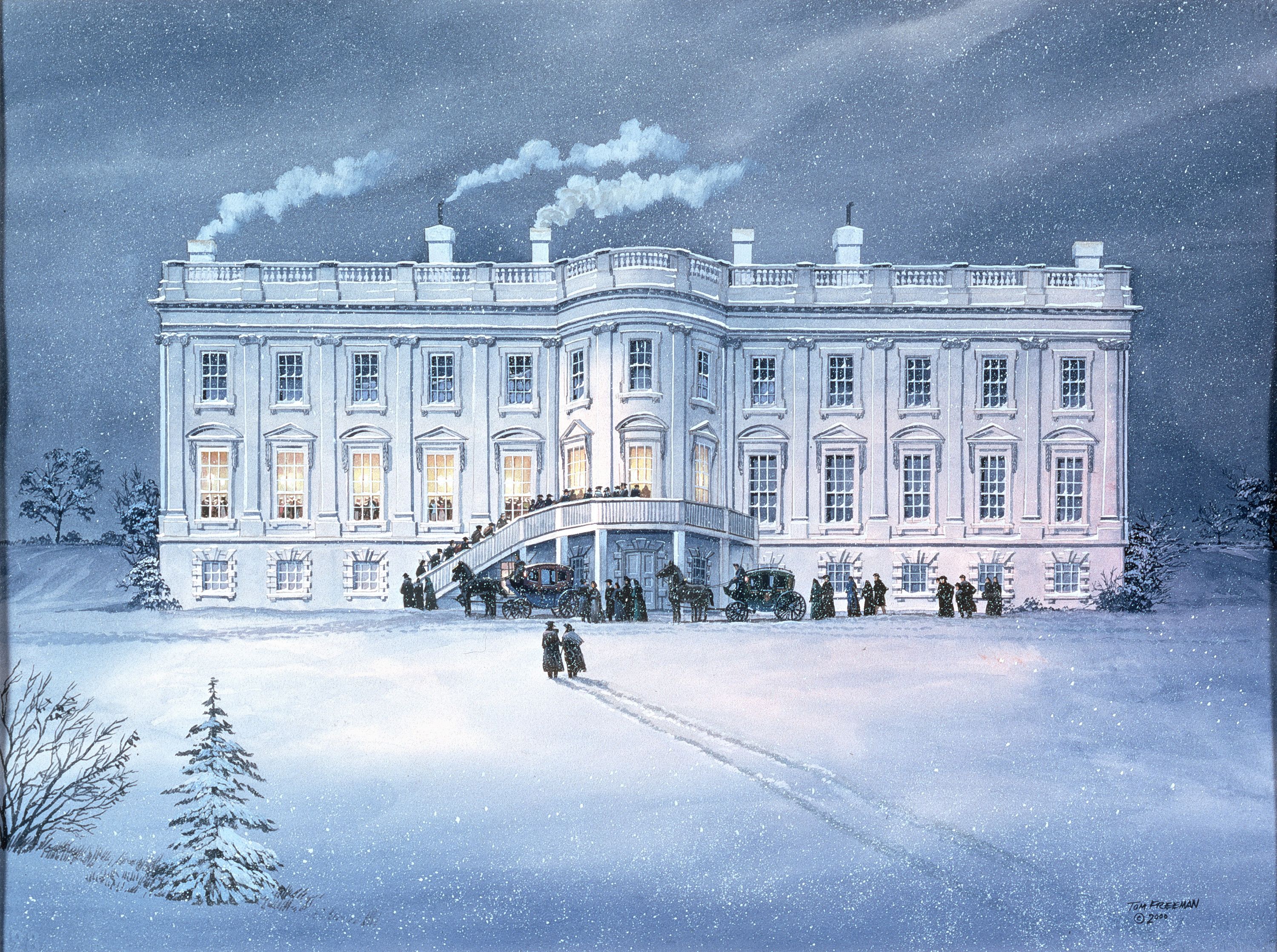
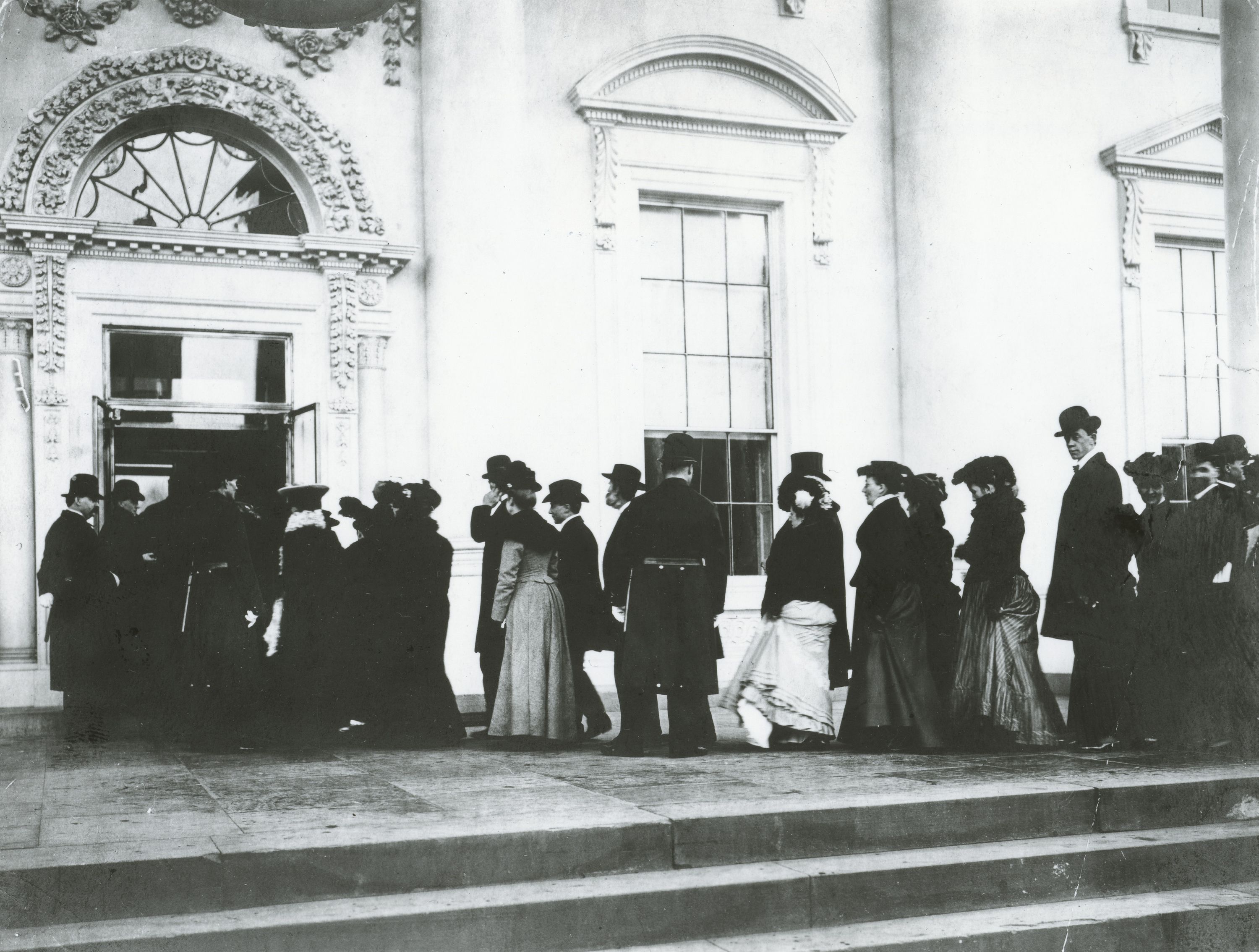
Flash forward: D.C.'s population snowballed, as did attendance for New Year's Day — the social event of the season. Diplomats in national dress and Washingtonians in their finest attire waited for hours — sometimes in the bitter cold and wet — for the opportunity to shake hands with the president.
The first grip-and-grins: The handshake was big — an egalitarian gesture scrutinized and detailed by newspapers as much as the first family's fine clothing and White House floral arrangements.
- Thomas Jefferson "instituted the practice of shaking hands when receiving visitors," according to White House historians, "in contrast with his Federalist predecessors' practice of bowing when receiving guests."
- In 1894, the New York Times applauded first lady Frances Cleveland, who "kept her right hand ungloved, and gave each one in greeting a vigorous hand-shake." Other society ladies then followed "this fashion of un-gloving."
- Theodore Roosevelt "perfected a handshake that firmly pushed the visitor along, while controlling the strength of the handshake itself," notes historian Foster.
Yes, but: All that glad-handing made some unhappy. "William H. Taft had dutifully hosted the New Year's Day receptions in 1910-1913, tirelessly greeting more than 6,000 people and reportedly shaking 40 hands per minute," writes the Supreme Court Historical Society. "It was a miserable ordeal."
Zoom in: One of the most notable NYD receptions was Abraham Lincoln's in 1863. The Civil War was raging and he was scheduled to sign the Emancipation Proclamation. Francis Carpenter, a painter in residence at the White House, wrote that Lincoln fretted over his shaking hand — a result of greeting endless New Year's visitors — and how it would be interpreted when signing the executive order freeing slaves.
- "If my name ever goes into history it will be for this act, and my whole soul is in it," Lincoln reportedly told Carpenter. "If my hand trembles when I sign the Proclamation, all who examine the document hereafter will say 'He hesitated.'"
- Lincoln signed without wavering. As a result, the first Black guests arrived at the White House reception the following year. Today, African American communities still celebrate "Watch Night" on New Year's Eve to commemorate how their ancestors "watched and waited" for news of freedom.
Flash forward: Herbert Hoover held the last New Year's Day reception in 1932. The unpopular president was blamed for ending the tradition, though White House historians note that it was actually Franklin Roosevelt.
- "It may have been cost-consciousness during the depression, or that crowds were too large," notes the White House History Quarterly. Also: his disability "since he did attempt to hide his wheelchair from the general public."
Yes, but: Local D.C. painter John W. Hunefeld, who prided himself on being first in line to shake the president's hand for years, still showed up at the gates in 1935, according to the New York Times, and "said he'd be back next year, reception or no reception."
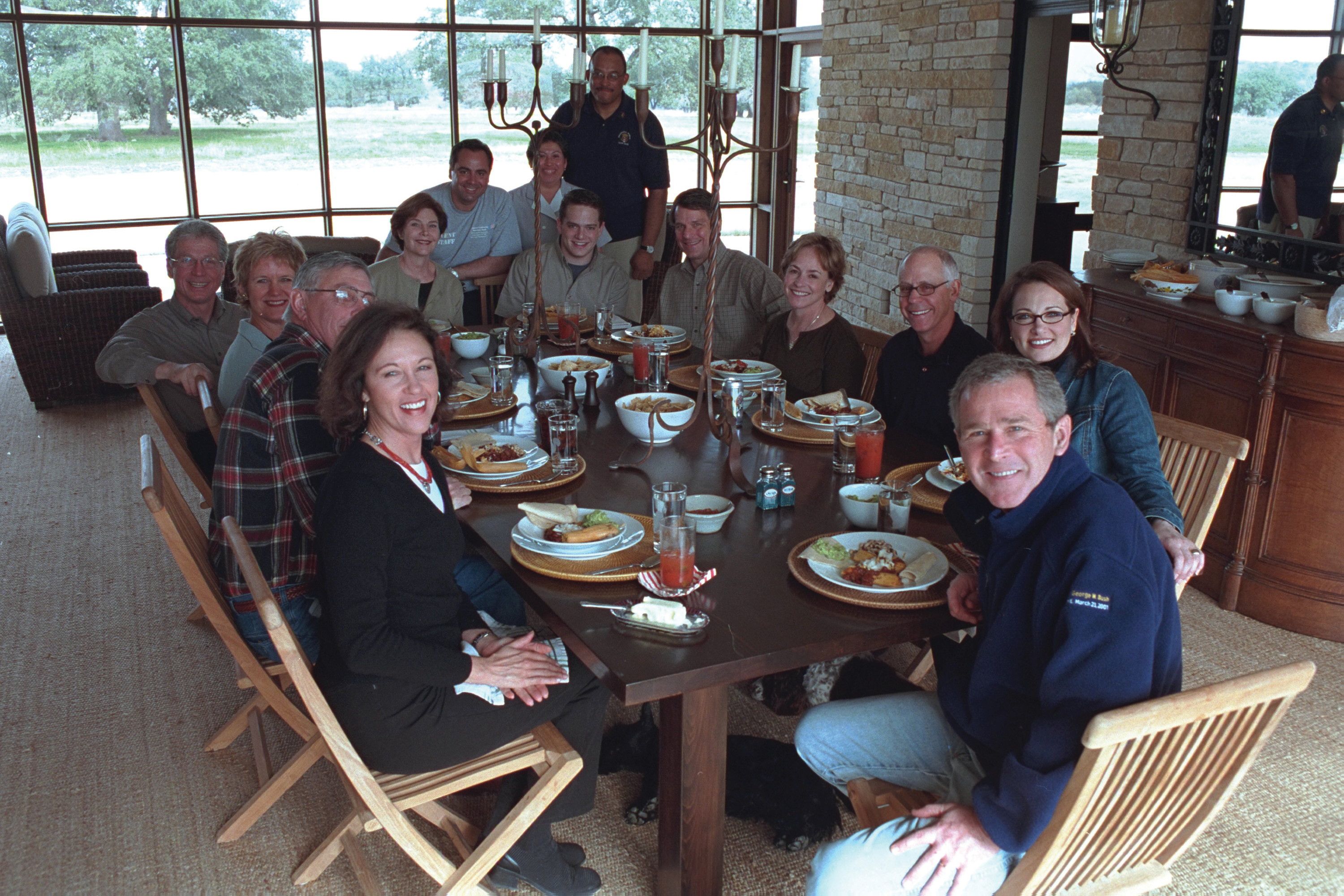
New Year's became an increasingly private tradition among presidents going forward. Reagan, for example, chose a glamorous party in California over the White House. The younger Bush, his Texas ranch.
- The Obamas made headlines for hosting an "American Idol"-inspired family talent show. Meanwhile, President Clinton allegedly spent New Year's Eve 1995 with Monica Lewinksy.
There's no word yet on how POTUS will ring in 2024, but per tradition the Bidens may catch the ball drop from the beach.