Marching on Washington, 60 years later

Add Axios as your preferred source to
see more of our stories on Google.
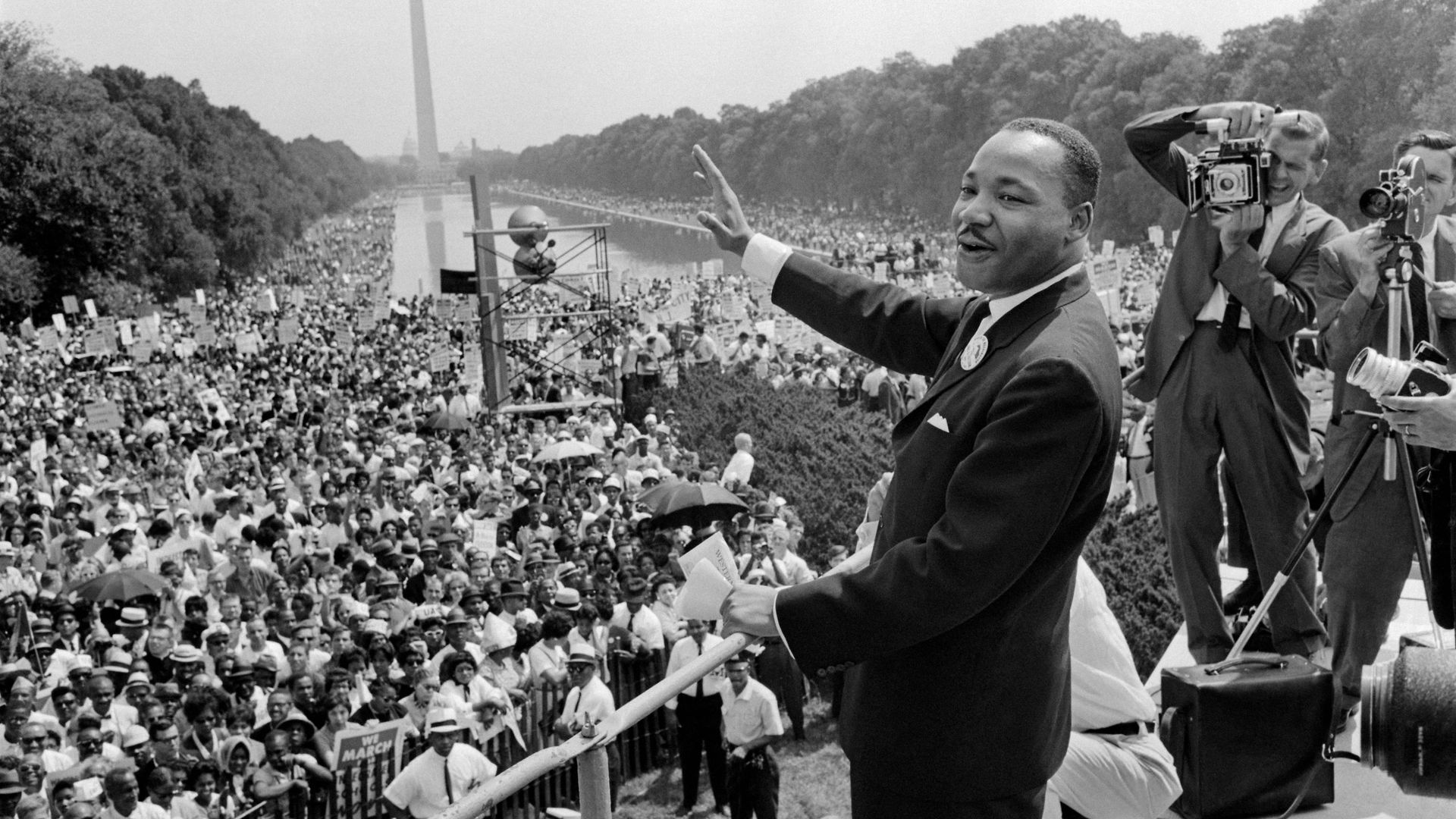
Dr. King at the 1963 March on Washington. Photo: AFP via Getty Images
The 60th anniversary of the March on Washington is projected to bring tens of thousands to the National Mall this Saturday.
Why it matters: The 1963 March for Jobs and Freedom marked a turning point in the Civil Rights Movement — and each anniversary brings reflection on the progress made and a call to action for the great lengths still needed for Black rights, freedom, and economic equality in the United States.
What's happening: Civil rights leaders including Andrew Young and Dr. Martin Luther King's family will rally on Saturday at the Lincoln Memorial for the anniversary march: "Not a commemoration, but a continuation."
- Organizers anticipate around 75,000 participants, according to the National Park Service permit.
- Opening activities begin at 8am followed by the main program at 11am. The march on the Mall, led by Rev. Al Sharpton, Martin Luther King III, and Arndrea Waters King will start at 1pm.
Flashback: Sixty years ago, a quarter of a million people gathered on the Mall in nonviolent protest for the first March on Washington. The day ended with Black leaders meeting with President Kennedy. President Johnson signed the Civil Rights Act the following year.
- The march's power drew from its peaceful masses. "The big demonstration was a unique mixture of revival meeting, picnic, and denunciations of what speakers called man's inhumanity to man," wrote the AP at the time.
- D.C. streets were bottlenecked (Marian Anderson was late to sing). It was hot; some people fainted. At rally point tents, people lined up to sign a pledge to fight for jobs and freedom for all Americans, and "not relax until victory is won."
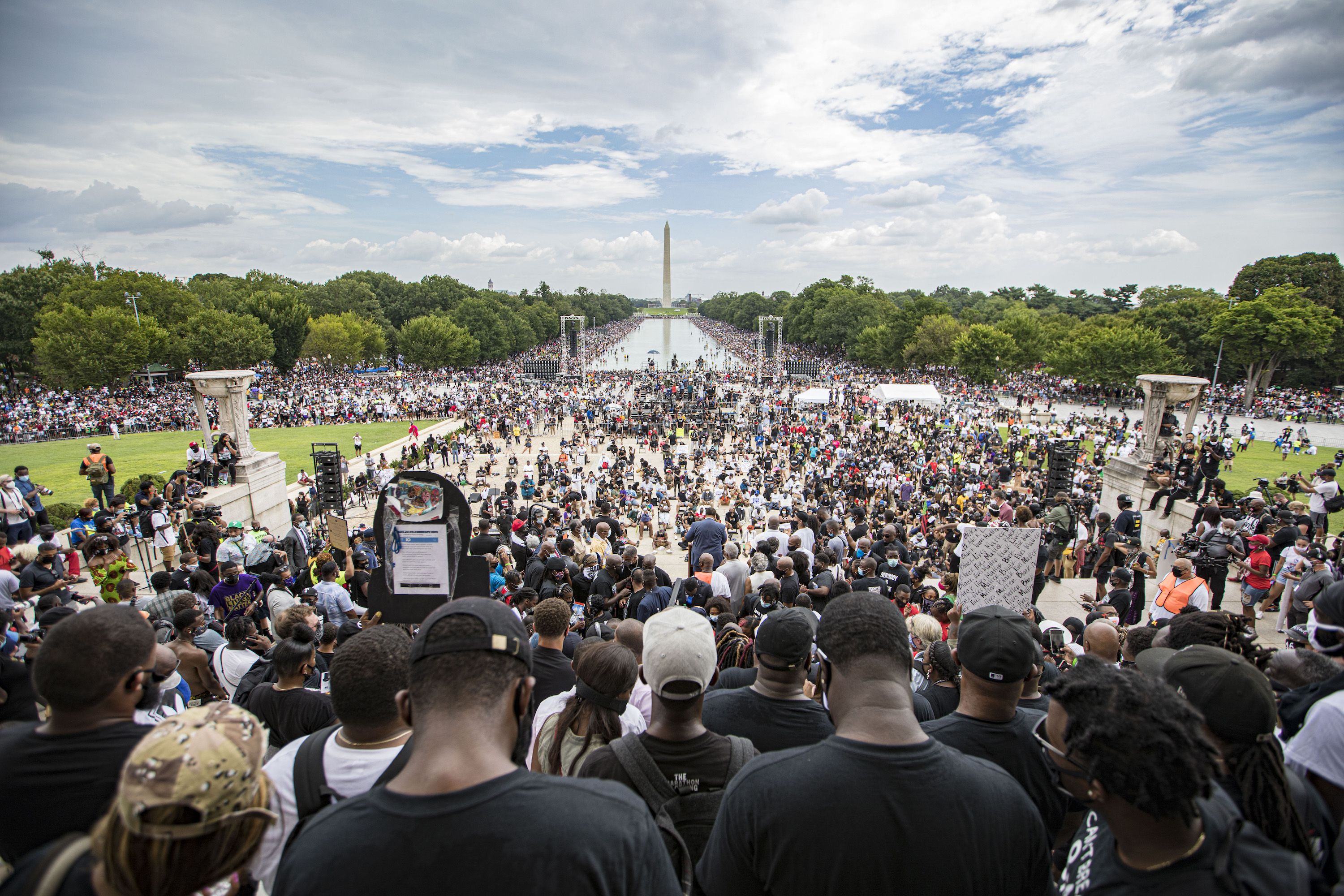
Flash forward: The fight continues. "We take two steps forward, and they make us take one step back," Young, one of the last surviving members of King's inner circle, told the AP.
Then/now: Martin Luther King III highlights setbacks and stalemates between 1963 and now in the fight for racial equality, from Black homeownership to unemployment.
What we're watching: Among other rally points, the Kings will call on Congress to pass voting rights legislation. MLK III described his father as "not just turning over — he's spinning in his grave" over voting rights attacks and the Supreme Court hobbling the 1965 Voting Rights Act.
The bottom line: "It is our goal to really have America show up," MLK III told the Washington Post while planning the march. "This is not about issues for one group or one ethnic group. It's about Americans. It's about creating a climate for America to fulfill its true promise for all of its citizens."