Capital Jewish Museum opens in D.C.

Add Axios as your preferred source to
see more of our stories on Google.
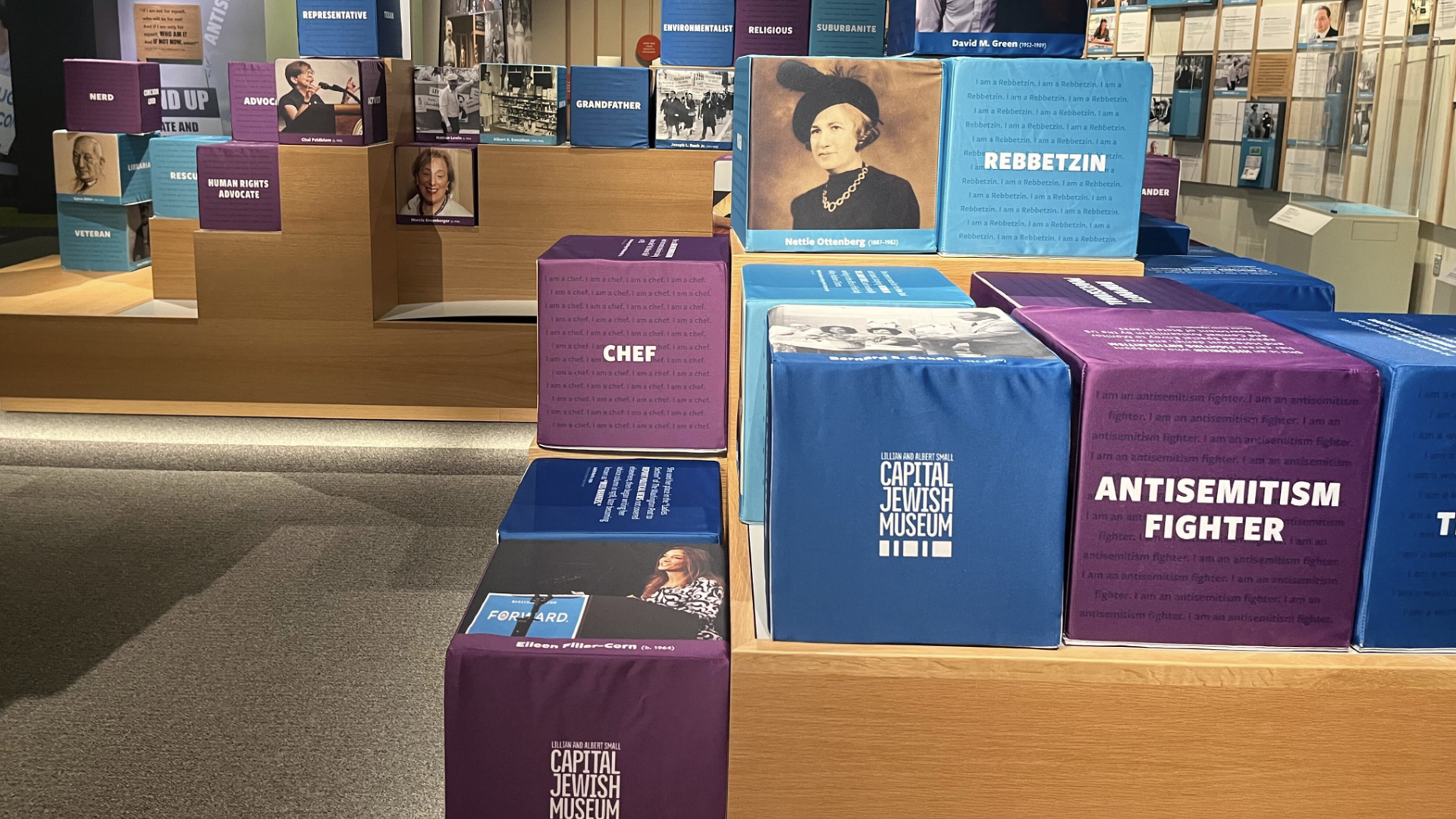
Photo: Chelsea Cirruzzo/Axios
A new museum devoted to the story of Jewish life in D.C. opens today.
Why it matters: The Washington area has a Jewish population of more than 300,000, but there hasn’t been a museum dedicated to the local Jewish experience until now.
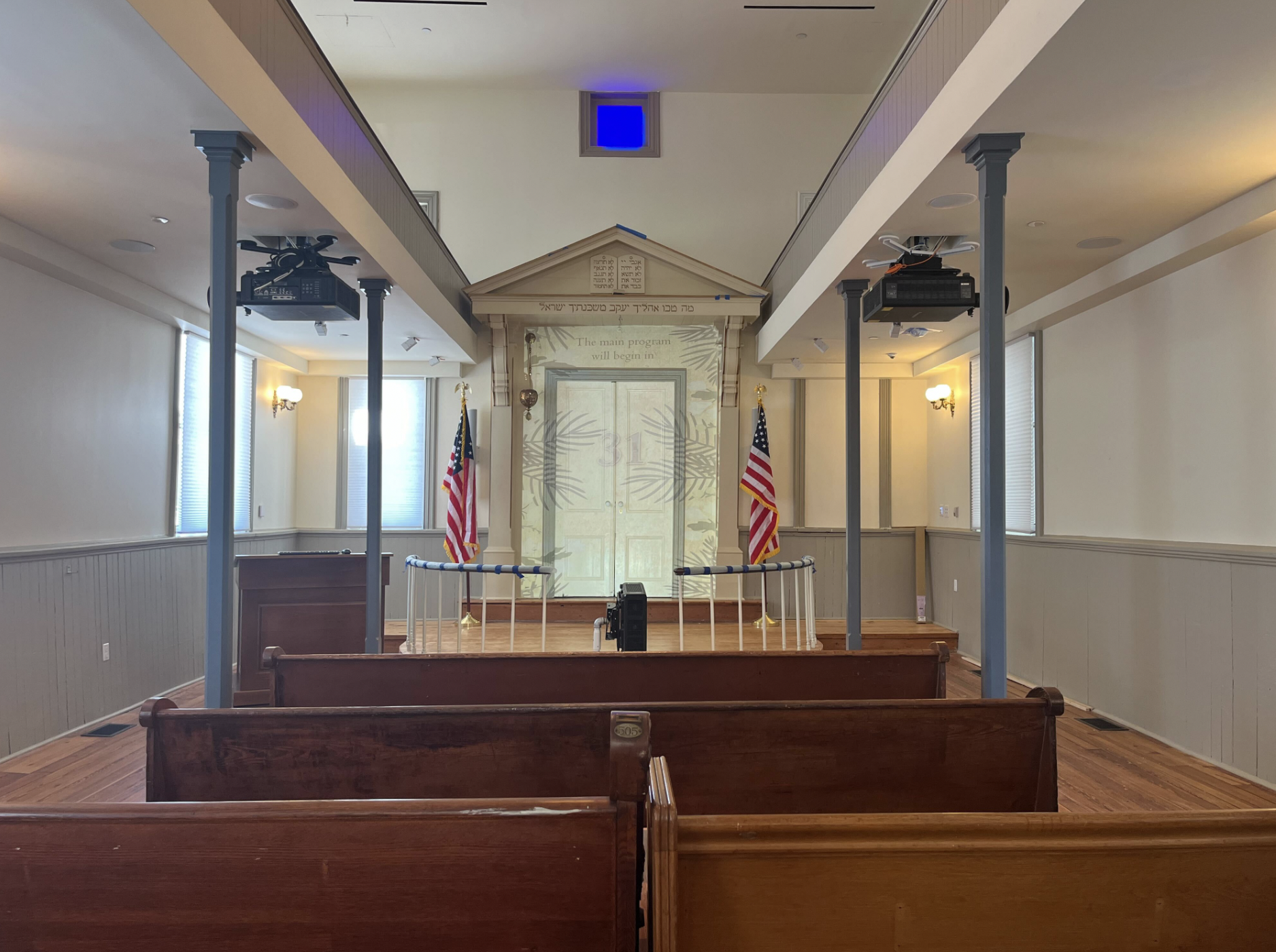
State of play: The four-story Capital Jewish Museum near Judiciary Square surrounds a sacred site: the oldest surviving synagogue in the District, built in 1876 and President Ulysses S. Grant attended the dedication.
- The synagogue building itself has been relocated three times from its original site at 6th and G streets. During its final move in 2019, the 273-ton brick synagogue was lifted onto a flatbed, blessed by a rabbi, and driven one block to its current location.
What’s inside: Visitors will be guided through exhibits that show the history of Jewish people in D.C., including a top-floor special exhibit on the life of late Supreme Court Justice Ruth Bader Ginsburg.
- RBG artifacts include her collar worn in court, photos of her as a child, and information on the cases she took on as a lawyer that she used to chip away at sex discrimination.
- A large interactive map of the DMV in one room shows the evolution of Jewish businesses, synagogues, grocery stores, and schools.
- A wall honors famous Jewish residents, from AIDS activist David M. Green to disability rights activist Judith Heumann.
Highlights include:
- A matchbox signed by President Jimmy Carter that was used to light the first National Menorah in 1977.
- The “Bagelman” sign from the now-closed Dupont Circle Bethesda Bagels.
- Photographs of the Nice Jewish Boys, a group for queer Jewish men in D.C.
By the numbers: Across 32,500 square feet, there are 24,000 photos and 1,050 objects.
- Most contributions come from the archives of the Jewish Historical Society of Greater Washington, named for Lillian and Albert Small, whose son was a supporter and philanthropist of the local group.
One classroom is devoted to educational crafts and activities focused on social justice issues, like a button-making workshop.
How to visit: Most of the museum is free, with timed passes available.
- The special exhibit is $12 for adults, $10 for students and seniors, and free for children and members.