How Metro's $2 fares have fared

Add Axios as your preferred source to
see more of our stories on Google.
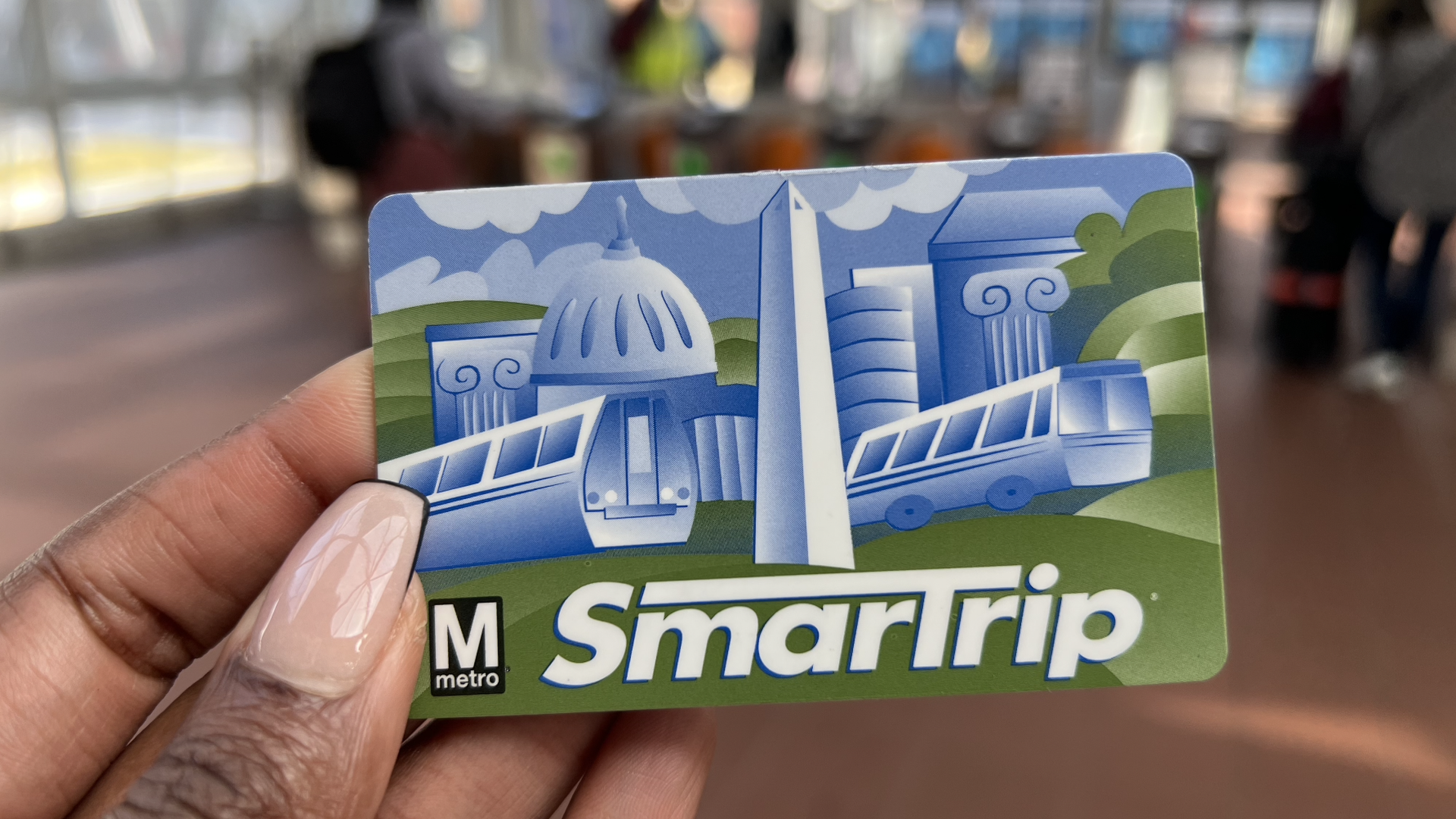
A SmartTrip Metro card. Photo: Paige Hopkins/Axios
Metro is slowly attracting riders back, and its $2 weekend rail fares are playing a role in that recovery.
Why it matters: The agency has a lot of work to do to win over riders following years of remote work and scaled-back social calendars.
State of play: Metro rolled out $2 one-way weekend fares in Sept. 2021.
An Axios analysis of WMATA data found that since they were implemented, Metrorail has recouped 62% of the pre-pandemic weekend ridership it saw between 2018 and 2019.
Yes, but: There are a few factors besides the price drop that could be contributing to weekend ridership’s rebound.
- Historically, Metro has largely been used by commuters during the week — fewer weekend riders means a smaller pool of people to win back now. That could be speeding up the rebound, D.C. Policy Center executive director Yesim Sayin Taylor tells Axios.
- While the Delta variant was circulating in the months following the change to $2 weekend fares, the FDA approved vaccines for kids 5-11 in late October, which could have also contributed to the increase in riders.
Of note: Metro this summer dropped the price of weeknight fares to also $2 — a signal that the agency sees $2 fares as a fruitful tool to bring more riders back during times when commuters aren’t as plentiful.
What’s next: Metro riders have gotten quite a few pieces of good news over the last few weeks – the Silver Line extension will open on Nov. 15; more 7000-series trains are returning to the tracks, which should decrease wait times; and the stations south of DCA reopened on Sunday.