Public financing shifts political campaigning in D.C.

Add Axios as your preferred source to
see more of our stories on Google.
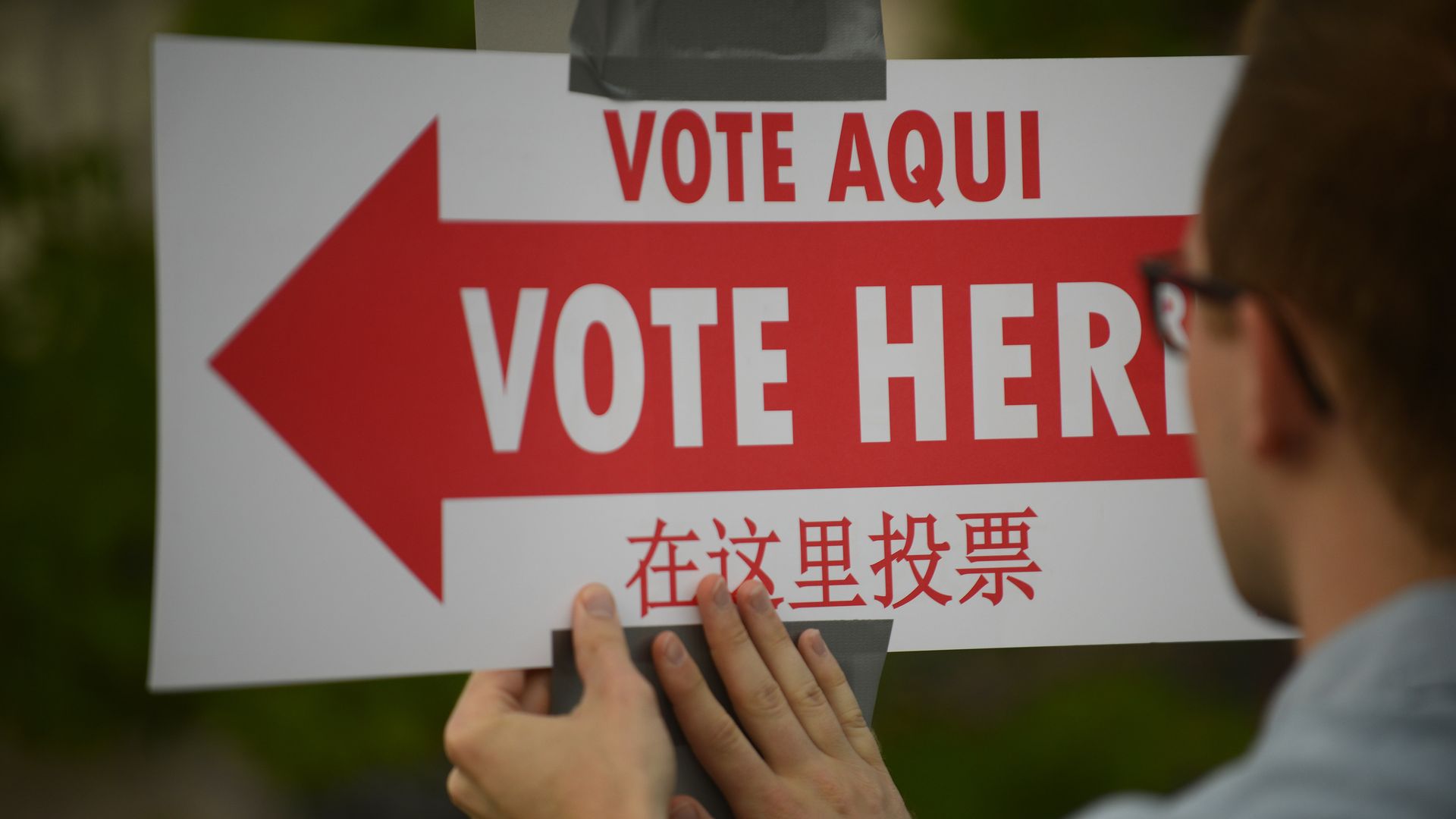
Photo: Astrid Riecken/The Washington Post via Getty Images
The diminishing financial clout of deep-pocketed donors was on display this week in public campaign finance reports, as top candidates turned to public financing and hundreds of small donors.
Why it matters: Most of this year's top candidates are using the District's public financing program, which tallies donations up to $200 from city residents with a 5-1 match in taxpayer funds
By the numbers: Mayor Muriel Bowser so far in this campaign has raised three times as much money as challenger and council member Robert White.
- Bowser has raised $2.65 million in total. White's haul is at about $864,000. Campaigns are also expected to have about $160,000 in public financing qualifying funds.
- White's campaign pointed out he out-raised his opponents during the roughly 7-week fundraising period, bringing in $39,300 from District residents, compared to the mayor's total of $33,200.
The intrigue: In the attorney general's race, incumbent Karl Racine contributed $200 each to the campaigns of council member Kenyan McDuffie and Brian Schwalb, who was Racine's former colleague at the Venable LLP law firm.
- Racine has not endorsed a candidate in the race to replace him. He decided against seeking public office this year.
- McDuffie has raised an estimated $848,000 since launching his campaign, from donors and a public match. Schwalb reported raising about $602,000 in his first fundraising period.
A notable exception to the trend toward public financing is council chair Phil Mendelson, whose campaign is raising money the traditional way, allowing him to accept individual checks of up to $2,000.
- He raised over $57,000, and has $382,000 cash on hand. His opponent, advisory neighborhood commissioner Erin Palmer, is using public financing and reported having $197,000 on hand.
The big picture: Public financing has changed the game plan for many candidates. It has also given the average citizen the chance to make a difference with small donations.
- “If I'm downtown in a conference room having breakfast with a bunch of business people collecting checks, probably three quarters of them don't live in the District,” said Chuck Thies, a veteran D.C. consultant and current manager of McDuffie's campaign. “I probably walked out of that room talking to five voters.”
- But with public financing, “people are stoked” to learn, for example, that their $50 contribution turns into $300 after a public match. And it gets candidates talking to more voters. “People really feel empowered,” he says.