Should you obey homemade no parking signs?

Add Axios as your preferred source to
see more of our stories on Google.
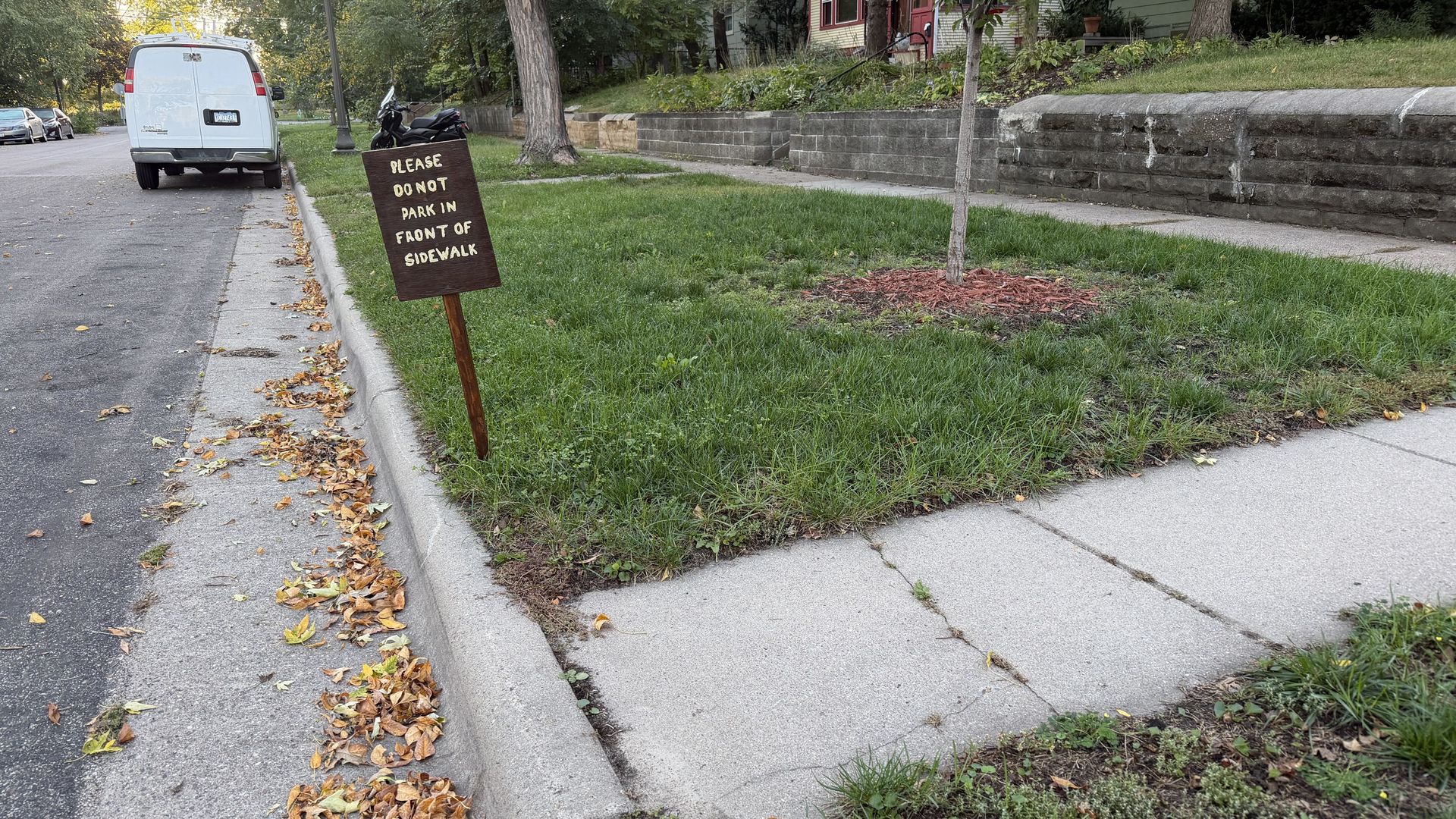
Homemade no parking sign in St. Paul. Photo: Kyle Stokes/Axios Twin Cities
If you park on residential city streets, you may have noticed homemade no parking signs placed in the boulevard, asking drivers not to block the paved walkway between the sidewalk and the street.
Why it matters: These are not new, but I've noticed them more often and can't resist the urge to write about a Nextdoor-type issue that makes neighbors squabble.
Reality check: There's no rule in either St. Paul or Minneapolis prohibiting drivers from parking in front of these walkways — or, as St. Paul staff call them, outwalks.
- The only somewhat relevant rule here is that you must park at least 5 feet from a driveway. But that area in front of an outwalk? It's fair game.
Yes, but: Legal doesn't always mean neighborly.
- The issue heightens in winter, when snowbanks can make getting between the sidewalk and the road very tricky, especially on streets without driveways.
What they're saying: "We hope that neighbors are being respectful and not blocking outwalks where possible, but also recognize the challenge that some neighborhoods have very limited on-street parking capacity and blocking the outwalks happens," a St. Paul Public Works spokesperson wrote in an email.
- While some of the signs are creative and just ask people not to park, the ones that resemble official no parking signs are often quickly removed by staff in St. Paul.
Between the lines: Both St. Paul and Minneapolis allow residents to apply for accessible zones in front of their homes — as in, the official blue signs.
- Both cities require a handicap license plate or certificate to qualify.
- There's no listed charge for these in Minneapolis, but in St. Paul residents split the cost of installation with the city. That typically comes to around $274 for the resident.