Taxpayers paid for Walz's D.C. hearing prep. The cost is still a secret.

Add Axios as your preferred source to
see more of our stories on Google.
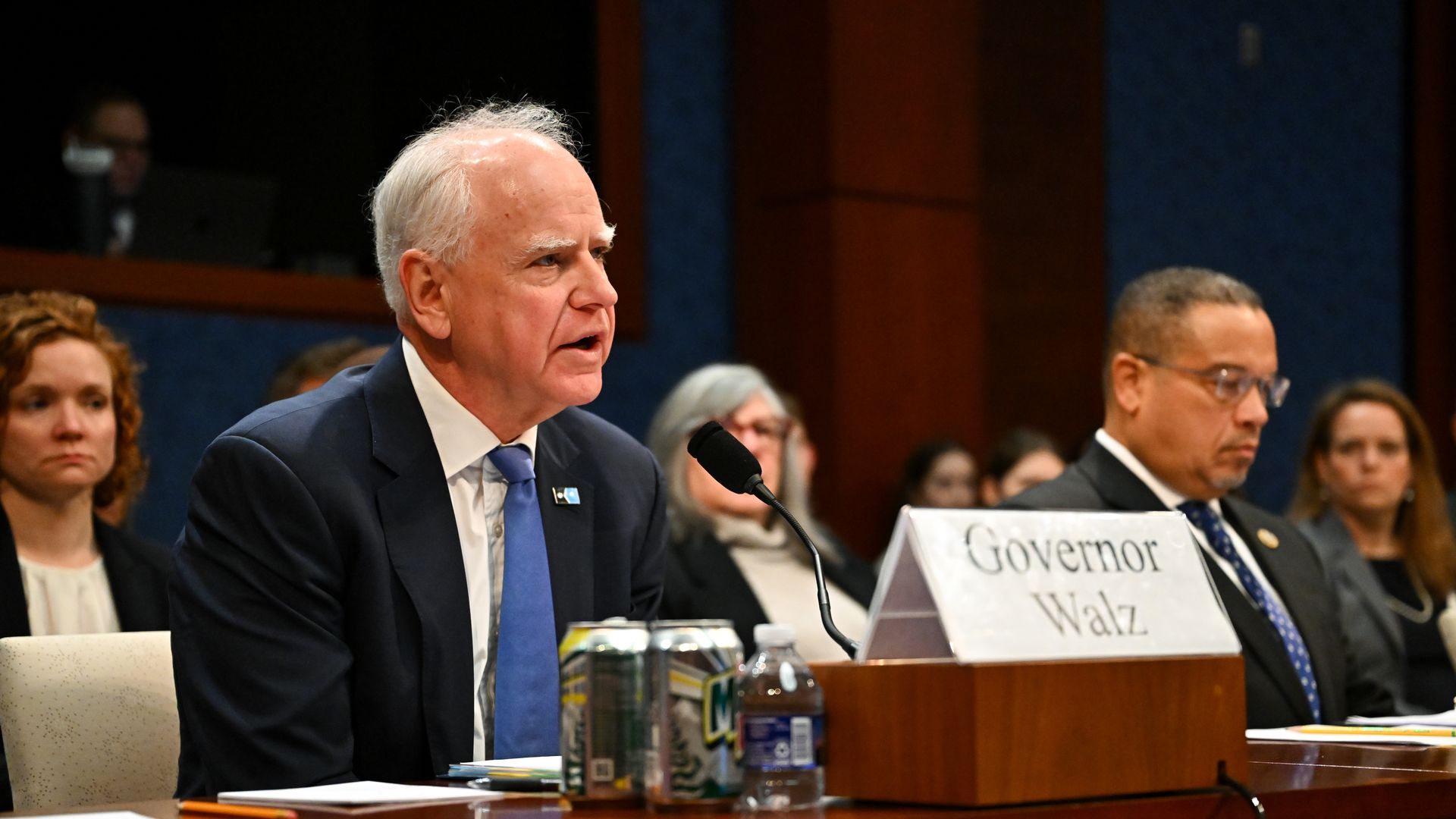
Gov. Tim Walz and Attorney General Keith Ellison were called to testify at the hearing on fraud targeting state programs. Photo: Graeme Sloan/Bloomberg via Getty Images
Gov. Tim Walz's office still won't say how much it paid an outside law firm to get him ready for an early March appearance in front of Congress.
Why it matters: Taxpayers can foot the bill for such engagements, making the still-undisclosed cost of Walz's testimony in front of the House Oversight Committee a matter of public spending.
- When the DFL governor was called to testify before the GOP-controlled panel in 2025, the state was charged over $400,000 for his preparation.
Plus: It's also part of what experts tell Axios is a broader pattern of transparency problems in state government.
State of play: Axios filed a public records request on March 5 seeking invoices showing how much Walz's office paid global law firm K&L Gates to prepare him for the hearing on fraud targeting state programs.
- A spokesperson confirmed at the time that the firm had been retained for the work, but said a cost estimate was not yet available.
What they're saying: The Walz administration says it's been inundated with requests filed under Minnesota's public records law since Operation Metro Surge and is processing them as quickly as it can.
- "Response time will vary depending on the size and scope of your request and the number of requests our office has received in a given time period," Walz's office wrote to Axios in August.
- The office tells Axios that it has produced "three times as much responsive data this year as we did last year."
Yes, but: The slow turnaround problem for public records requests predates this year, longtime Minnesota public records advocate Matt Ehling tells Axios.
- While past administrations were also sluggish at times, he says getting a response to records requests has been "extremely slow and cumbersome" since Walz took office in 2019 with a pledge to prioritize transparency.
The big picture: Timely access to public records is a critical tool for both understanding government's actions and holding elected officials accountable, experts say.
- Without that ready access, "government can continue to do whatever it is doing without the public really understanding what's happening until it's too late," Ehling, the president of the Forum for Constitutional Rights and Government Accountability, says.
- "Information is meaningful in real time and in real contexts," agrees David Schultz, a Hamline University professor and ethics expert. "When you start to strip away the information from that immediacy, it takes away takes away the usefulness."
Context: Minnesota's open records law doesn't set specific deadlines for responding to requests, though it does direct government to answer in an appropriate and prompt manner.
- That flexibility sometimes translates to journalists and others waiting months or even years for answers to their requests.
Case in point: Ehling was part of a a group that sued the Department of Public Safety in 2024 over a 2022 request for documents related to the Walz administration's "after-action report" on the unrest following George Floyd's murder.
- The case was settled, leading to the release of hundreds of pages of documents, though a second legal spat followed over redactions DPS made to the data.
Worth noting: The Legislature has exempted itself from state public records laws, further restricting public access to information about how state government functions.
What's next: Walz's office wrote in an email to Axios in early September that it expected to respond to Axios' public records request "within the next few weeks."