Summit founder confident he'll keep the brewery

Add Axios as your preferred source to
see more of our stories on Google.
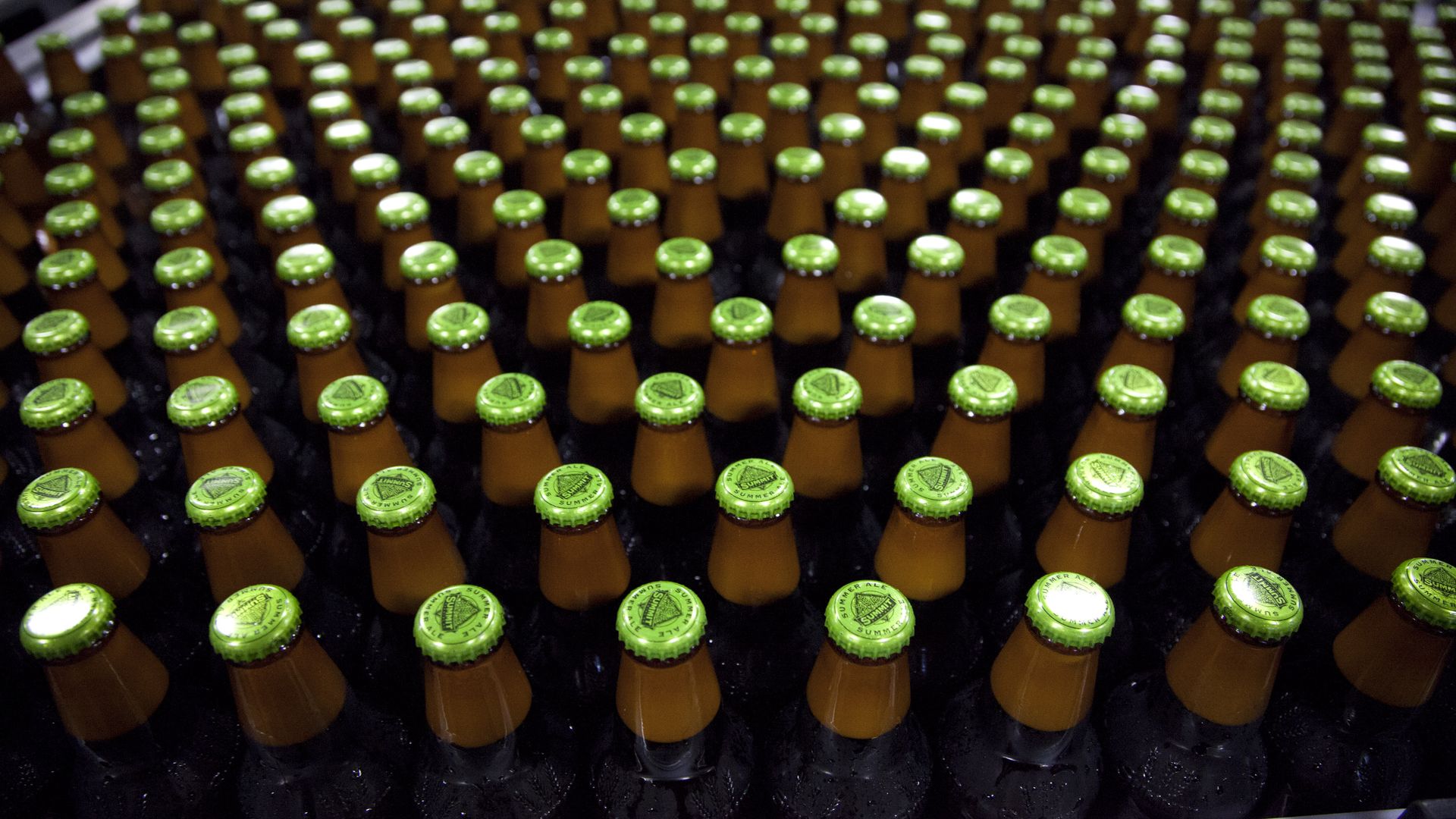
Summit's production line in 2012. Photo: Ariana Lindquist/Bloomberg via Getty Images
Mark Stutrud says that despite a lender's lawsuit painting a picture of Summit nearing its demise, the 40-year-old St. Paul brewery will weather the craft beer reckoning.
- "I think we're close to the floor of this deep trough cycle — one that's the deepest I've experienced in 40 years," the company founder and controlling owner told Axios in an interview a few days after BMO Bank filed to foreclose on the brewery.
Why it matters: Summit is the OG of modern craft brewing in the Twin Cities, but BMO Bank's lawsuit has cast doubt on its future. The bank alleges that Summit owes $8.2 million, mostly tied to a loan the brewery got in late 2024.
- BMO, which didn't respond to a request for comment, also wants to appoint a receiver to take over operations and possibly liquidate Summit's assets. It claimed in the suit that Summit was in immediate danger of insolvency.
What he's saying: Stutrud is confident he won't lose the brewery and says the lawsuit and media reports have mischaracterized how things got to where they are today.
- Stutrud says the 2024 loan was not a case of him borrowing when the industry was clearly in decline, but a move that was primarily a refinancing of debt tied to a $20 million expansion between 2012 and 2015 that doubled the brewery's capacity — though a big chunk of a $1.25 million line of a revolving credit line was used for some upgrades.
BMO, in its lawsuit, cited a June letter Summit wrote to the bank saying it was near insolvency. The letter was not in the court documents and Stutrud says BMO is selectively picking communications to build its case.
- But he says Summit is current on all of its payments and that his lawyers made the bank a "reasonable" offer to settle the debt as recently as last week.
- BMO rejected that offer and filed a lawsuit, he says. Stutrud declined to say how much he offered, but says it was more than what BMO could get selling the company's assets, noting that there's a glut of breweries and equipment for sale right now.
- Stutrud, who handed over CEO duties to Brandon Bland in 2023, says the brewery will continue to operate as usual under a receiver.
What's ahead: Stutrud, the largest Summit shareholder, says other shareholders are interested in infusing additional equity to pay off the debt. Bringing in new outside investors is also an option, but he's not making calls right now, he says.
The big picture: The lawsuit is the latest example of a craft beer slide that has roiled the industry in recent years.
- A gold rush in the 2010s led to an explosion of taprooms in the state — from 50 in 2012 to more than 200 in 2024.
- Brewers, many of which borrowed big for buildouts, were hammered by the pandemic and a full rebound never came because of market saturation and a changing consumer who either drinks less alcohol or dabbles in other products, like canned cocktails.
By the numbers: Summit's annual production peaked around 128,000 barrels in the mid-2010s, but the brewery made just 55,000 last year. That decline isn't an anomaly — almost every craft brewery has felt similar pain, with several closing shop.
Yes, but: Stutrud resisted chasing industry trends. He didn't hop up his beers during the early IPA craze, arguing that heavy hops mask defects and he'd rather focus on classic brews with high quality. He didn't embrace THC seltzers early on, though Summit now makes them on contract for other brands.
- He also never turned Summit's taproom into a major destination like so many of his competitors because he didn't want to steal business from the bars and restaurants that poured his beer for years before the state legalized taprooms.
Did he leave money on the table by not chasing the trends? He says he's proud of the quality beer the company has made, the people it's employed and he wouldn't do anything different — even the expansion at the heart of the debt problem.
- "When we were spending $20 million … that was based on some pretty solid data. And looking back, I would do it again."