How to enter a Minnesota State Fair food contest

Add Axios as your preferred source to
see more of our stories on Google.
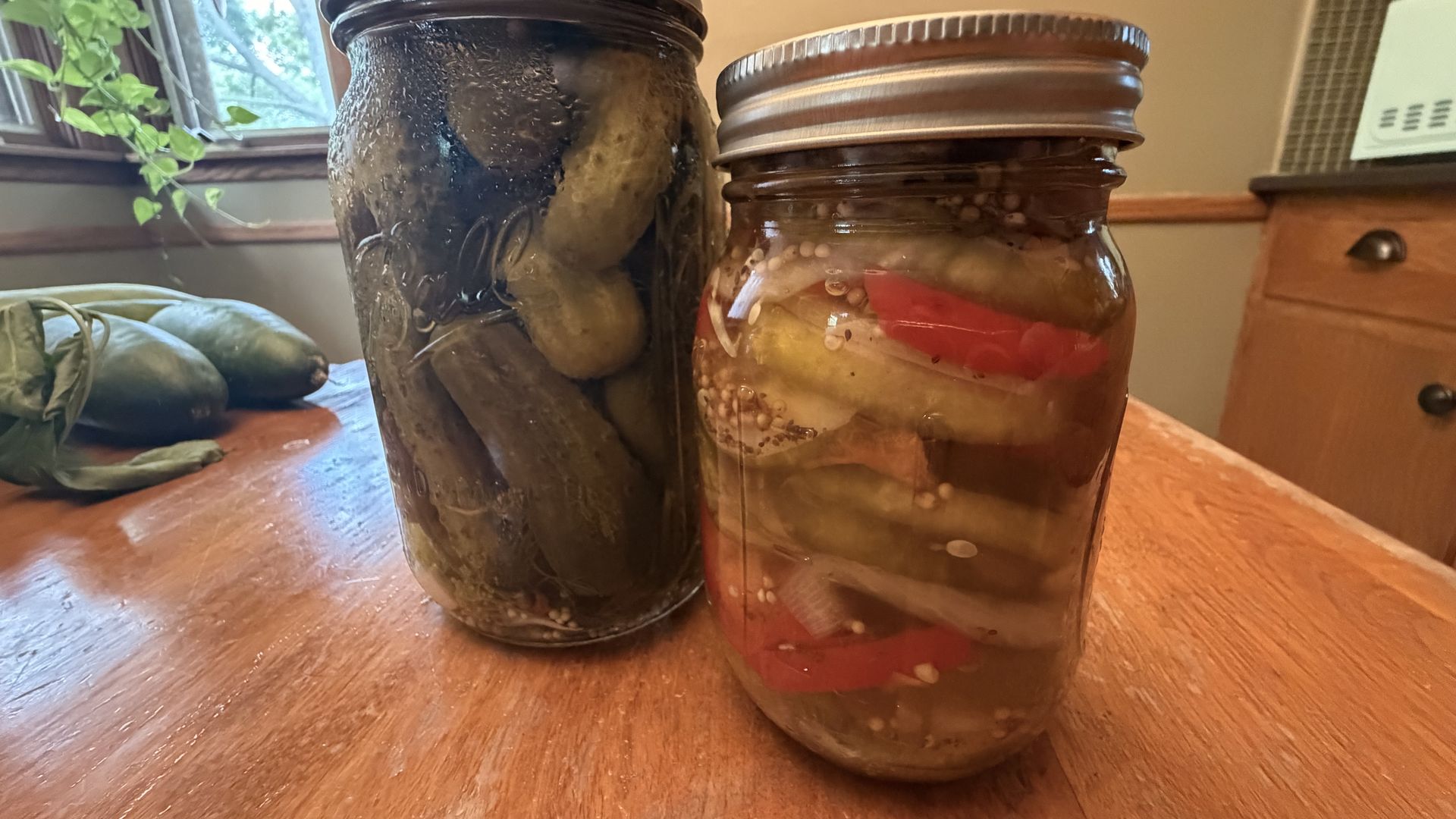
Chasing glory: Bill's dills, at left, and Maureen's bread and butters. Photo: Geoff Ziezulewicz/Axios
Objectively, my parents' homemade pickles are the best in the world.
- This year, I set out to prove it by helping them enter the Minnesota State Fair's pickle contest.
The big pickle: Turns out submitting your homemade vittles at the Great Minnesota Get-Together is free and fun, with categories for all tastes of culinary creatives.
- It also felt like old-school civic engagement in an online world.
Catch up quick, family-style: My dad, Bill, makes phenomenal Kosher dill pickles. Cool and crunchy with a vinegary garlic twang that doesn't overpower.
- My mom, Maureen, (also an Axios Twin Cities member), makes sublime bread and butter pickles, not cloyingly sweet and with just enough onion. They are killer on a roast beef sandwich.
How it works: Getting into the State Fair pickled game, or any of the culinary competitions taking place in the Creative Activities building, is easy and free.
- We registered online before heading to the Creative Activities building (NE coroner of Dan Patch and Cosgrove) on Aug. 15 to drop off our wares.
- Two jars were submitted per parent: one for tasting and one for displaying.
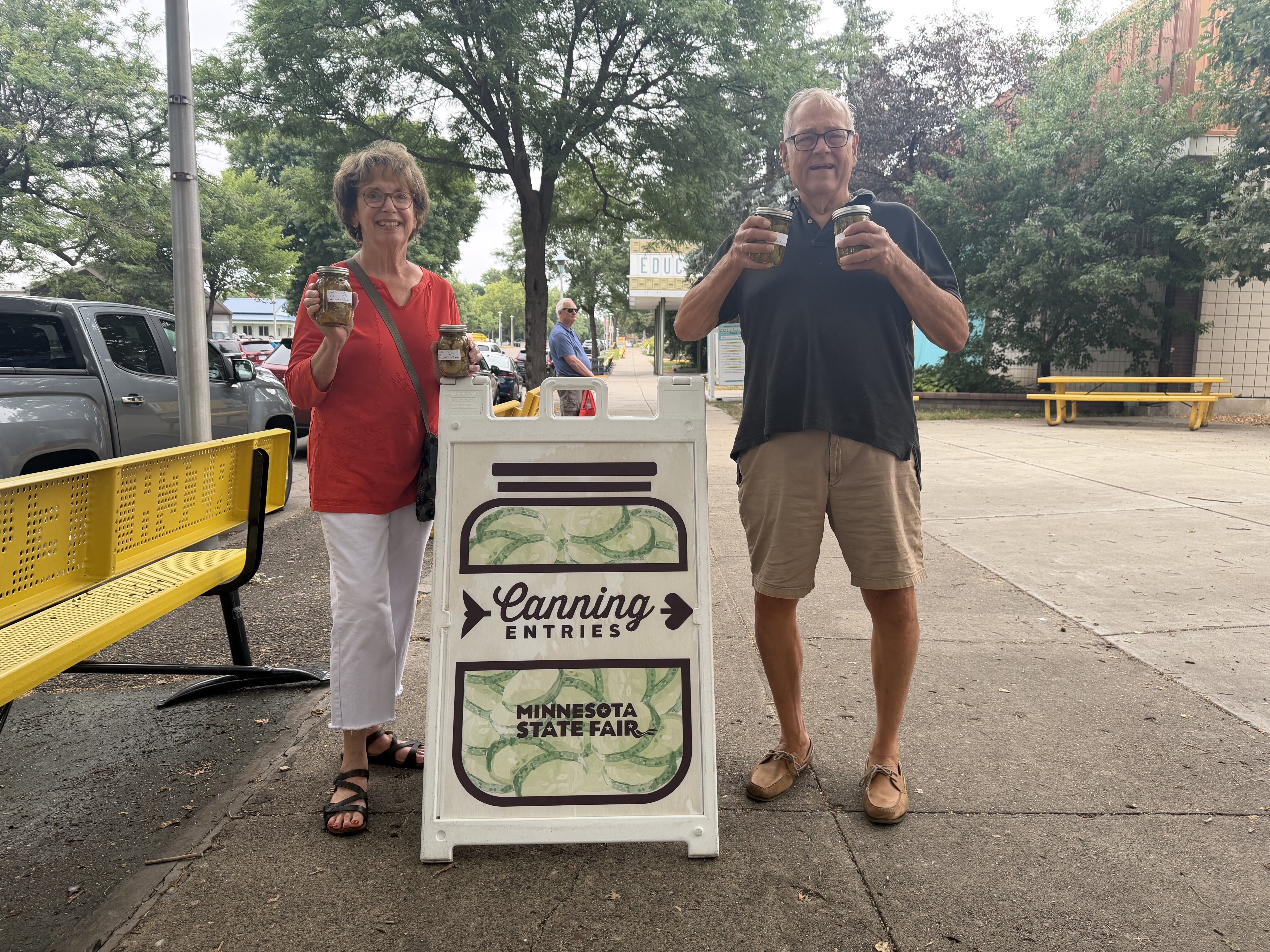
Between the brines: The assorted volunteers were the friendliest!
- I had entered my dad's dills in the wrong category, but canning coordinator Mary Bartz and her crew graciously corrected us and guided us toward re-submitting.
Inside the jar: Bartz, a General Mills vet who judges several county fairs each year, oversees a crew of 15 judges from food science and culinary backgrounds.
- They assess and taste hundreds of pickled entries, as well as jams, jellies, salsas, kimchi and more.
Judges grade on a 100-point scale across several criteria, with points deducted along the way.
- There's food safety, including ensuring jars are properly sealed. (If judges spot any mold when opening your entries, it's game over, she cautioned.)
Another criteria is jar head space. Jams and jellies require about a quarter inch up top, about half an inch for pickles, Bartz said. (This was news to me.)
- "We'll see jars where they have an inch, two inches of head space," said Bartz. "Too much head space allows too much room and air for things to grow."
Size also matters when it comes to the cukes used.
- Same-size pickles ensure uniform heat processing, and they look prettier on display, Bartz said.
Salinity check: Then, of course, there's crisp texture and aroma/flavor.
- We also gave them a printed copy of our recipe.
Winners are announced on the first day of the fair.
- I was out that morning with Torey, Audrey and Kyle sampling new fair foods (rough job) when Maureen texted the family chat that Bill's dills had placed second in his category!
- None of us expected real-deal ribbon showing, and dad was thrilled.
- Their jars are displayed in the Creative Activities building alongside other entrants until the fair ends.
What's next: We'll head back to pick up our entries and judges' notes when the fair is over.
- Next year we're entering Bill's pickled eggplant, too.
The bottom line: "Entering at the fair is a big adventure," Bartz told me. "It's a competition, but it's a very friendly competition and we just want to make everybody shine."