Walz moves to ban copper-nickel mining near Boundary Waters

Add Axios as your preferred source to
see more of our stories on Google.
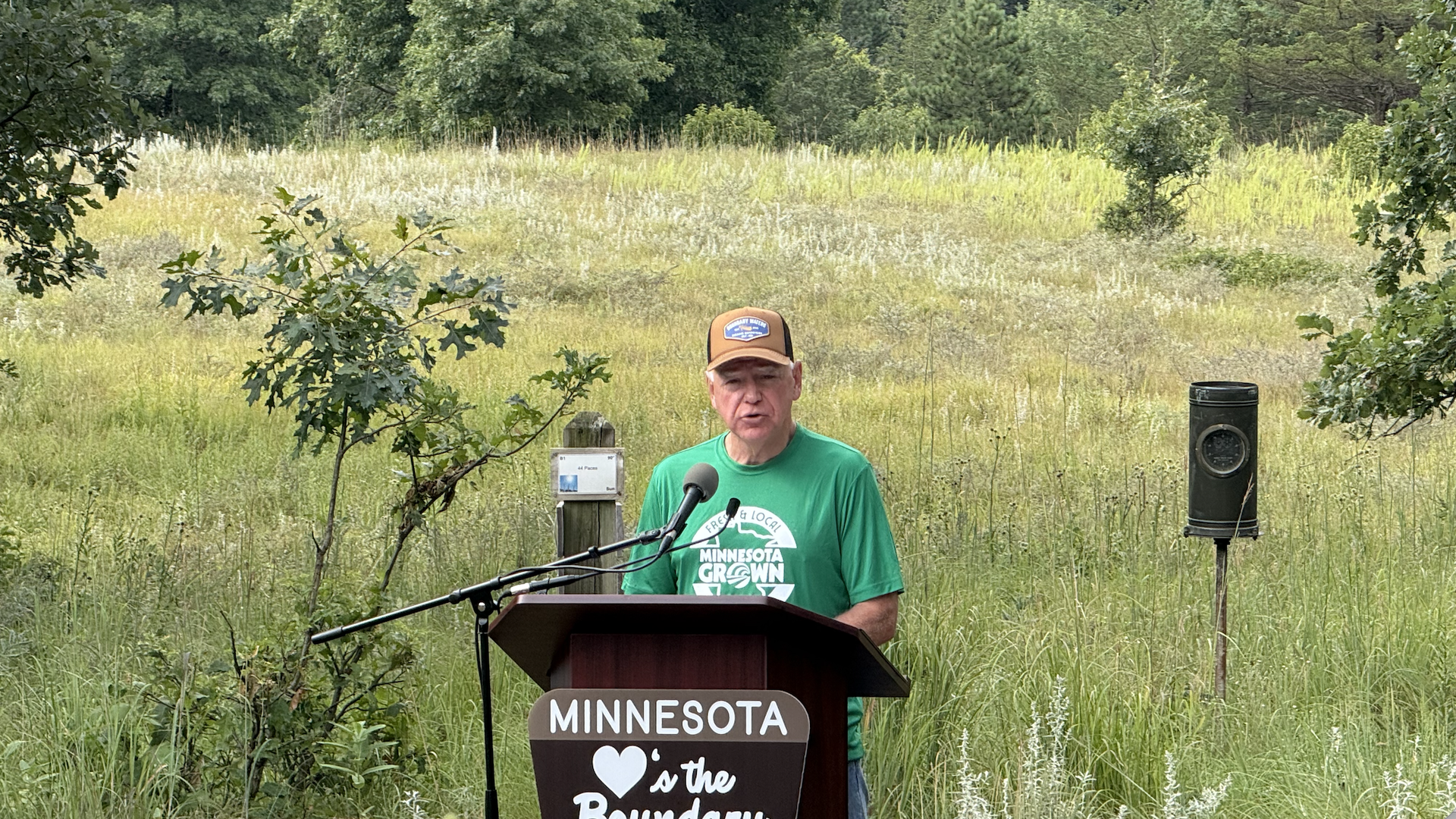
Gov. Tim Walz touted the executive order to supporters at an event held just hours after he issued it Tuesday. Photo: Torey Van Oot/Axios
Minnesota Gov. Tim Walz's sweeping move to block copper-nickel mining near the Boundary Waters thrust a long-running debate back into the headlines — and onto the campaign trail.
The big picture: The fight over the future of Twin Metals and other mining proposals reflects a wider political tension between boosting U.S. critical mineral output and prioritizing conservation.
- In issuing his executive order, the outgoing DFL governor put himself squarely on the side of environmentalists who have long lobbied for more protections.
What it does: The executive order, issued Tuesday, instructs state agencies to stop issuing permits and leases for nonferrous — as in non-iron ore — mining in the Rainy River Headwaters Watershed.
- It also directs them to take a closer look at dozens of existing leases, including one long held by Twin Metals that was already under review.
- State agencies are also barred from cooperating with the Trump administration on the federal side of the permitting process.
Why it matters: These projects can't move forward without state permits and leases, even if they are on federal land and win approval from the federal government.
- "As far as my administration is concerned, the fight for the future of the Boundary Waters is over," Walz told supporters at an event in Afton. "The verdict is in, the decision has been made, we will protect this place forever."
Plus: While the state Department of Natural Resources can't cancel existing leases outright, the reviews ordered by Walz could give the administration an opportunity to find grounds to try to rescind some of them before year's end.
Reality check: An executive order doesn't have the same permanence as a ban passed by the Legislature and codified in state law.
- That means the governor elected this November could reverse course.
What they're saying: Lisa Demuth, the GOP gubernatorial nominee, quickly condemned Walz's order and pledged to "ensure mining is part of Minnesota's future."
- "We can do it safely here better than anywhere in the world, protecting our beloved outdoors while benefiting from the job creation and tax revenue these projects bring to northern Minnesota," she said.
Democratic nominee Amy Klobuchar's campaign would not directly answer whether she would keep Walz's order in place.
- In a statement, her campaign said she "has made clear she has serious concerns about a project so close to the Boundary Waters," but has
"long supported mining and workers" and believes some projects can be done safely and responsibly.
Between the lines: While polling shows Minnesotans overwhelmingly oppose mining near the Boundary Waters, support for the job-creating projects in northern Minnesota and among building trades unions can make the topic a political flashpoint.
- LIUNA Minnesota, an infrastructure union that has endorsed Walz in the past, called the order "a slap in the face" and accused the governor of putting politics ahead of science and established processes.
Friction point: The timing of the order, which comes as Walz wraps his eighth and final year in office, has raised questions from some about why he didn't act sooner.
- He said an "unprecedented power grab by the federal government," including the recent reversal of a Biden-era ban on mining on federal lands, motivated him to make the move before his term is done.
What we're watching: Walz, who framed the move as part of his broader commitment to climate and environmental issues, signaled plans to use his executive powers to shape more policies before he leaves office in January.
- "I still have 10% of my final term," he said. "This is called foreshadowing. More to come."
What we're hearing: Reactions to Walz's order
🛶 Environmentalists and many Minnesota Democrats praised the move as a necessary step to protect the area from pollution and other adverse effects.
- Save the Boundary Waters executive director Ingrid Lyons said the governor "stood up for Minnesota" after the federal government "sold out our canoe country… by stripping away protections."
- DFL U.S. Rep. Betty McCollum, who has pushed for years for a federal ban, praised Walz's move as "bold leadership… that protects the pristine waters of the Boundary Waters and its watershed."
⛏️ Minnesota Mining slammed the order as "a political decision dressed up as an economic one," citing what it described as DNR's own past comments on existing state laws providing sufficient environmental protection.
- Twin Metals echoed that stance, saying state law already requires projects to "prove they can meet some of the world’s most rigorous environmental and labor standards."
- The company said it remains committed to moving forward with its proposed copper-nickel mine despite the governor's move, which it said "unnecessarily hinders the responsible development of Minnesota’s natural resources."
🐘 Elected Republicans slammed Walz's decision as an abuse of executive power that will hurt jobs and economic development in the Northland.
- "Removing any opportunity for these mining projects to even start through Minnesota’s incredibly rigorous environmental review and permitting process is short-sighted [and] will damage the fragile economy in Northern Minnesota," House GOP Leader Harry Niska said.
- GOP U.S. Rep. Pete Stauber, meanwhile, condemned it as a "spiteful and harmful attack against the hardworking people of the Iron Range."
👀 State Sen. Grant Hauschild — a Democrat running for re-election in a competitive northeastern Minnesota district that could determine control of the Senate — said he strongly disagrees with Walz's move.
- “A decision this significant to the people of the Northland should not be made through executive order by a governor who leaves office in a matter of months,” Hauschild said in a statement.