Twin Cities loses tree cover — but gains trees

Add Axios as your preferred source to
see more of our stories on Google.
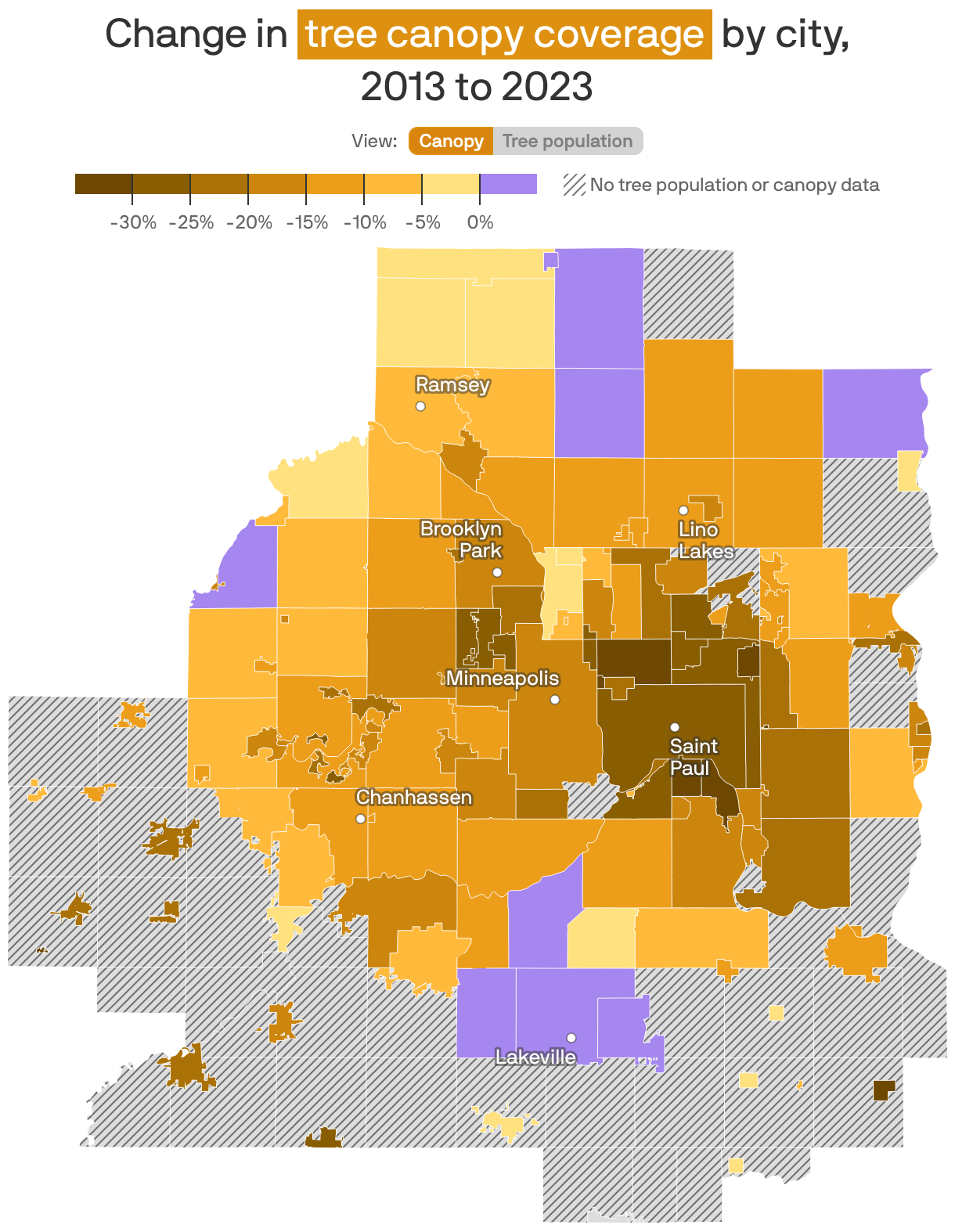
Pests, disease and poor planning have decimated the urban forest in the Twin Cities, which has lost 11% of its tree cover over the last decade, according to an Axios analysis of state data.
Why it matters: The numbers largely reflect the invasive emerald ash borer’s devastation of Twin Cities tree populations and represent a huge setback to Minnesota’s goals to put more communities in the shade.
- Trees cool neighborhoods, improve air quality, manage stormwater runoff, raise property values and even boost our mental health.
Yes, but: Canopy size is only one indicator of tree health. Tree population is another — and there, the news is better.
- The Twin Cities gained at least 1 million new trees between 2013 and 2023, according to data the Minnesota Department of Natural Resources released this spring.
Between the lines: Considering these two metrics together offers a more complete measure of a city’s tree health, DNR urban forester Rachel Morice tells Axios.
- "A community that proactively removed declining ash and replanted with diverse, resilient species might show the same canopy loss as one that did nothing, but those two communities are in very different positions for the next 20 years,” Morice says.
Case in point: St. Paul lost 30% of its tree canopy between 2013 and 2023 as it removed roughly 35,000 ash trees from parks, boulevards and the public right-of-way to contain emerald ash borer.
- But St. Paul also replanted a tree for almost every tree cut down, spokesperson Clare Cloyd tells Axios. Overall, the city’s tree population grew by 108,000 trees over the decade — an 18% increase, per the DNR data.
Flashback: Minnesota once had more ash trees than any other state. The trees were planted in the 1970s and '80s to replace populations lost to Dutch elm disease, largely because ash is resilient against disease, Morice says.
- Planters weren’t counting on the arrival of a pest.
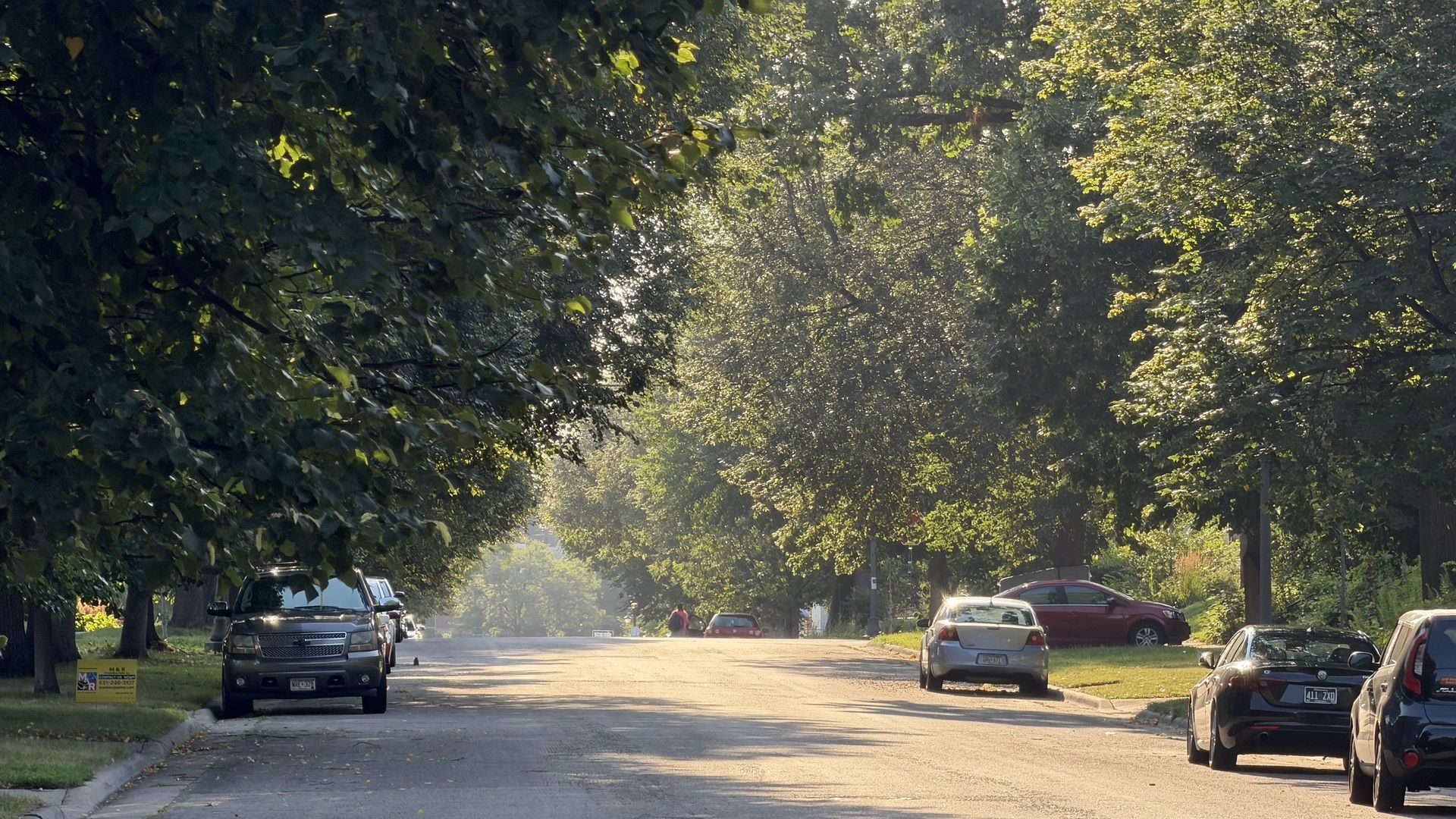
By the numbers: Ash was the fastest-declining species in the Twin Cities over the last decade, with some 563,000 trees lost over the decade in 97 metro cities where the DNR took detailed surveys.
Zoom in: Fungal diseases ravaged the metro’s populations of spruce (-374,000 trees) and pine (-249,000 trees).
- Those losses also reflect poor planning: The Colorado blue spruce, for example, is susceptible to those fungal threats and ill-suited to Minnesota’s climate — yet it’s “commonly planted in Twin Cities yards,” says Morice, who coordinated the DNR’s data-collection effort.
The good news: The metro gained more than 791,000 northern white cedar trees — a species that’s native to the region and seen by many forestry experts as a good replacement for a lost ash.
What we’re watching: Dozens of communities have tapped into DNR grant programs meant to plant trees and build canopy. Cities like Edina and St. Paul have also enacted tree protection ordinances.
- The efforts come against the backdrop of Minnesota’s climate goals, which call for 40% tree canopy coverage by 2050. (It’s about 37% right now.)
The bottom line: “The real measure of success isn’t what we’ve lost,” Morice says. “It’s what’s being planted to replace it.”
Go deeper: Read the DNR's full tree population reports for Minnesota cities.