Wildfires ease in Minnesota's Boundary Waters

Add Axios as your preferred source to
see more of our stories on Google.
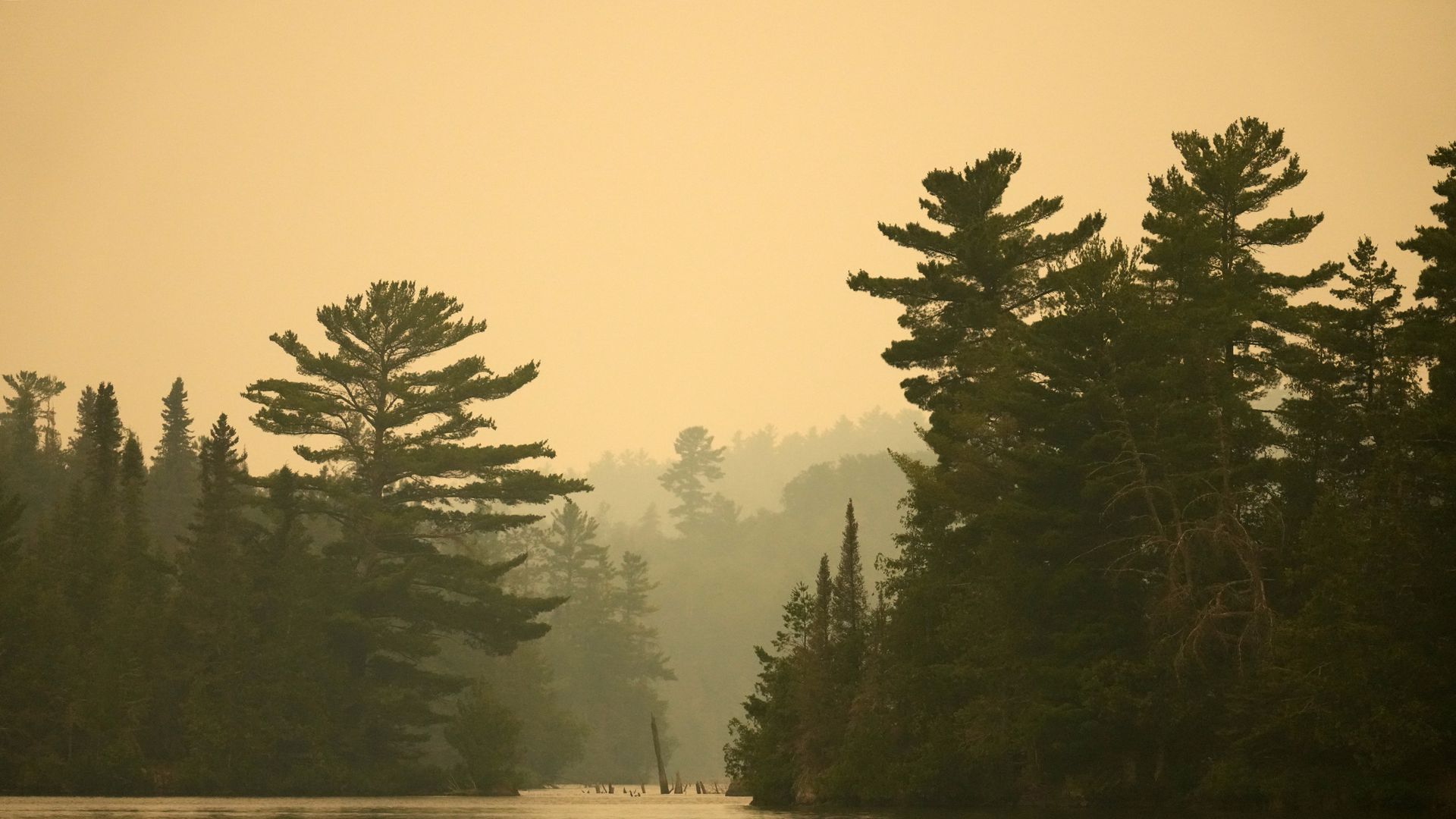
The smoke that choked the region in July, as seen above, has largely cleared. Photo: Anthony Soufflé/The Minnesota Star Tribune via Getty Images
Top Minnesota officials are preparing to wind down the state's peacetime emergency response to the Boundary Waters wildfires as crews continue to make steady progress on containing the blazes.
Why it matters: The move signals that the devastating blazes that upended northeastern Minnesota's tourism season and blanketed the state in smoke are coming under control.
Driving the news: Gov. Tim Walz said Wednesday that, as of now, he doesn't see a need for a special legislative session to extend the peacetime emergency he declared in response to the fires last month.
- "We're in a better spot than I think [we] anticipated," he said.
Where things stand: Six separate fires are still burning, down from 20 a month ago. Those still active are roughly 50% contained.
- Plus: Large swaths of the Boundary Waters have reopened to campers and paddlers.
What we're hearing: Officials say the coordinated state response, combined with rain and cooler weather, helped halt the fires' spread.
By the numbers: At its peak, the effort involved 29 aircraft and 2,400 personnel from state, federal, tribal, county and local fire departments.
- Minnesota National Guard emergency helicopters, activated as part of the governor's emergency order, delivered more than 170,000 gallons of water to active fire lines.
What they're saying: "While it's not over — and I'll stress it's not over — we are to a point where things are starting to calm down," says Mike Warnke, a top fire official with the state Department of Natural Resources.
Zoom in: The blazes have already had a devastating effect on the area in and around Minnesota's beloved Boundary Waters Canoe Area Wilderness, as aerial photos published by the Star Tribune show.
- While no lives or structures have been lost, the flames have scorched some 65,000 acres, leaving "familiar forests and canoe routes forever changed," the paper wrote.
Between the lines: Calling legislators back to St. Paul to extend the peacetime emergency, an idea Walz first floated last month, would have been logistically and politically complicated.
- That's because the deadline for the narrowly divided Legislature to green-light an extension would have fallen on Tuesday, the same day as the state's primary election.
What we're watching: Walz urged lawmakers to keep working on a financial relief package for businesses in the region so they can act quickly when they return to the Capitol in January.
- In the meantime, he urged Minnesotans to head north and spend money to give the local economy a boost.
The bottom line: While the situation has improved, officials cautioned that risks remain.
- Much of the state remains in a drought, and fire conditions typically worsen in late summer and early fall, as vegetation dries out.