
Son of slain Minnesota Democrat turns family tragedy into effort to curb political violence

Add Axios as your preferred source to
see more of our stories on Google.
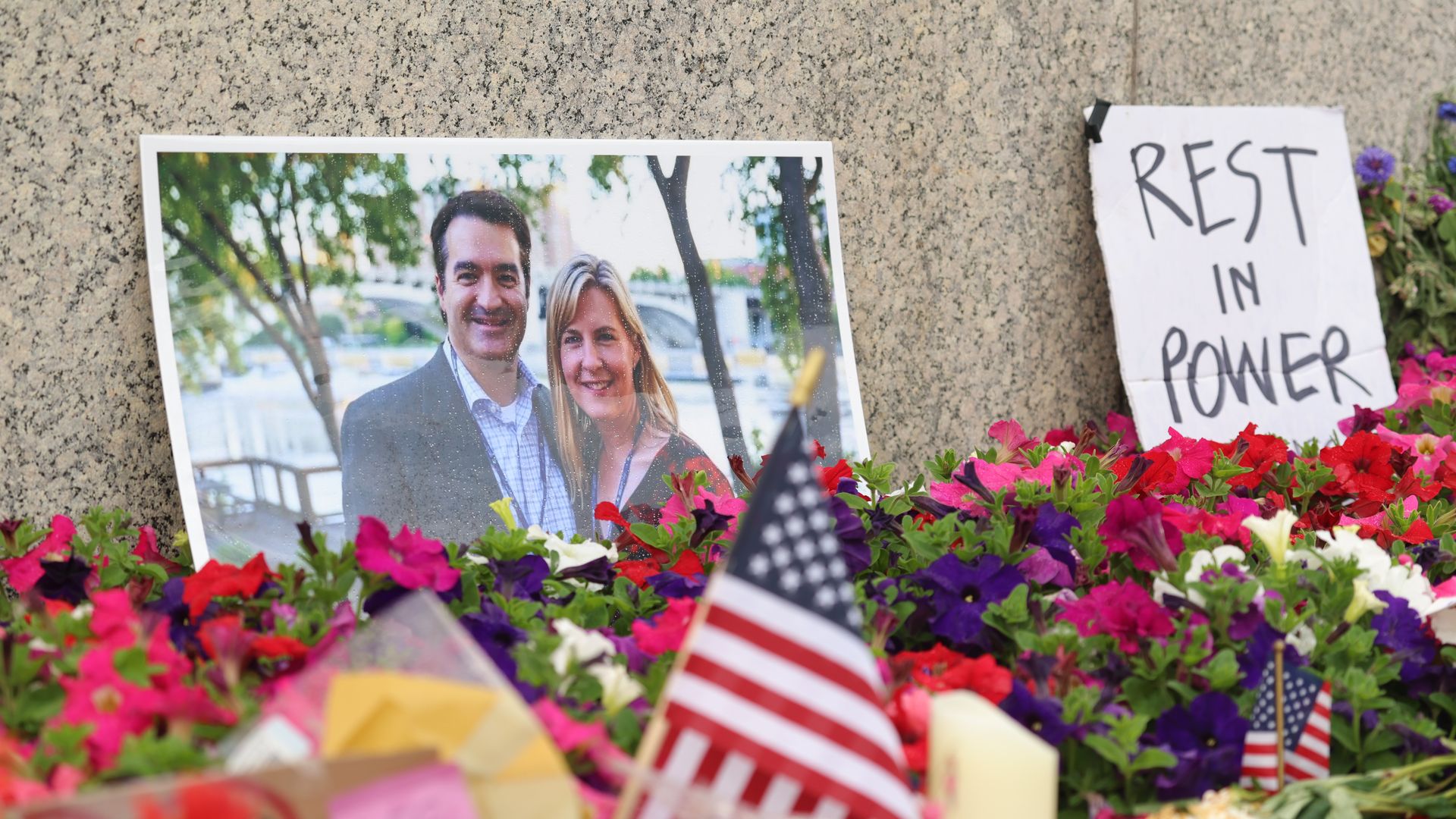
Photo: Steven Garcia/Getty Images
Since losing both his parents in a politically motivated attack, Colin Hortman has channeled his grief into a simple goal: preventing another family from experiencing a similar loss.
The big picture: In recent months, the 31-year-old programmer met privately with members of Minnesota's divided House, participated in workshops on bridging the partisan divide, and gave his first public talk on the need to lower the temperature when talking politics.
- "When someone is framed as a danger to survival or as fundamentally immoral, as an enemy, it invites fear. And fear, when repeated often enough, turns into permission," he said at an April event in Rochester. "Permission to harass, permission to threaten, and eventually, permission to act."
"I'm standing here — the human cost of the shift," he told the crowd.
Context: Early on June 14, 2025, a gunman disguised as a police officer killed House DFL Leader Melissa Hortman and her husband, Mark, in their home, shortly after wounding DFL Sen. John Hoffman and his wife in their nearby residency.
- The brazen attack, which authorities say was part of a broader plot targeting state lawmakers, put the growing threat of political violence in American society into grim focus.
Experts say that dialing back dehumanizing rhetoric — and holding leaders accountable for when they use it — can help reverse the trend.
That's where Colin Hortman hopes his story can help.
Zoom in: As he grasped for meaning in the wake of the killings, Hortman came to the conclusion that talking about the toll the violence has had on his family could make a difference in deterring future violence.
- In Rochester, he opened up about his grief and PTSD diagnosis and the medication that's helping him cope.
- He also reflected on the months-long effort to repair the damage the violence inflicted on his childhood home, and the peace he's found in returning there to cook and listen to music, as his parents loved to do.
And he described in vivid detail what made his parents so special, down to the favorite cocktails they had sipped the night they were killed (a margarita with fresh lime for his mom and a whiskey with cherries for his dad).
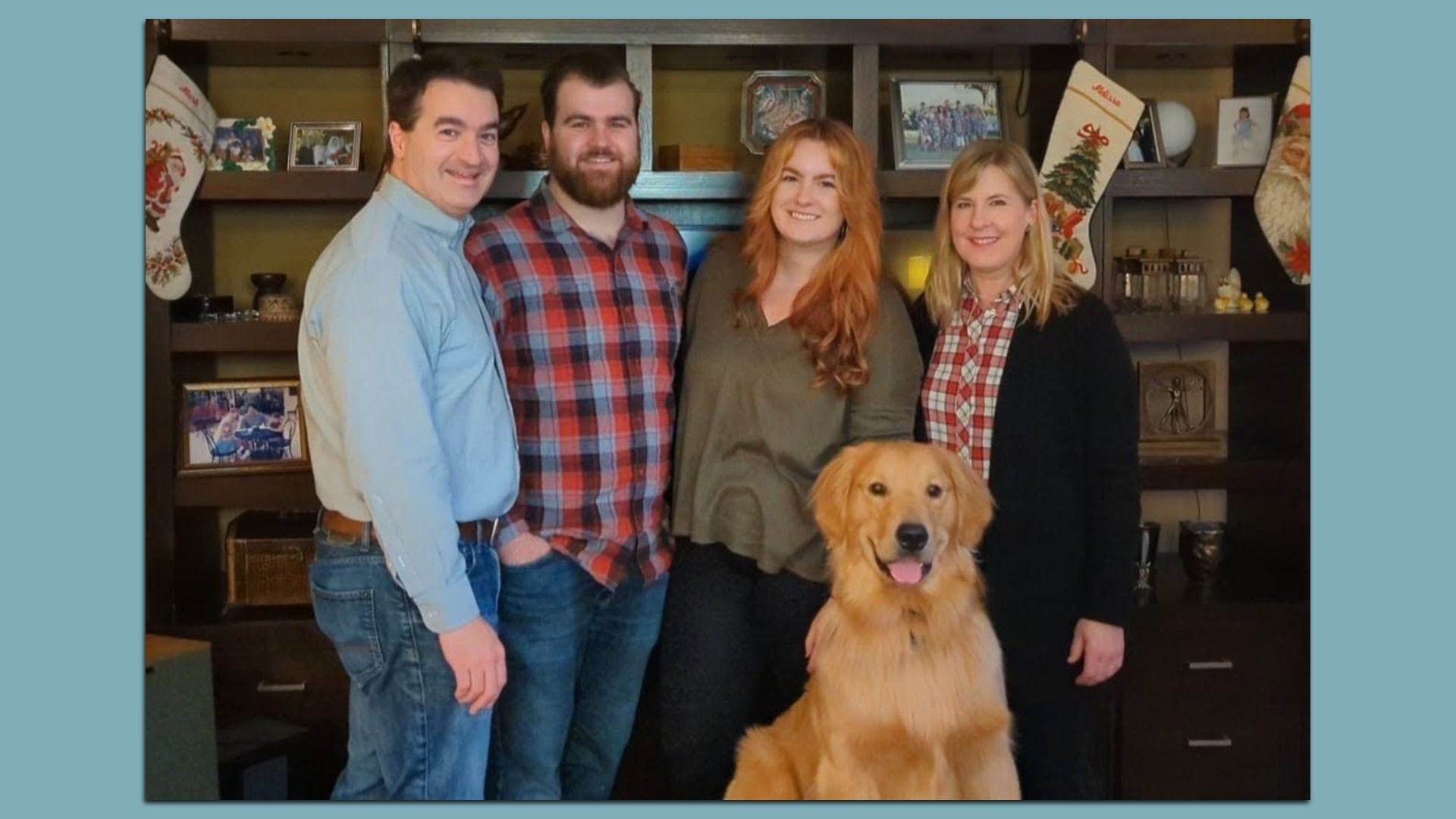
What he's saying: "Humanizing both of them is super important, because when we talk about political violence, it can be very abstract," Hortman told Axios during an interview in his mom's former Capitol office. "This was my mom and dad."
Zoom out: Hoffman, who survived being shot nine times, has taken a similar approach, using his platform to urge unity — and call out colleagues who use vitriolic language during debates.
- "There seems to be that continuation of polarization that's occurring. It's not OK," he told MPR News. "I've addressed it individually to people, publicly. I tried to address it, too, and we just got to keep moving forward on it."
Friction point: While many hoped the shootings would be an inflection point, more violent words and acts — including the September slaying of conservative commentator Charlie Kirk and the April attempt on President Trump's life — seem to have only furthered the divide.
- Threats against members of Congress and federal judges rose last year, according to tracking from Princeton University's Bridging Divides Initiative.
- Even in Minnesota, legislators have at times retreated to their corners, engaging in some of the same combative rhetoric that was used before the attacks, as the Star Tribune documented.
America remains stuck "in this persistent climate of hostility that is headed the wrong direction," Bridging Divides executive director Shannon Hiller told Axios.
- "This climate is impacting everyone, across parties, ideologies," she said, noting that women and Democrats are seeing significant increases.
Stunning stat: In one of her recent surveys, 75% of local officials reported that the risks are impacting how they engage with their job.
Hiller sees the ongoing use of dehumanizing and divisive language at the highest levels of national politics, including by the president, as "absolutely a huge part of the challenge."
Still, "many other countries have turned a corner of worse conflict," she noted. "It's always a combination of individuals, communities and leaders rejecting that continual escalation."
Between the lines: While he agrees that top leaders need to be part of the turnaround, Hortman isn't interested in publicly litigating who's to blame for the rise in divisive rhetoric — one of his underlying goals is to craft a message that won't alienate people on either side of the aisle.
- He consulted with Republicans — including family members and some of his mom's former colleagues — on drafts of his talk.
He also tries to give his audiences clear — and realistic — actions they can take to be part of the solution, such as downloading the Dignity Index app to learn how to identify and avoid divisive language.
- "The worse our rhetoric gets, the worse the actionable violence gets," he told Axios of his research into the issue. "We need to train people out of the rhetoric and get that justification out of people's heads."
Hortman isn't Pollyannaish about the headwinds, especially at the national level. The charged rhetoric in the aftermath of Kirk's assassination was especially difficult for him and his sister Sophie as they processed their own grief.
- "It was horrible watching the other side say awful things about [Kirk] in the same way the other side said awful things about our parents," he said of ghoulish cracks and disinformation that circulated online in both cases.
"It just showcased how this is not a party-line issue," he added. "The threats and the actionable violence exist on both sides of the aisle."
Yes, but: Hortman was encouraged by what he saw as a deliberate slowing of the "exponential" growth in divisive rhetoric here in Minnesota given the heightened emotions surrounding the assassinations, the Annunciation shooting, and Operation Metro Surge.
- "It's not perfect," he said. "[But] I think that that space is better than most."