NHL players are blocking more shots. These students want to help.

Add Axios as your preferred source to
see more of our stories on Google.
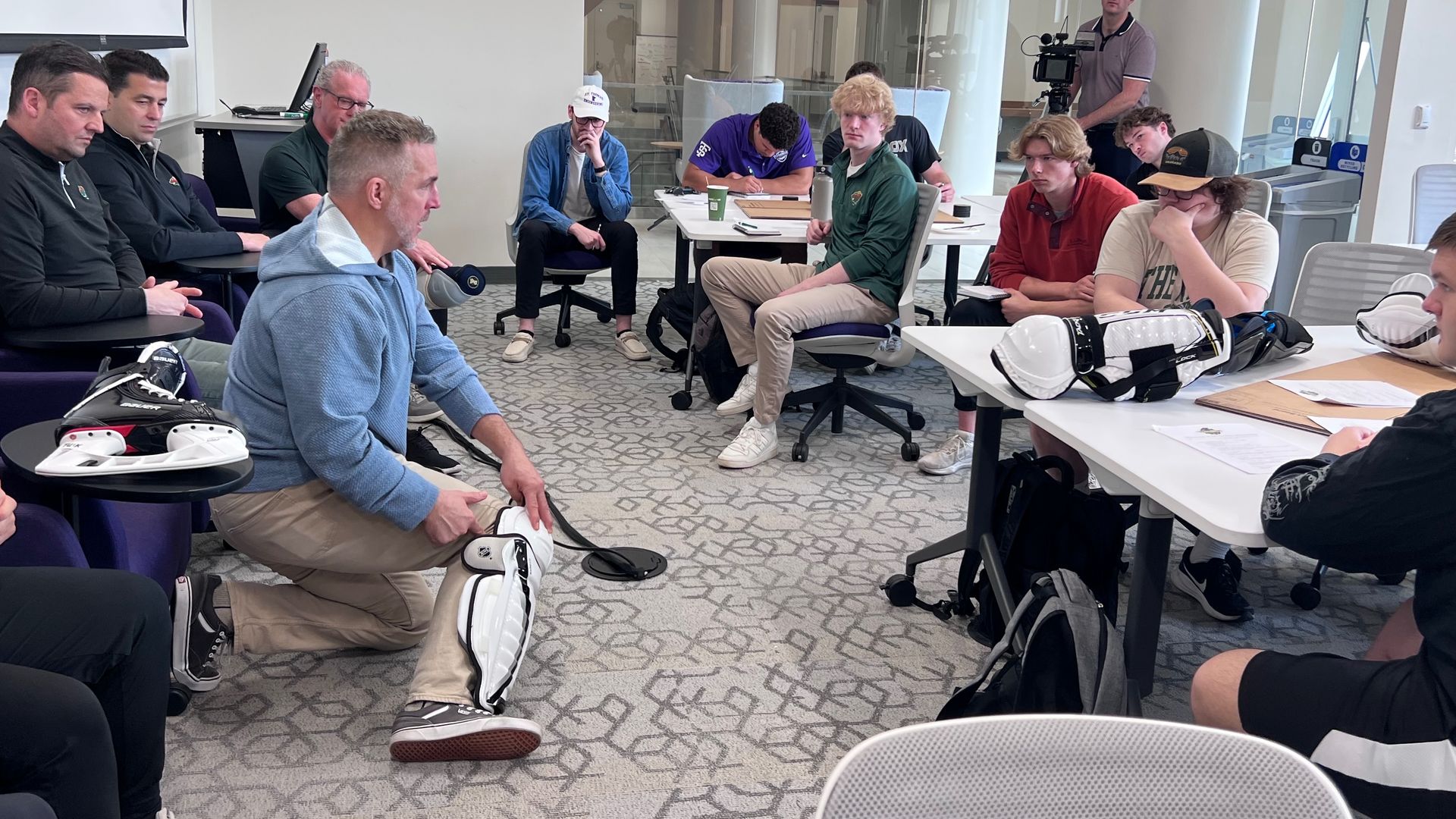
Former Wild forward Wes Walz models a shin pad for University of St. Thomas students building prototype protective gear for hockey players. Photo: Kyle Stokes/Axios
Twelve University of St. Thomas engineering students spent their spring break working with the Minnesota Wild to prototype more protective hockey gear.
Why it matters: These Minnesota students are helping to solve a growing problem for the NHL: blocked-shot injuries, which pose serious financial and competitive risks.
- NHL players have been blocking record numbers of shots in recent years, according to an Axios analysis — in an era when high-tech sticks fling pucks at higher velocities than ever.


Inside the action: "When you get hit, there's a split-second in your body … and you'll know right away if you're going to have a problem or not," former Wild player and current TV analyst Wes Walz explained to Axios.
- He said players know almost immediately, "'OK, I got lucky there,' or 'OK, I'm in trouble … I gotta figure out a way to get back to the bench.'"
Stunning stats: In 2018–19, the average NHL team blocked 14 shots per game. Five seasons later, in 2023–24, it blocked 15.6 per game.
- It doesn't sound like much — but that same five-year span saw a 26% increase in games lost to lower body injuries, according to data from NHL Injury Viz.


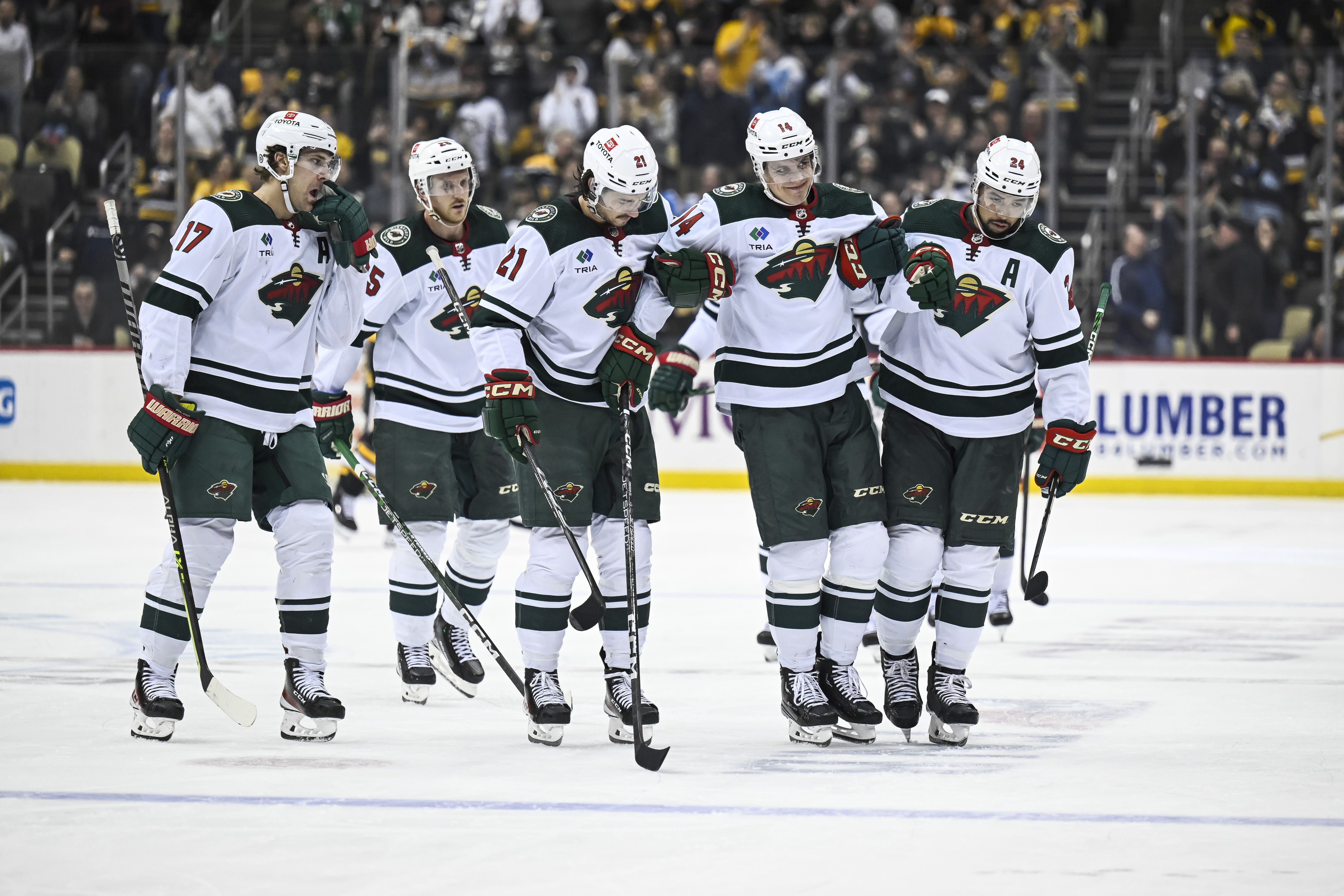
Case in point: Wild center Joel Eriksson Ek broke his leg blocking a shot late in the 2022–2023 season — a key casualty that contributed to a first-round playoff exit.
The intrigue: Eriksson Ek's injury illustrated the problem St. Thomas engineering students set out to solve: He got hurt because a screaming puck struck a spot his pads didn't cover.
- Players' ankles, the tops of their knees and the sides of their legs are easily exposed.
Yes, but: When it comes to gear, "hockey players don't like new," St. Thomas engineering junior Jack Loucks said.
- So the students' challenge was to develop prototypes that fit seamlessly with existing pads.
What they did: The students divided into three teams for a three-day friendly competition — and took three different approaches to impress the judges: Walz, two St. Thomas athletic trainers and an engineering professor.
- One team used packets of, essentially, an industrial-grade variant of "oobleck" — that water-and-cornstarch fluid kids play with that hardens on impact — as extra padding.
- Another extended the shin pads to cover more of the player's knee and added foam-padded ankle protectors.
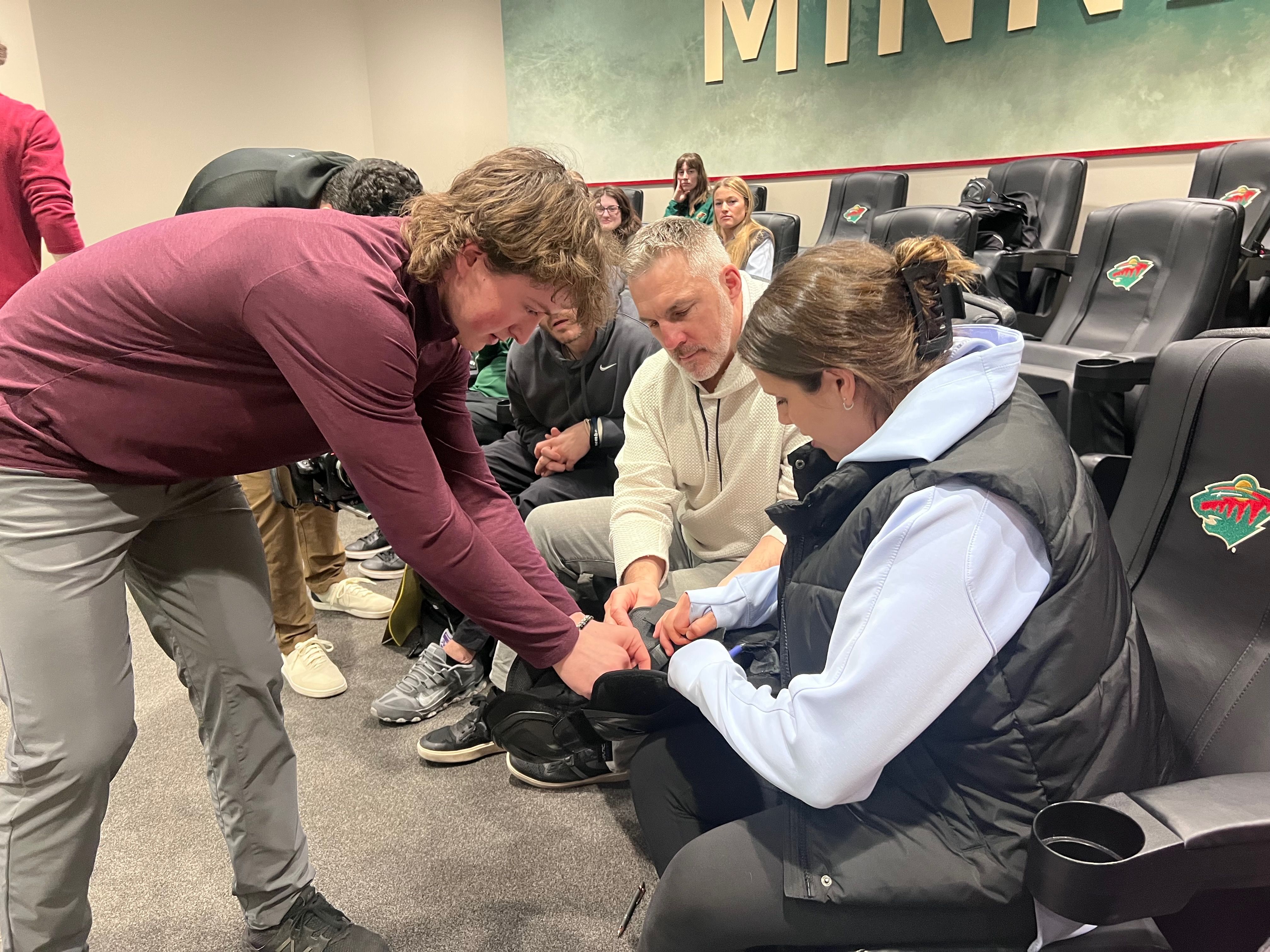
The results: The winning team — Loucks and teammates Tyler Sedlacek and Brandon Hill — reinforced the shin guard with the same foam used in motorcycle gear.
- They also used some of the same material to create ankle-protecting pads.
What we're watching: Though shot-blocking numbers this NHL season are down from their recent peak, advancements in video scouting and analytics have made it easier for coaches to show players how to throw their bodies into shooting lanes.
- That means the sting and the risk of blocked shots aren't likely to fade anytime soon.
The bottom line: "For us," Wild trainer John Worley told Axios, "the health or welfare, but also the money that's lost, when a guy misses a game is monumental."