What to expect from Minnesota's legislative session

Add Axios as your preferred source to
see more of our stories on Google.
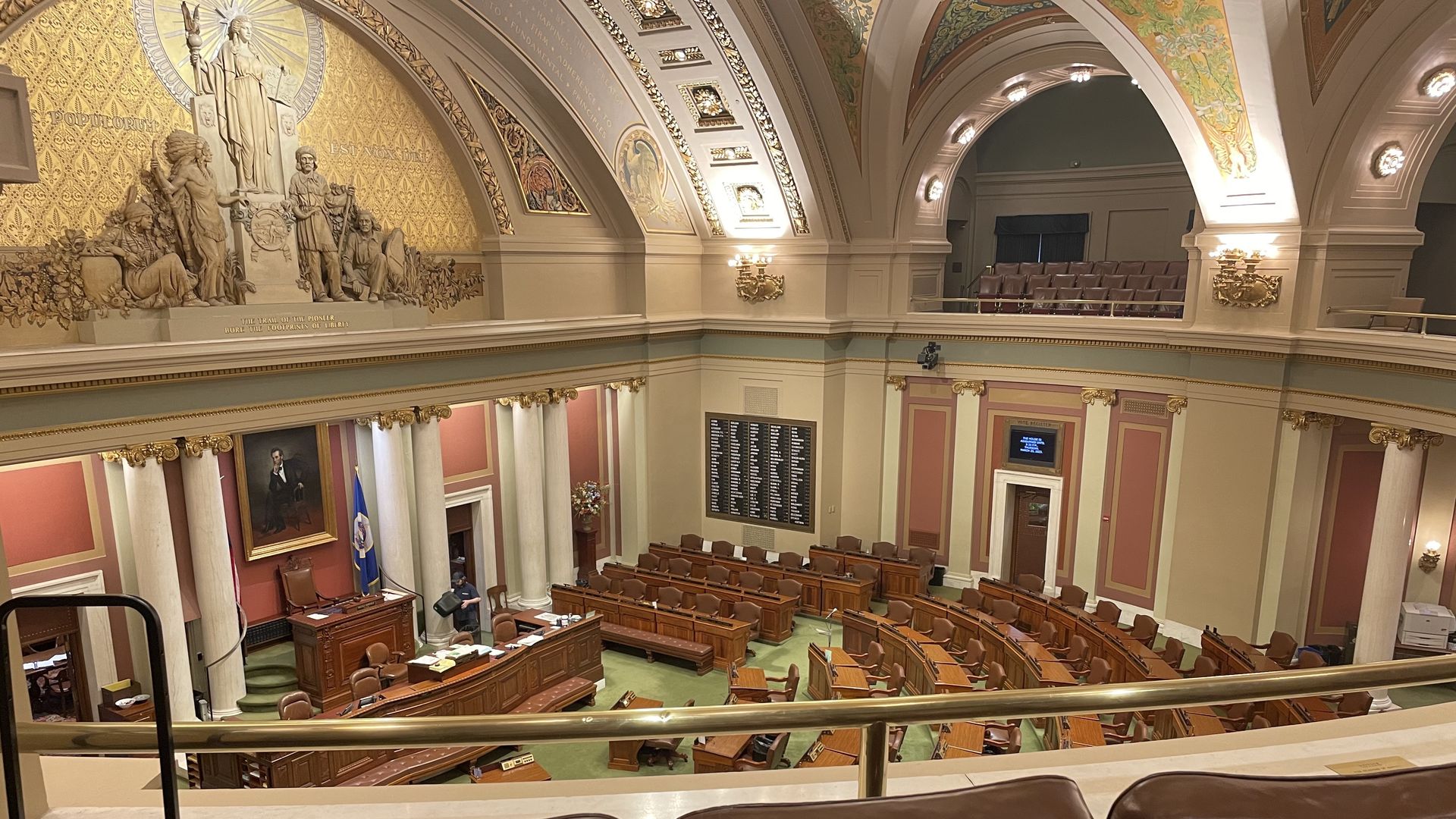
Photo: Torey Van Oot/Axios
Lawmakers return to the Minnesota State Capitol on Tuesday with emotions high and expectations low.
The big picture: Bipartisan compromise is tougher in an election year.
- The extremely narrow divide under the dome, soaring tensions over the immigration crackdown and other federal policies, and political ambitions of prominent legislators could make this 13-week sprint even more fraught than usual.
They're also gaveling in under a cloud of grief — and heightened security fears — after the attacks that killed Speaker Emerita Melissa Hortman and her husband and gravely injured Sen. John Hoffman and his wife.
- Changes made in response to that tragedy include new weapons screenings at all entrances.
State of play: The two-year budget was set in a special session last June, so there's not much lawmakers have to get done.
- As with last year, the tie in the House means bills need bipartisan support to even get a floor vote, let alone pass.
What they're saying: "It's going to be a difficult one," House DFL Leader Zack Stephenson said. "Look, a lot has happened. We're facing some really significant issues that people have really strong feelings about."
Yes, but: A legislative session is a "terrible thing to waste," Stephenson added, and leaders say issues like affordability, fraud, shifts in federal funding, and fallout over the recent ICE surge deserve action.
The reason for optimism: House Speaker Lisa Demuth (R-Cold Spring) points to last year, when legislators struck a budget deal under "really hard circumstances."
- "We have the opportunity to really do good things, like you saw last time, and nobody could take full credit or full blame," she said. "That's why I think it's even more possible."
The bottom line: The state's latest fiscal forecast, released in December, showed a small surplus, thanks in part to the $5 billion lawmakers cut as part of last year's budget deal.
- But a projected structural deficit looms in the years ahead. That reality, combined with uncertainty over federal funding, will make any proposals with a big price tag a tough sell.
"We have to be frugal, but also responsive to the needs of the people," Senate DFL Leader Erin Murphy said.
Zoom in: Issues to watch

🔎 Fraud: Curbing fraud in state social services programs, set to be one of the session's marquee issues, could still gain bipartisan traction.
- Legislation creating an independent inspector general, which stalled after passing the Senate with broad bipartisan support last year, will likely get a serious look in the House.
- Leaders told Axios everything from new requirements for providers to rethinking how high-risk programs are administered could be on the table.
💙 Guns: Gov. Tim Walz has said that reviving the gun control push that stalled last fall in the wake of the Annunciation Catholic Church shooting is one of his top priorities.
- Murphy expects an assault weapons ban to get a Senate floor vote, along with other school safety and mental health measures, though it remains unclear if all Democrats will vote yes.
- Demuth, whose caucus rolled out a package focused on school safety and mental health after the attack, said she's "not going to block anything," but declined to commit to a vote before bills are heard by committees.
- Stephenson told Axios he'll use procedural maneuvers to try to get a floor vote if the GOP won't sign off.
💰 Federal impacts: Republicans want to make some of the centerpieces of President Trump's One Big Beautiful Bill, including no tax on tips and overtime provisions, part of the state tax code.
- But those changes would chip away at the state's bottom line, and Democrats may be wary of anything that helps boost the president's signature policy.
- County leaders and DFLers, meanwhile, are sounding the alarm on the implementation costs and other effects of the bill's sweeping changes to Medicaid eligibility requirements.
🏗️ Capital investment: Even-year sessions are traditionally when lawmakers cobble together a "bonding" package that authorizes borrowing for local projects and infrastructure. Per usual, the list of funding requests is long.
- Disagreements over the size and scope — as well as other partisan squabbles — can derail the package, since it needs a supermajority to pass.
- Senate GOP Leader Mark Johnson said his caucus is open to a bonding bill, but that the spending target will depend on what the state's February financial forecast shows.
🏡 Property taxes: Skyrocketing rates will definitely get lip service, though cash for significant relief will be hard to come by given the budget situation.
- Demuth said she wants to form a working group to look at the root causes.
🏀 Sports betting and arena aid: These two issues are unlikely to move forward this year, leaders have acknowledged in interviews and public forums.
- Both have attracted bipartisan opposition, and cash constraints make funding for sports venues a tough sell.
🤖 Robotaxis: Regulating Waymo and other driverless cars has the potential to become a political hot potato — with similar dynamics to the recent debate over rideshare driver pay.
Plus: Debate over tweaks to the new Paid Family Leave and Earned Safe and Sick Time laws, energy policy, housing, data centers, artificial intelligence, and more could bubble up in the weeks ahead.
What we're watching: Every session has a few surprise hot-button issues that seem to come out of left field.