How Minnesota's rapid responders track ICE agents in real time

Add Axios as your preferred source to
see more of our stories on Google.
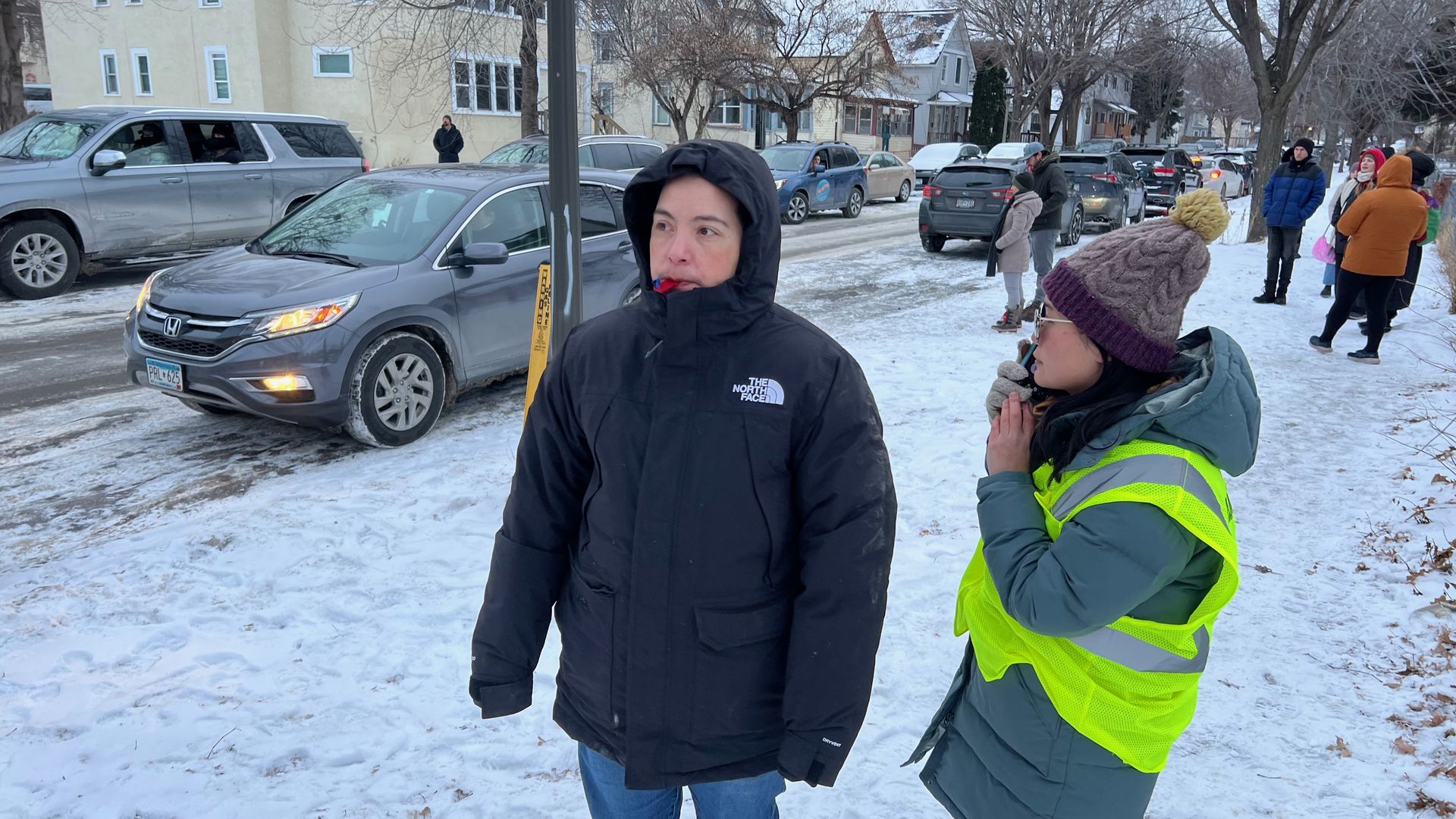
St. Paul City Council Member HwaJeong Kim dials into a rapid response dispatch call as state Rep. Liish Kozlowski (DFL-Duluth) observes agents in St. Paul. Photo: Kyle Stokes/Axios
St. Paul's rapid response network spotted the known ICE vehicle as soon as it entered the neighborhood.
Just before 3:45pm last Tuesday, the volunteers who track federal agents — and warn immigrants of their movements — reported it in an encrypted group call.
- By 4pm, rapid responders had radioed the agents' destination: Sherburne and Western avenues. Several on the call offered to go observe.
Within a half hour, more than 40 people were on the scene — with warning whistles screeching and cameras rolling.
Why it matters: This scene — which Axios witnessed a week before federal agents killed Alex Pretti in Minneapolis — demonstrated how large and efficient the Twin Cities' anti-ICE watch groups have grown, especially since the fatal shooting of Renee Good.
- Video shows Pretti was shot while filming agents with his phone, and his killing has focused new attention on constitutional observers and the unofficial rapid response groups coordinating residents' response to Operation Metro Surge.
- Thousands of volunteers have joined these groups, covering every neighborhood in Minneapolis and St. Paul, plus several suburbs.
"Constitutional observation is, in my mind, a type of nonviolent, peaceful protesting," said St. Paul City Council Member HwaJeong Kim, who volunteers as a rapid responder.
- Kim invited Axios to ride along during one of her shifts last week.
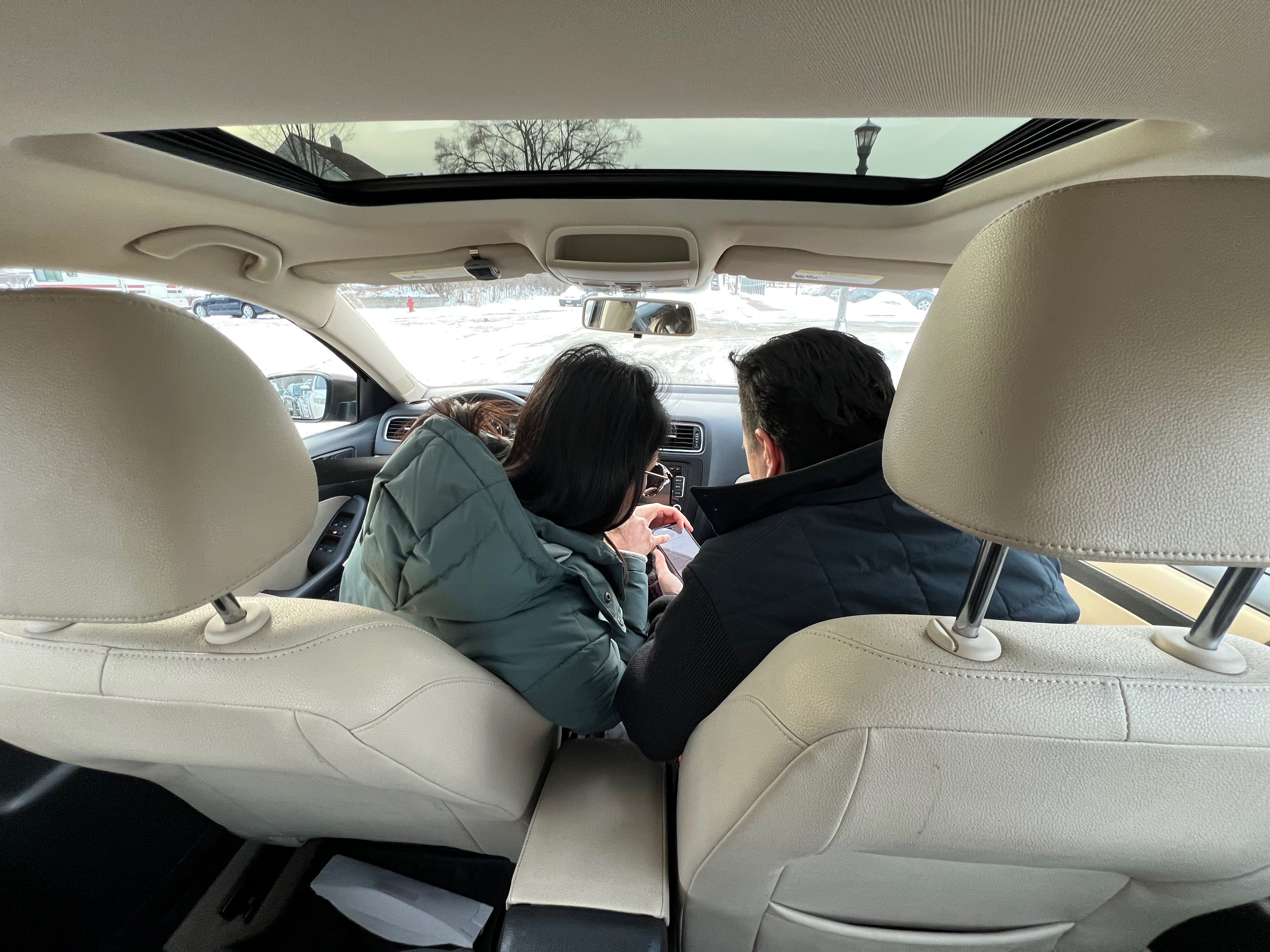
How it works: Rapid responders' intel often helps warn nearby businesses, notify neighbors, and quickly draw crowds of witnesses, like we saw happen at Western and Sherburne. These numbers, volunteers believe, deter agents from detaining more people.
- Kim said rapid response often arrives first to scenes, but "the moment that neighbors hear the whistles and the car horns, people are coming out of their houses."
- If agents get out of their vehicles, Kim said, the response escalates from private group chats to "all-call" public warnings on social media.
Zoom in: Kim drove laps around her council ward on St. Paul's North End looking for vehicles bearing the hallmarks of ICE: tinted windows or out-of-state plates.
- Throughout the 90-minute shift, she was dialed into a call with more than 40 other rapid responders circling the city on foot or by car.
- The call sounded like a DIY police dispatch frequency. Every minute or so, it crackled with the license plate number of a suspected ICE vehicle — which dispatchers then checked against crowdsourced databases.
- When the system works well, Kim said, dispatchers have even triangulated where agents are headed.
The intrigue: Many rapid responders share a primary goal, Kim said: to create a trove of evidence that could win lawsuits, shift public opinion, or challenge the Trump administration's official narratives.
- "We really believe strongly that there will be a day of reckoning so we can use the information against them," Kim explained.
Kim followed one of the ICE vehicles as agents left the scene at Western and Sherburne.
- The agents went to a nearby Holiday station, pumped gas and then — as Kim's shift was ending — drove off into the gathering dark.
The politics of watching
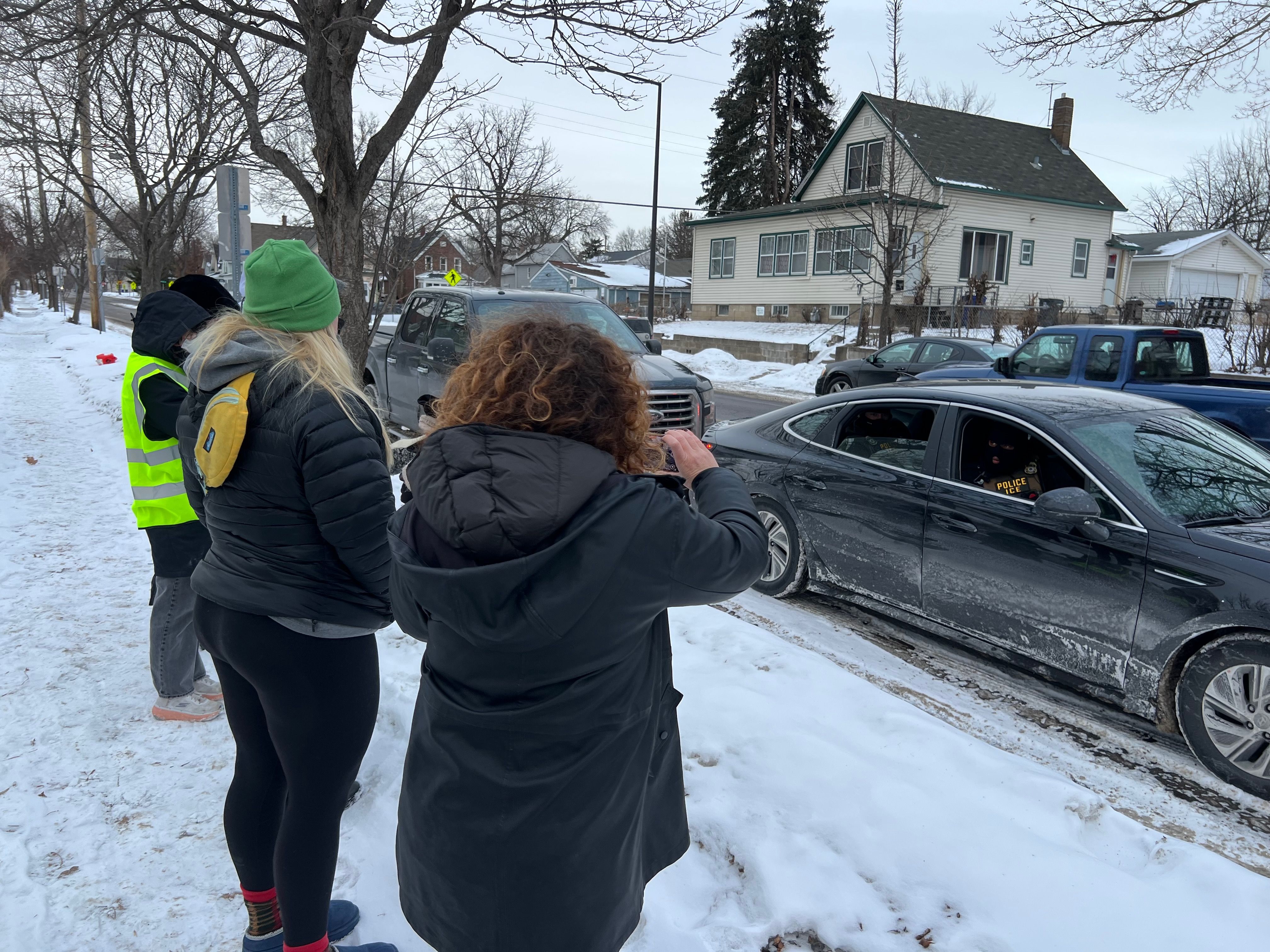
Rapid responders' activities are a central point of tension between the Trump administration and Minnesota's elected leaders.
The big picture: While Gov. Tim Walz has urged residents to "take out that phone and hit record" when they see ICE activity, Trump administration officials have claimed observers are out to antagonize agents.
- Though it's not clear how active Pretti or Good were in observer groups, both were branded "domestic terrorists" by top Trump officials immediately after their deaths.
Friction point: Minnesota groups are "better organized" than observers tailing federal agents in other cities, Border Patrol Commander Greg Bovino recently told reporters — which he said makes it a "difficult operating environment."
- Large crowds of observers and well-coordinated efforts to track federal agents' movements have led to multiple charged interactions: Observers have been detained. Agents have deployed tear gas against crowds and have claimed harassment amid protests around their hotels or during off-duty dinners.
Catch up quick: Rapid responders are following a playbook first developed by activists in Los Angeles and Chicago. Their training materials emphasize that ICE watch work is "nonviolent" and urge observers to leave any weapons at home.
- Pretti was armed with a gun while filming the agents, but video analysis shows that he never brandished the weapon and that agents had disarmed Pretti before they shot him.
- "We're not asking people to bring guns," said Kim, who has attended multiple observer trainings — but she also said Pretti was acting within his legal rights: "Alex demonstrated more principle with a gun than any federal agent."
What's next: Pretti's death shook Kim, but she has no plans to stop taking rapid response shifts — and is encouraged by the growing numbers of people willing to grab their phones when they hear whistles.
- "Every common person, political or not," she told Axios, "is joining the fray."