50 years later, the Edmund Fitzgerald's story is told again

Add Axios as your preferred source to
see more of our stories on Google.
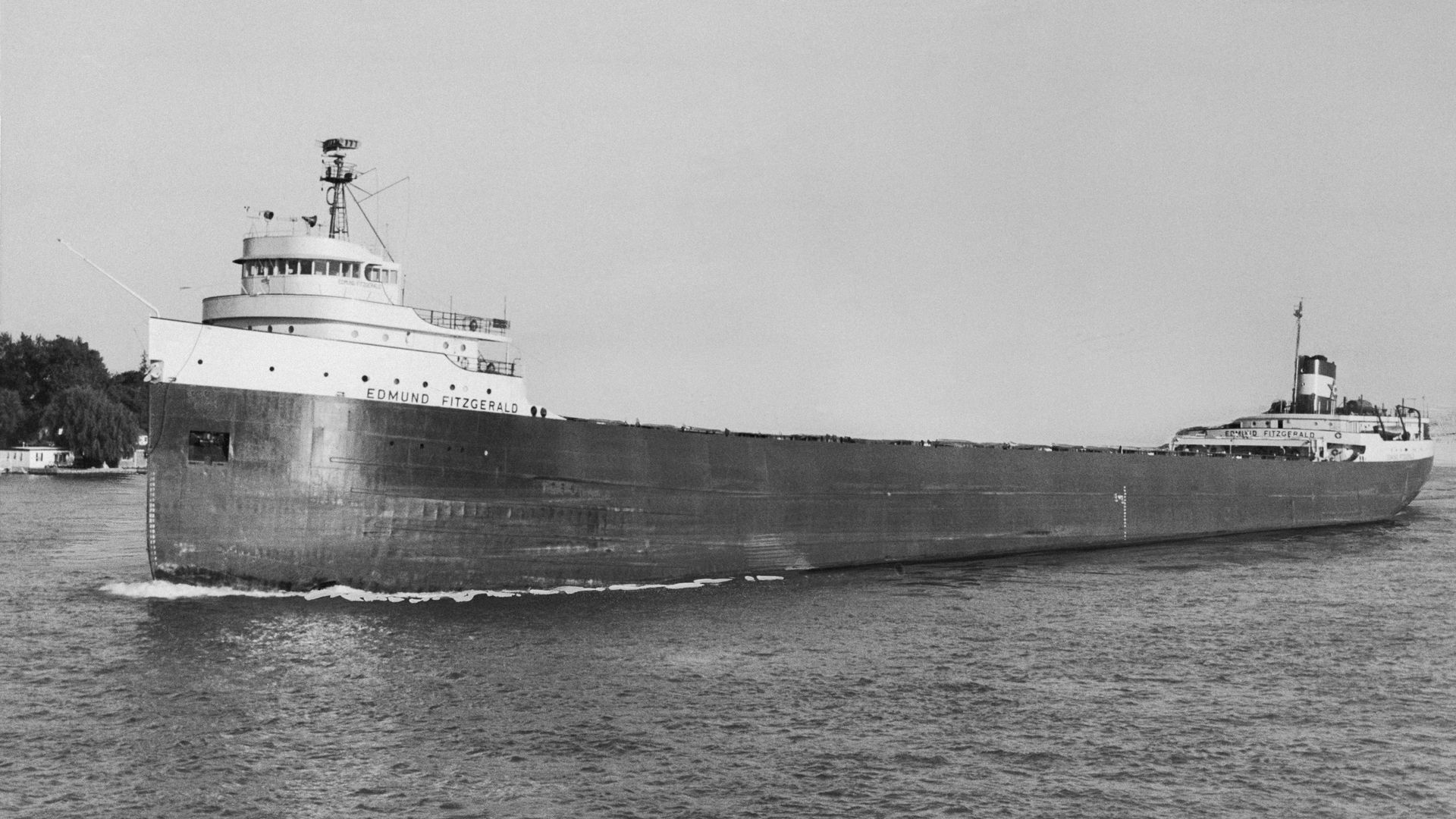
The Edmund Fitzgerald in 1972. Photo: Bettman via Getty
Fifty years ago tonight, 29 men — including two from Minnesota — died in the wreck of the Edmund Fitzgerald on Lake Superior.
Why it matters: The story of the demise of one of the most beloved ships in Great Lakes history is well known by an older generation in the Upper Midwest, but younger people may not know much beyond Gordon Lightfoot's ballad.
Driving the news: John U. Bacon's new book "The Gales of November" brings the story back to life with a comprehensive look at what happened to the Fitz during that fateful trip across the big lake they called Gitche Gumee.
- Bacon told Axios he interviewed two men who worked on the Fitzgerald in 1975 who had never spoken to a reporter. He also talked to 14 of the 29 families who lost a loved one, including two daughters of Nolan Church, a 55-year-old porter from Silver Bay.
- A key interview with an engineer from a ship sailing just behind the Fitzgerald helps explain what happened, since there were no survivors on the Fitz.
The intrigue: There are likely multiple factors that contributed to the ship's sinking, but none are bigger than a truly epic storm that produced regular swells of 25 feet and, as Bacon reports, waves that likely reached 55 or 60 feet.
- Other possible factors include a widespread practice of overloading ships and weather forecasting that didn't fully communicate how treacherous things would get. The freighter may have run aground earlier in the night due to an incorrect chart.
The big picture: Bacon's book tells not only the gut-wrenching story of the Fitzgerald's last hours, but also the golden age of the Midwest economy based on iron and taconite from Minnesota feeding factories all over the Great Lakes.
- The region was the Silicon Valley of its time, Bacon said, and he writes about the prosperity the automotive industry brought to cities like Detroit and Toledo.
- "The ship goes down almost at the precipice of some of the most challenging decades for the Midwest," the Michigan author said.
Bacon's book captures the romance of sailing on the Great Lakes — and especially on the Fitz, which was known to have posh living quarters, the best cooks and the most professional and experienced crew.
- The pay was good, the sailors were well known in bars at ports and the scenery was top-notch — including spectacular Northern Lights displays.
Yes, but: Men didn't see their families for nine months a year. The ships were brutally hot in the summer and, of course, the risk of death was always present.
The bottom line: As the Wall Street Journal put it, the story of the wreck has been told in countless books, but "never has it been told better than by Mr. Bacon in this colorful and compelling book."