Mayoral candidate's idea to fill empty shops: Tax the landlords

Add Axios as your preferred source to
see more of our stories on Google.
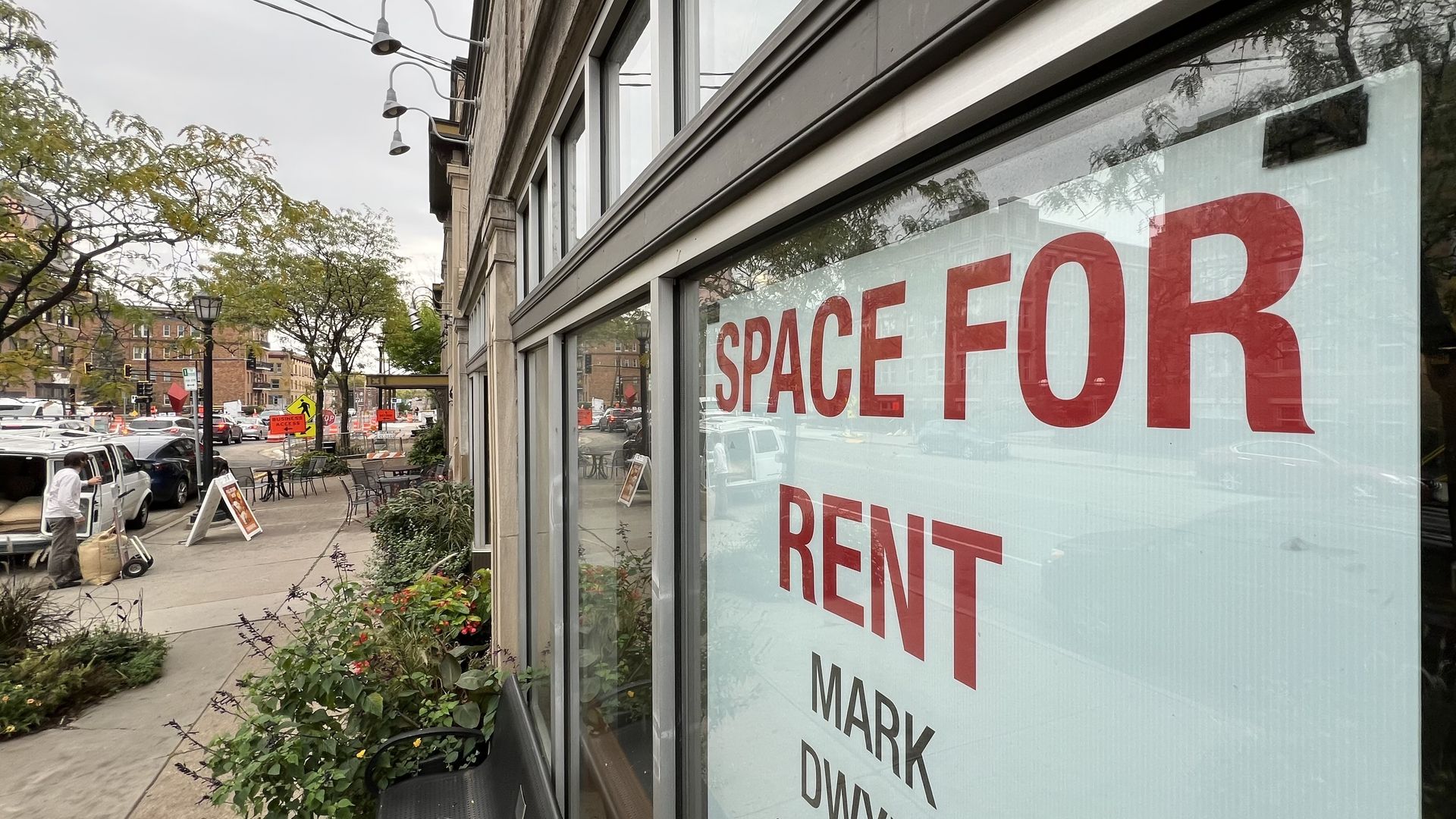
A commercial space for rent near Hennepin Avenue in Minneapolis. Photo: Kyle Stokes/Axios
Minneapolis mayoral candidate Omar Fateh has an idea for filling empty storefronts: When they're vacant, tax the landlord.
Why it matters: Retail vacancy blights neighborhoods, raises crime rates, and dampens efforts to restore downtown Minneapolis' vibrancy.
- Right now, nearly 29% of retail square-footage downtown is unused — more than double the pre-pandemic vacancy rate, according to the Minnesota Commercial Real Estate Association.
The big picture: Fateh's proposed solution — a commercial vacancy tax — is also emblematic of where he breaks with his fellow challengers to Mayor Jacob Frey. Fateh has been more eager than his allies to embrace big-government interventions like rent control or a city income tax.
What they're saying: "We're witnessing the slow erosion of our city's commercial corridors, where they have remained underutilized, blighted, and ultimately abandoned," Fateh told Axios. "We must think creatively about big ideas to meet the moment."
How it works: Fateh said it would be "irresponsible" to commit to details about how his proposal would work — but San Francisco taxes a landlord when their ground-floor commercial district storefront sits vacant for more than six months.
- The idea behind a vacancy tax is to prevent speculation by landlords — like holding out for rents to rise, or for a higher-paying tenant.
- This activity is sometimes found in gentrifying neighborhoods that are ripe for "rapid redevelopment," University of Maryland associate professor of urban studies Willow Lung told Axios.
Yes, but: This speculative activity "tends to be the exception rather than the rule," said Alan Mallach, senior fellow at the Center for Community Progress, which studies vacant properties.
- He told Axios he suspects vacancies are driven by weak demand for retail space, particularly in downtowns hollowed out by COVID.
The other side: Minneapolis Downtown Council president Adam Duininck worries a tax could penalize owners already "struggling to make the math work on these buildings."
- "We still have a long way to go to recover," and a tax could make that uphill climb worse, Duininck told Axios.
Between the lines: In a 2021 report, Harvard and NYU researchers concluded a proposed empty-storefront tax in New York City would've likely reduced the vacancy rate.
- But it also would've pushed landlords to rent to lower-quality tenants, leading to faster churn.
Plus: A poorly structured tax could raise risks for local small business tenants, too.
- "Starbucks could easily move into a vacant commercial space," allow a landlord to avoid the tax, noted Lung, who directs the Small Business Anti-Displacement Network.
Zoom in: San Francisco officials collected $2.7 million from 114 businesses in the 2024-25 tax year, the city's Office of the Treasurer & Tax Collector told Axios.
- The city initially projected the tax could generate as much as $5 million in annual revenues, according to the Chronicle.
- Landlords must self-report their vacancy — and for the first two years, officials didn't penalize anyone who failed to pay, reported the San Francisco Standard.
- So far, the only evidence that San Francisco's tax has affected vacancy rates is anecdotal, the Gazetteer wrote.
The latest: A California judge recently ruled the city's commercial vacancy tax unconstitutional. An appeals court is now weighing its fate.