
Minnesota at high risk of a recession, economist warns

Add Axios as your preferred source to
see more of our stories on Google.
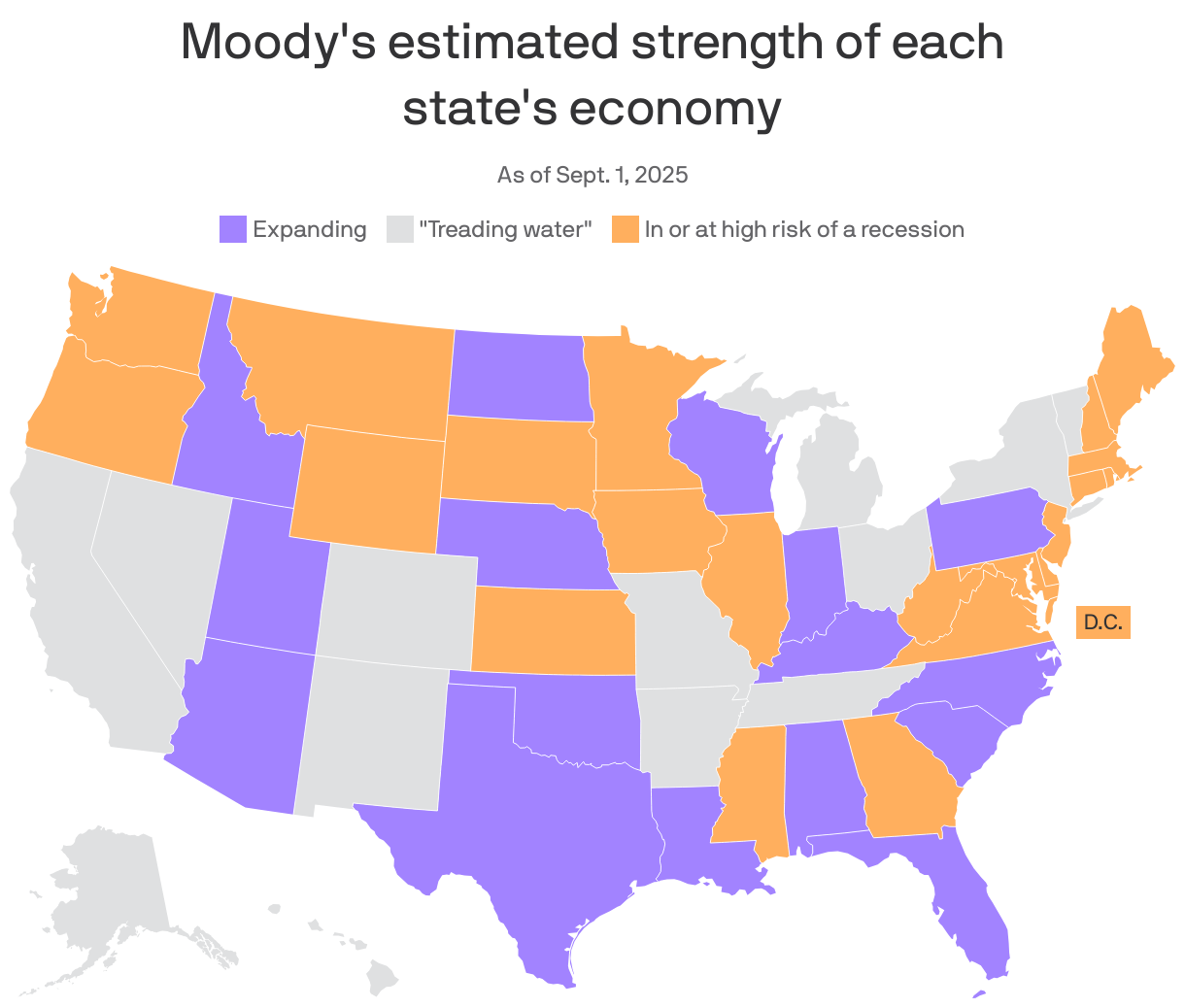
Minnesota is one of 22 states at high risk of a recession, according to a new analysis from Mark Zandi, chief economist at Moody's Analytics.
Why it matters: It's just one economist's opinion, but Zandi's 50-state index highlights real pain points in Minnesota's economy: a creeping unemployment rate; and a growing toll from broader forces like trade wars, an immigration crackdown and federal job cuts.
What they're saying: Nationally, "my takeaway is not that the economy is in recession, but it's pretty darn close," Zandi tells Axios' Emily Peck.
How it works: The most important indicator in Zandi's index is employment data from the end of August — but it also considers inputs like modeled industrial production, personal income and housing starts.
Zoom in: While Minnesota added 5,900 jobs in August, the state's unemployment rate rose to 3.6% — its highest level in four years.
Zoom out: The states that scored worst on Zandi's index are more reliant on sectors feeling the impacts of higher tariffs — including agriculture, which makes up a sizeable chunk of Minnesota's economy.
- States doing well are ones still seeing robust population growth, particularly Texas and Florida.
The other side: In other ways, Minnesota's economy is still humming. The state's gross domestic product grew in the second quarter, and unemployment remains below the national rate (4.3%).
- Overall, Minnesota landed just below Zandi's threshold for a state that's "treading water."
Reality check: "Whether and when a recession occurs is often a matter of significant debate among economists," Minnesota Management and Budget spokesperson Patrick Hogan told Axios, noting the agency doesn't comment on individual forecasts.
- Minnesota's economy is not seeing the "broad declines across many industries" that typify a recession, University of St. Thomas associate professor and economist Tyler Schipper told Axios.
- Plus: Zandi's forecast uses state-level data, which has greater margins for error, Schipper cautioned.
The intrigue: "It's a much stronger argument to say we're in a jobs recession," Schipper said, given the rise in long-term unemployment and the difficulty of finding work.
- Minnesota may not be in a recession, he said, "but people are going to increasingly feel like it's a recession."
What we're watching: The federal government shutdown has delayed the release of official September jobs data — but national data from private-sector firms suggests the national economy lost jobs last month.