Minneapolis mayoral candidates oppose Wolves arena subsidy


Add Axios as your preferred source to
see more of our stories on Google.
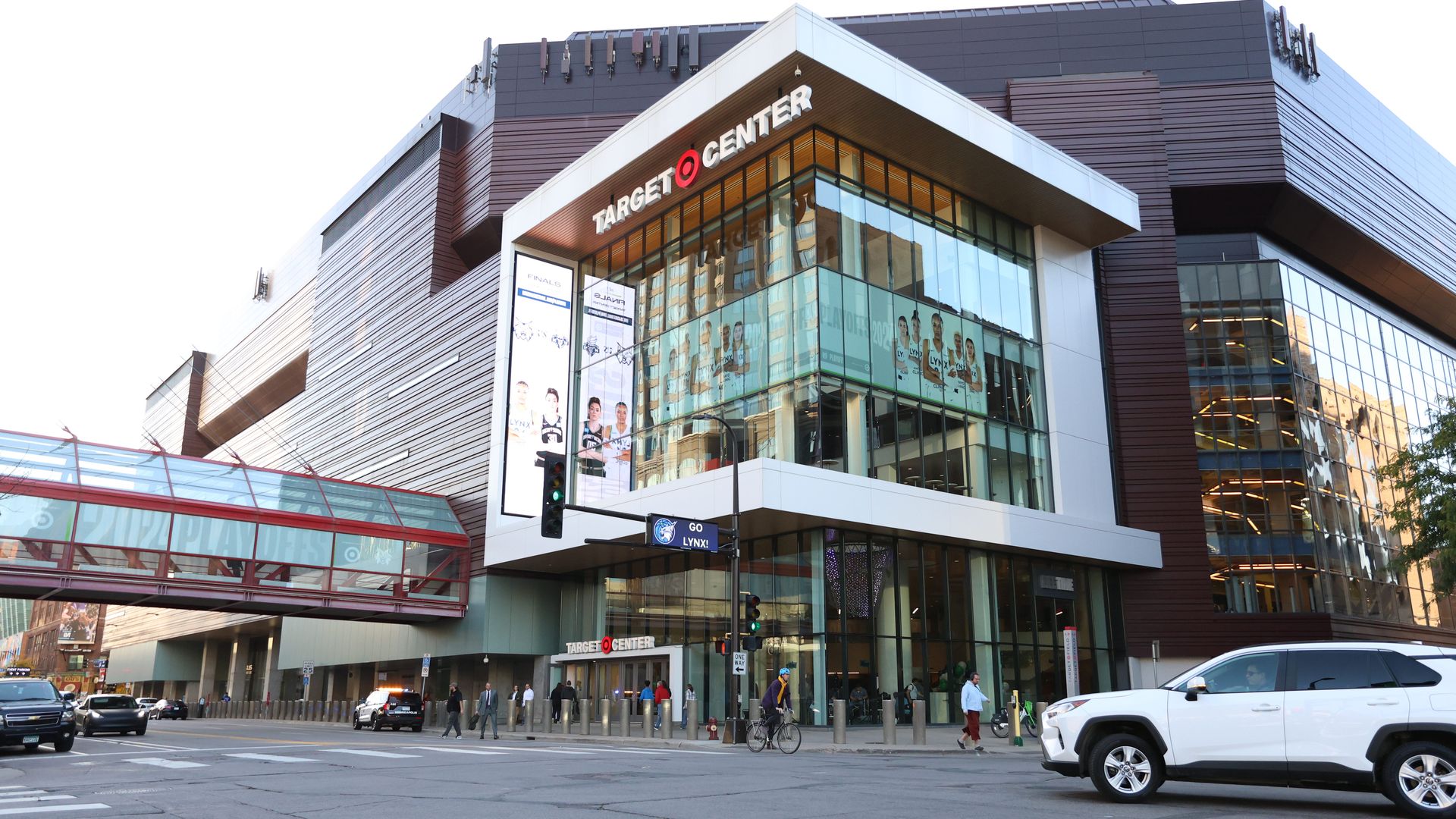
Target Center is the second oldest arena in the NBA. Photo: Choua Yang/NBAE via Getty Images
As new Wolves and Lynx owners Marc Lore and Alex Rodriguez begin their quest for a Target Center replacement, they're likely to find politicians highly skeptical of sending public money to help them build it.
Why it matters: It might not, because the two have said they're prepared to privately finance a new arena, but that doesn't mean they won't ask public officials for help in some form.
Flashback: A decade ago, Minnesota United FC wanted to build its soccer stadium near the Farmers Market, but then-Mayor Betsy Hodges opposed a request that they be exempt from paying property taxes on the building, a perk all other local teams enjoy.
- The team instead picked St. Paul.
What we're hearing: Most Minneapolis mayoral candidates told Axios they're against direct public subsidies, but some kept the door open to the property tax exemption.
What we're watching: A-Rod and Lore told the Star Tribune they're open to building outside of downtown, so Minneapolis could be faced with a competing offer from a suburb.
Reality check: Every NBA team except the L.A. Clippers plays in their city proper, and Inglewood isn't exactly the sticks.
State of play: The trend in professional sports is for owners to build an arena while also developing surrounding land with hotels, restaurants and apartments.
- "They want to create a greater destination, to give fans more reasons to come down earlier, to stay later and to come down on non-event dates," said Ted Johnson, the Wolves' former chief strategy officer who headed up a Target Center makeover in the 2010s.
- Johnson said he expects the new owners will conduct a thorough market analysis on not only the real estate potential of sites, but also where their season ticket holders live.
The intrigue: While building a Wolves/Lynx district might sound like a suburban idea, the economics of downtown real estate, where values have plummeted in the era of remote work, open more doors.
- "There's half a dozen places around Minneapolis that would make a lot of sense," said Johnson, who now runs consultancy Norden Strategies. "It might be a once-in-a-generation opportunity to buy in the core of the city."
What the mayoral candidates say
A common theme among Minneapolis mayoral candidates is that they want the Wolves and Lynx in Minneapolis, but they lack interest in spending public money to help build an arena.
Yes, but: They differ on the property tax exemption question.
Mayor Jacob Frey: "I don't support public subsidy for an arena." He didn't address whether a property tax exemption counts as a subsidy, but said: "We are ready to partner, to work together, to help find a site and to find a way to get a successful result."
Omar Fateh: He opposes both direct subsidies and property tax exemptions.
- "We cannot afford to give billionaires handouts when hardworking renters and homeowners will foot the bill, especially with looming federal budget cuts that will impact programs and investment for our most under-resourced communities at the state and local level."
Jazz Hampton: He opposes direct subsidies, listing higher priorities for schools, housing and public safety.
- Hampton said he's open to transferring the property tax exemption for Target Center to a new site, but "only if the current Target Center property brings in new property tax revenue that is at least equal to, or greater than, the property tax revenue generated by the new location."
DeWayne Davis: "I am willing to talk about a lot of things," he said. "But I just go into this with real skepticism, because I just have not seen that the city gets a good deal on these kinds of things."