Weather fans fire risk across Minnesota


Add Axios as your preferred source to
see more of our stories on Google.
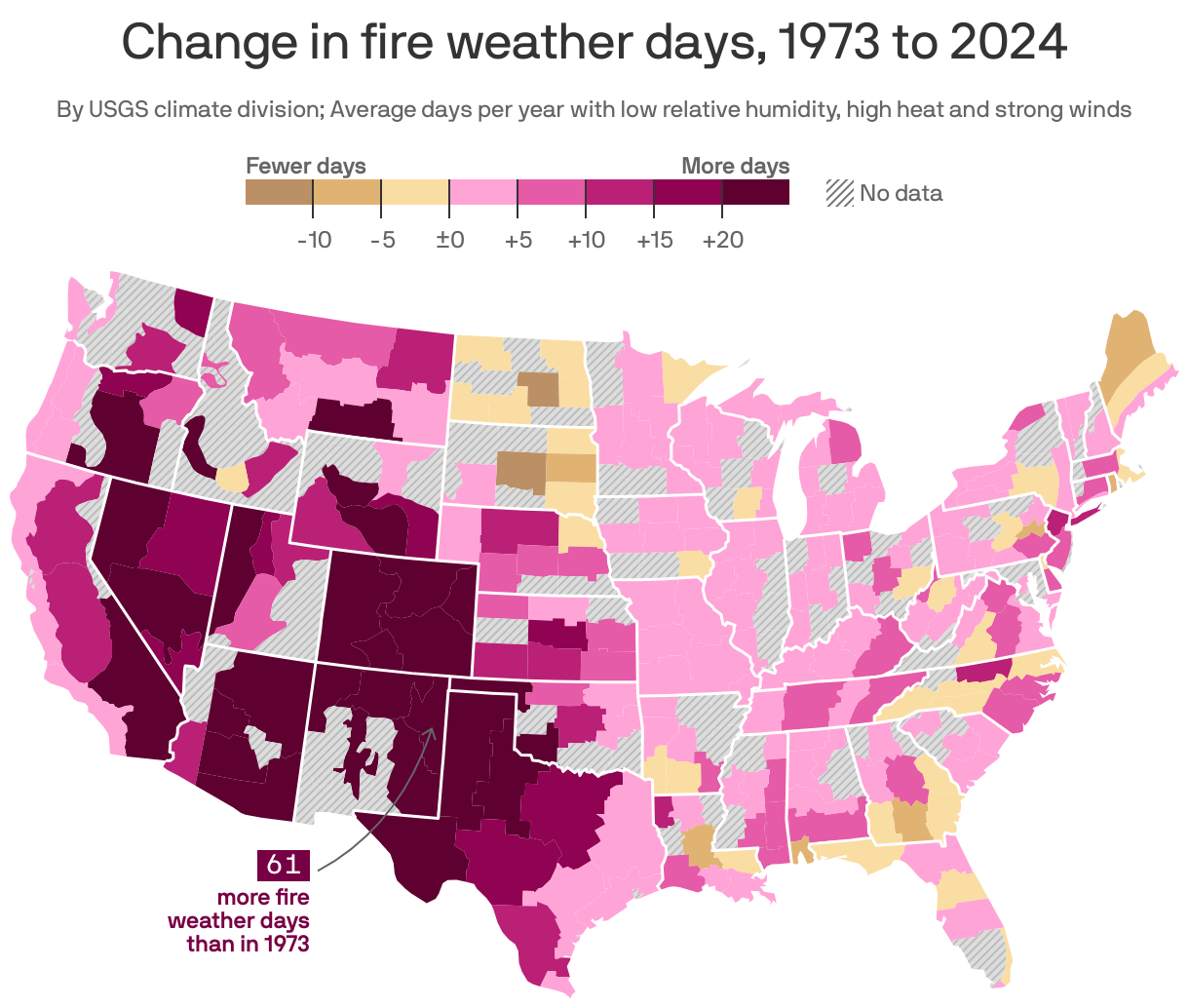
"Fire weather" is happening more often, including in parts of Minnesota, a new analysis found.
Why it matters: Hot, dry and windy conditions can cause small sparks to spread. As the recent blazes near Duluth demonstrated, the result can have devastating effects.
The big picture: It's not just Minnesota: Prime "fire days" are becoming more common across much of the U.S, amid climate change, the analysis from research group Climate Central found.
Threat level: Warm temps and drought conditions have already fueled a "very rapidly changing early wildfire season" in Minnesota this year, Department of Natural Resources commissioner Sarah Strommen told reporters earlier this month.
- Roughly 1,100 blazes had burned more than 48,000 acres this spring as of May 23.
Case in point: State officials have already issued "red flag" warnings on at least 10 days this year. Several of those coincided with those near Duluth that have burned some 30,000 acres.
By the numbers: It's not just this season. Climate Central's analysis found that much of the state has seen a slight uptick in "fire days" over the last 50 or so years.
- Central Minnesota has seen the biggest increase, with four more on average compared to 1973.
Zoom out: Other parts of the country have weathered even bigger flare-ups. The number of "fire weather" days rose by 37 in the Southwest and 21 in the West on average between 1973 and 2024.
Between the lines: In addition to damage caused by the flames themselves, wildfire smoke from Minnesota and elsewhere can contribute to poor air quality statewide.
- The Minnesota Pollution Control Agency cited the weather as a factor in its recent prediction that the state will slog through 12 to 16 days of smoky skies this summer.
What we're watching: The Climate Prediction Center forecasts above-average temperatures and below-average precipitation for the next several months, raising the threat of fire-friendly conditions, MPCA meteorologists told reporters recently.
Stunning stat: Human activities (unattended campfires, sparks from power lines, etc.) start a whopping 87% of wildfires, Climate Central says.
- "When fire risk is this high, it's important to be careful with anything that could spark a wildfire," Karen Harrison, DNR wildfire prevention specialist, warned in a recent release.
The bottom line: Even with the rain that doused the metro last week, much of the state continues to experience abnormally dry or moderate drought conditions.
- Parts of the Arrowhead, which DNR warns is at "high" risk of fires, remained "tinder dry," as of last week, meteorologist Paul Douglas noted.