Waymo needs way mo' time before Minnesota expansion

Add Axios as your preferred source to
see more of our stories on Google.
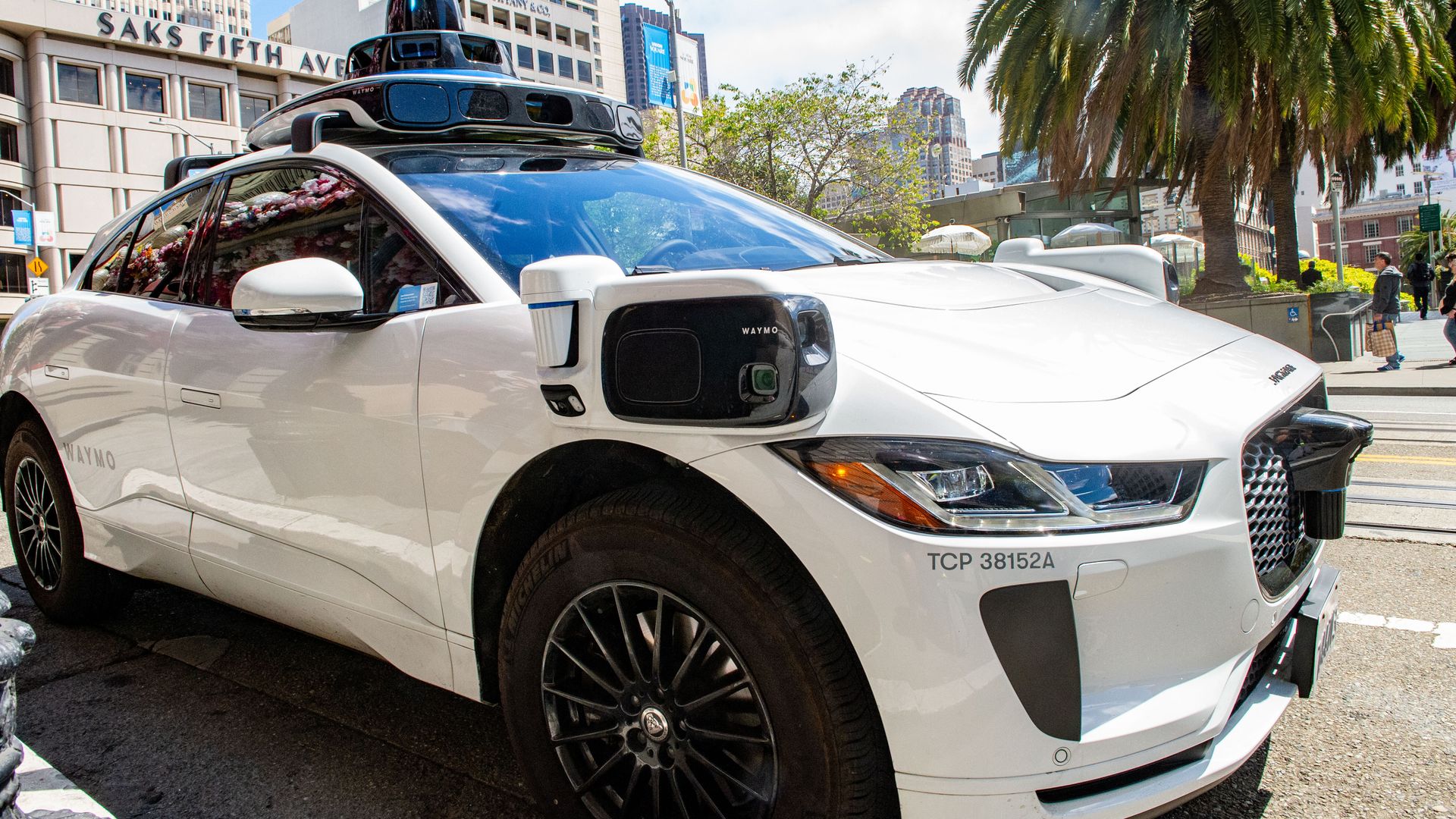
A driverless Waymo car in San Francisco. Photo: Andrej Sokolow/picture alliance via Getty Images
While robotaxi company Waymo plots an expansion from the West Coast, don't expect to see the service in the Twin Cities anytime soon.
Why it matters: A driverless taxi system would revolutionize local transportation, but major questions remain about how the technology would work on snow-covered Minnesota roads.
Friction point: Waymo uses cameras that struggle to detect lane markers when they're covered in snow, according to University of Minnesota mechanical engineering professor Rajesh Rajamani, who has been researching the topic and using the technology on a U-owned autonomous vehicle.
- Waymo also uses lidar and radar sensors, which can detect boundaries even when there's snow, Rajamani said. But those sensors require engineers to label street signs, traffic lights and buildings, which is a long and painstaking effort.
- He and other U of M researchers are testing out GPS to more easily create maps, but GPS signals can sometimes be lost, especially when there are buildings and trees above.
State of play: Waymo spokesperson Ethan Teicher said the company doesn't have plans to expand here in the near future, but that it's making "great progress" in testing the technology in upstate New York and northern Michigan, where the climate is similar to Minnesota.
- State law requires that a person be on board a driverless vehicle and be able to take over operations if necessary, MnDOT spokesperson Anne Meyer told Axios.
What we're watching: Waymo is expanding next year to Washington, D.C., which typically gets 14 inches of snow a year.
Yes, but: The Twin Cities average 54 inches a year and many roads are covered in snow and ice for months at a time, which is uncommon in most other big cities.
The bottom line: "I think we will have robotaxis, (but) it might be a little bit further down the road — maybe three years down the road ... because there is more work to be done," Rajamani told Axios.
- Go deeper: What it's like to ride in a Waymo