Capitol conflict-of-interest probe prompts ethics reform calls

Add Axios as your preferred source to
see more of our stories on Google.
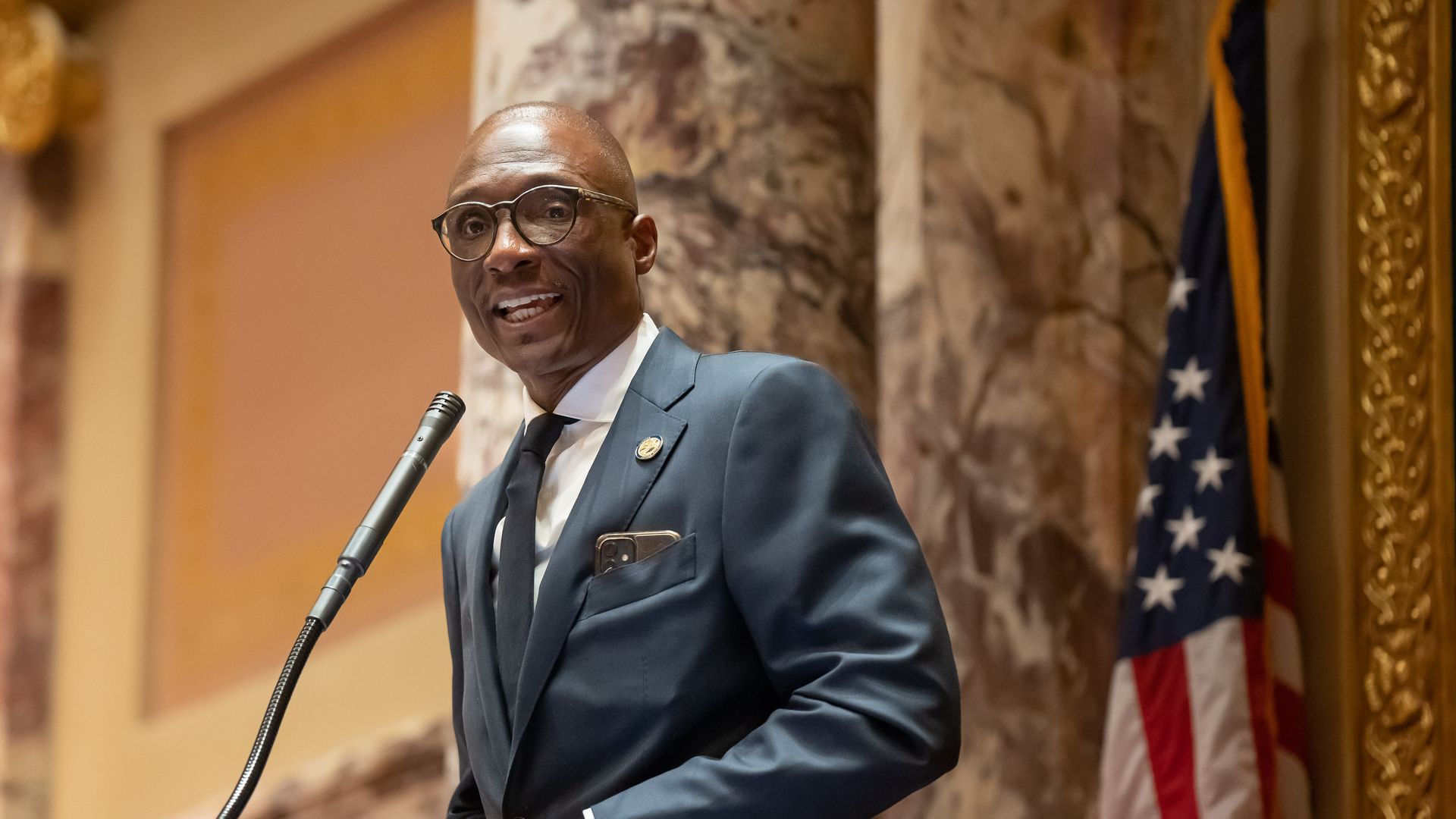
Senate President Bobby Joe Champion stepped aside as chair of the Senate ethics panel while questions over his conduct are reviewed. Photo: Glen Stubbe/Star Tribune via Getty Images
A prominent Senate Democrat's legislation directing state funding to a former legal client has sparked calls to strengthen the Legislature's conflict-of-interest rules.
Why it matters: Minnesota's state government has some of the weakest ethics and public disclosure laws in the country, experts say.
State of play: Minnesota has a part-time "Citizen Legislature" by design. That means most legislators maintain outside jobs and financial interests that could, in theory, present a conflict with the work they do under the dome.
- Senate rules and state law say lawmakers must disclose to the chamber conflicts that "substantially affect" their financial interests or "those of an associated business" if they'd benefit more than the average person in their chosen field.
More broadly, the rules prohibit behavior that "betrays the public trust" or could "bring the Senate into dishonor or disrepute."
The fine print: Potential conflicts should be reported to the body's presiding officer in writing. If the lawmaker is unable to abstain from a vote or official action related to the conflict, they're supposed to notify the Campaign Finance and Public Disclosure Board.
Yes, but: Annual financial disclosure reports, filed with the campaign board, don't include information about clients or income sources beyond an employer's name.
- Plus: Unlike some other states, Minnesota lacks an independent ethics commission with ample oversight resources and significant enforcement power, David Schultz, an ethics expert and professor at Hamline University, told Axios.
The result: Potential conflicts, whether real or perceived, are largely self-reported — and self-policed — with no way for colleagues or the public to determine independently whether a lawmaker stands to gain from a bill or vote.
- "We think we're really clean, efficient, no conflict-of-interest government, when in fact we've got enormous problems," Schultz said. "The Legislature and the legislators are in denial."
Zoom in: Senate President Bobby Joe Champion (DFL-Minneapolis) is facing scrutiny for carrying bills directing millions of dollars to a nonprofit run by a man he represented in court cases as recently as 2022, without disclosing their professional relationship at the Capitol.
- Champion, who says the work was pro bono and denies that he had a conflict of interest in authoring the legislation, has asked the Senate's ethics panel to issue an advisory opinion on the matter.
Friction point: Schultz said the current rules fail to account for situations like Champion's, where a lawmaker's action "doesn't violate the law" but still constitutes a "clear conflict of interest" from an ethical standpoint.
- He wants to see "clearly defined rules" barring lawmakers from authoring legislation that would benefit those they've done business with in recent years.
Zoom out: This is far from the first time the Legislature has grappled with conflict-of-interest concerns related to a lawmaker's outside employment.
- In recent years, legislators have faced questions about their paid work for employers ranging from Planned Parenthood to St. Paul Mayor Melvin Carter.
- In 2021, the Legislature banned members from working for lobbying and governmental affairs groups after a former GOP leader accepted a job with a Washington-based firm.
What we're hearing: Senate Leader Erin Murphy (DFL-St. Paul) told reporters last week that the Senate may need to look at the "gray area" between "what we understand our [conflict-of-interest] rules to be... and what Minnesotans think could fall into the bucket."
- "It is important that Minnesotans have faith in our work and we need to have a solid foundation underneath us," she said.
Senate GOP Leader Mark Johnson, meanwhile, called for a "robust conversation" around when lawmakers should proactively raise potential conflicts.
- "If it even looks like or might be a conflict, then you should be disclosing that," the East Grand Forks Republican said.
The catch: Requiring attorneys and others to publicly list clients may not be plausible, since it could violate confidentiality agreements and professional code-of-conflict standards, Johnson noted.
Between the lines: Schultz also supports giving more power to the Campaign Finance and Public Disclosure Board.
What's next: Senate Republicans filed an ethics complaint against Champion last week, starting a 30-day clock for a hearing on the matter.
- Any real look at the rules, meanwhile, will likely have to wait until after the session is done, Murphy said.