St. Paul averts trash pickup crisis, for now

Add Axios as your preferred source to
see more of our stories on Google.
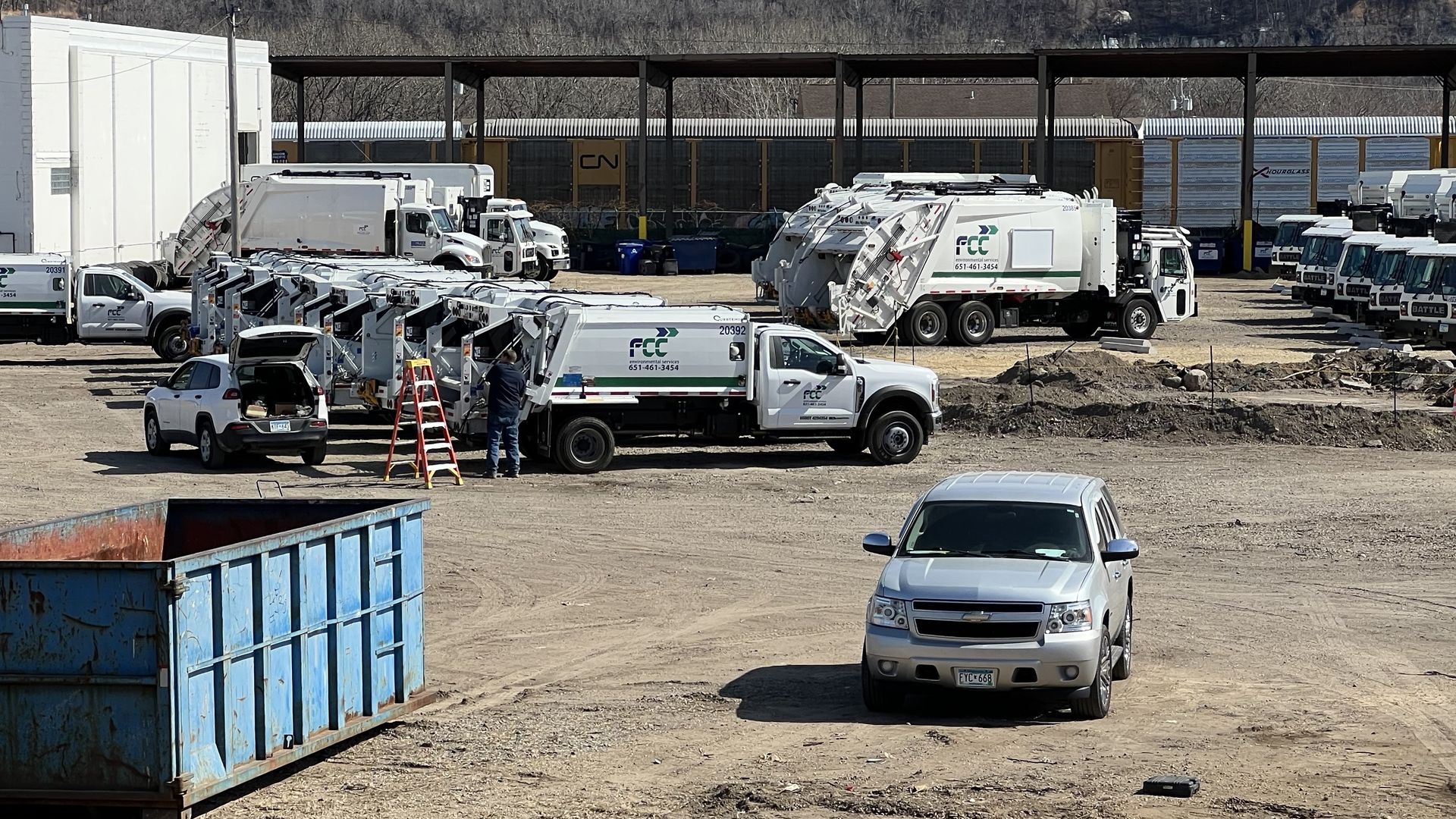
FCC Environmental collection trucks parked in a lot off West Seventh Street in St. Paul. Photo: Kyle Stokes/Axios
Trash pickup in St. Paul will continue Tuesday after Mayor Melvin Carter declared a three-day state of emergency that he said would allow the city's new garbage hauler to begin service as scheduled.
Why it matters: For now, the move averts a lapse in garbage collection that Carter warned would have escalated into "a public health crisis."
- The garbage impasse was also the latest strain in an increasingly frayed relationship between some City Council members and Carter, who still disagree on matters as basic as what budget they approved at the end of last year.
Catch up quick: The dispute centered on whether the city's new garbage hauler, FCC Environmental, can use a lot it purchased off West Seventh Street to maintain and fuel its roughly 30-truck fleet.
- The City Council voted 5-0 on March 19 to uphold an appeal from the local neighborhood group, the Fort Road Federation, blocking FCC from expanding on the lot.
State of play: Carter's emergency declaration temporarily overrules the council, suspending zoning regulations to allow FCC to begin using the site for garbage collection.
- The mayor is asking the council to vote Wednesday to extend the emergency.
- Appearing with Carter, Council Members Anika Bowie and Cheniqua Johnson told reporters on Monday they were prepared to support that emergency declaration.
What they're saying: The West Seventh neighbors have fair concerns, but "what's even more dire and more important is that people have their trash collected," Bowie said. "We have to be practical and reasonable."
- Council President Rebecca Noecker told Axios she will also support the emergency declaration, which she expects to last 90 days.
Yes, but: Noecker still opposes FCC using the West Seventh site as a permanent base of operations, and hopes the company will use the emergency period to search for a new site.
What we're watching: If the council does not extend that emergency, the city would continue to provide trash pickup as state law requires, Public Works Director Sean Kershaw told reporters Monday.
- Angie Wiese, St. Paul's safety and inspections director, said the city would not answer "crystal ball" questions about how pickup would continue.
The big picture: The council's vote threw a last-minute snag into a plan, years in the making, to centrally organize St. Paul's garbage collection, with a single hauler handling most of the work.
- It's the result of years of electoral and legal fights that grew bitter and are still remembered as "the garbage wars."
Friction point: The disputed property is currently zoned for light industry, but neighbors contend the city's own long-range plans "describe a specific vision for multi-family housing, transit-oriented development, and greenspace connections" on the site, Fort Road Federation president Meg Duhr told Axios in an email last week.
Weighing the appeal, Noecker sided with the neighbors, who argued FCC's yard would generate more traffic from heavier trucks than its zoning implies.
- In a March 20 letter, Carter warned that the council had overstepped, saying they were bound by legal precedents allowing FCC to use the site.
Zoom in: Because the site currently lacks fueling infrastructure, the company had planned to continue fueling its trucks at a Kwik Trip in South St. Paul on a temporary basis — but the company was still banking on using the lot as a place to keep its trucks.
- "The reason we are in this state is because of FCC's lack of planning, not due to any of the action that the council or the city took," Noecker said.
- Kershaw disagreed: "FCC has been a great partner," he told reporters Monday.
What we're watching: On April 10, city staff will ask St. Paul's Zoning Committee to approve FCC's plans for permanent infrastructure at the site.
- The neighbors are concerned FCC or city officials will use the emergency period to "find under-the-table workarounds within City Hall," Duhr told Axios on Monday.
Editor's note: This story was updated with new comments from Noecker and Duhr.