Minneapolis' 1st speed cameras could begin ticketing drivers this summer

Add Axios as your preferred source to
see more of our stories on Google.
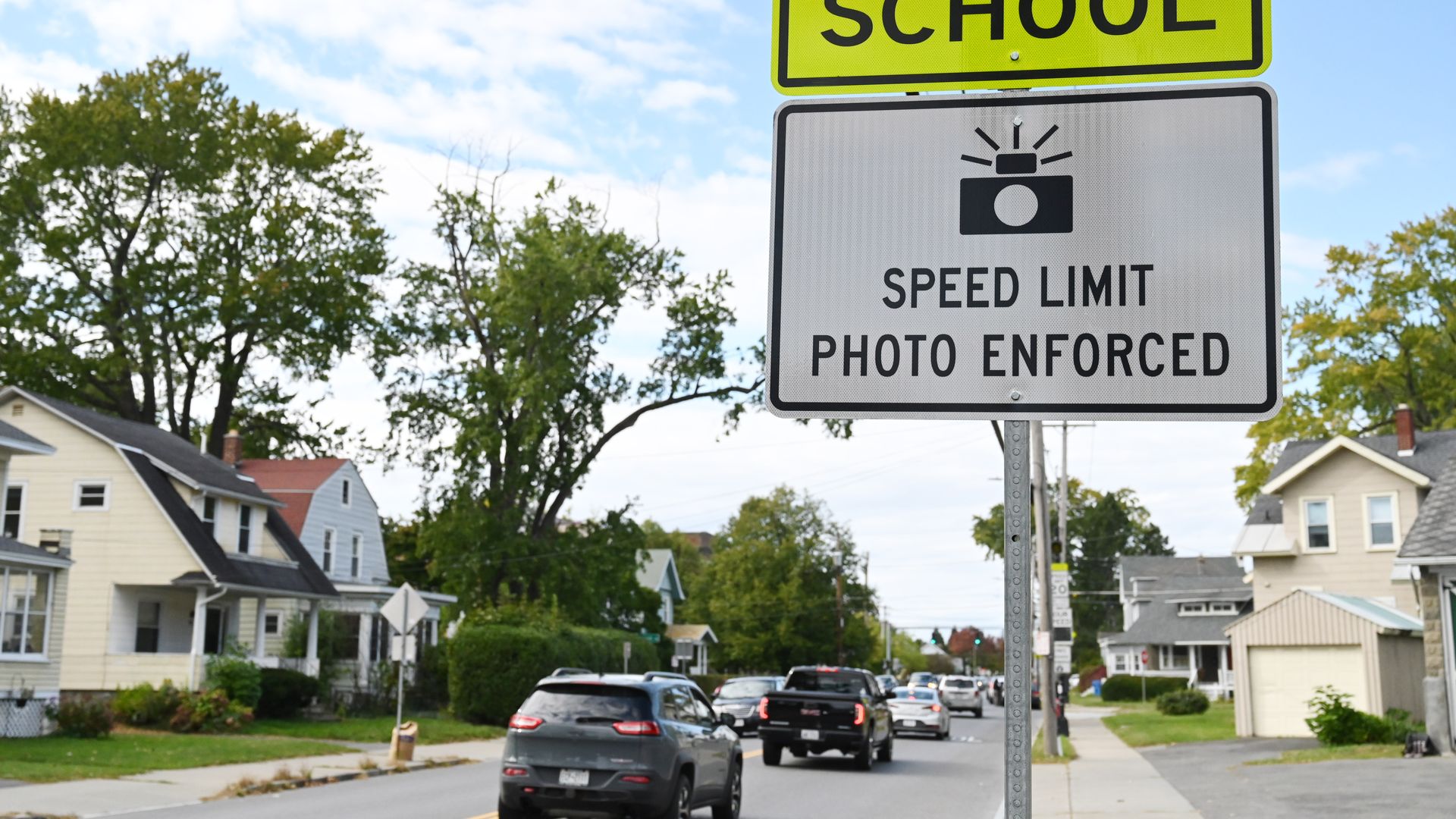
Signs alerting drivers to speed cameras in Albany, N.Y. Photo: Will Waldron/Albany Times Union via Getty Images
Lead-foot motorists, take note: Speed enforcement cameras are coming to Minneapolis as soon as Aug. 1.
Why it matters: Roughly 80% of Minneapolis' traffic fatalities involve speeding drivers.
- City officials said electronic eyes are an effective tool for slowing drivers down.
How it works: The system will nab vehicles going at least 10 mph over the speed limit, Ethan Fawley, who coordinates the city's Vision Zero traffic and pedestrian safety efforts, told Axios.
- The first citation will be a warning, and subsequent fines will be $40 for the first offense, or $80 for going at least 20 mph over the limit.
- The city will issue citations via mail to the vehicle's owner, who can appeal if their ride was stolen or they weren't driving at the time.
- The fines won't go on drivers' permanent records.
What's next: Though state law authorizes up to 42 cameras in Minneapolis starting Aug. 1, Fawley didn't give an exact date when they'd go live.
- State law also allows the city to use those cameras for red light enforcement.
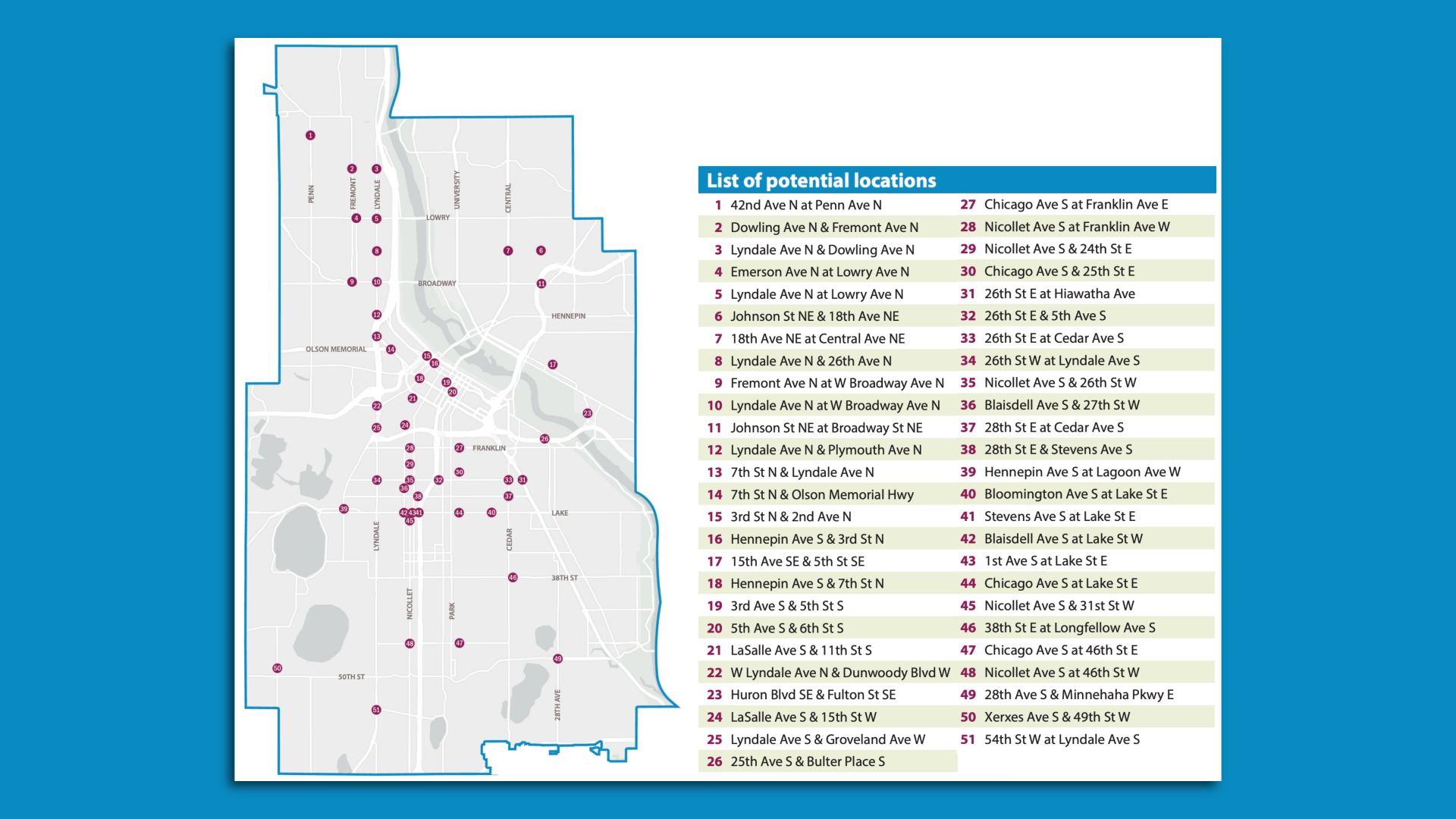
State of play: Residents can weigh in on where the first five cameras should be placed during two open houses this week — one at Central Library from 4-6pm on Tuesday, and a virtual session at 6pm Thursday.
- The city has unveiled 51 possible locations, all of them hotspots for crashes and injuries.
What they're saying: The cameras are one element of a plan to "reset our norms" around "crazy speeds" on city streets, Fawley said.
- He added the cameras will not be "set up as a 'gotcha' that's going to be overly punitive."
The big picture: Choosing locations for these cameras raises "complex" equity questions, Fawley said.
- Many problem intersections are located in low-income neighborhoods, which could lead to fines against residents with the least ability to pay.
Context: Minneapolis briefly attempted to field a "photo cop" red light camera program two decades ago, but the Minnesota Supreme Court struck it down in 2007.
- The court stopped short of calling it unconstitutional, but ruled the city lacked the necessary authority under state law at the time.
Friction point: The new effort has raised eyebrows among privacy advocates, who note license plate reading systems have been used for surveillance, including by federal immigration agents.
- Fawley said Minneapolis' system will be "very different" from automated systems, which can record every passing car. The city will only record license plate data of violators.
- State law only allows the cameras to capture the car, not identifiable images of the driver.
By the numbers: The city expects the effort to cost $2.9 million over the next two years.