Jan 28, 2025 - News
Air quality in the Twin Cities is getting worse

Add Axios as your preferred source to
see more of our stories on Google.
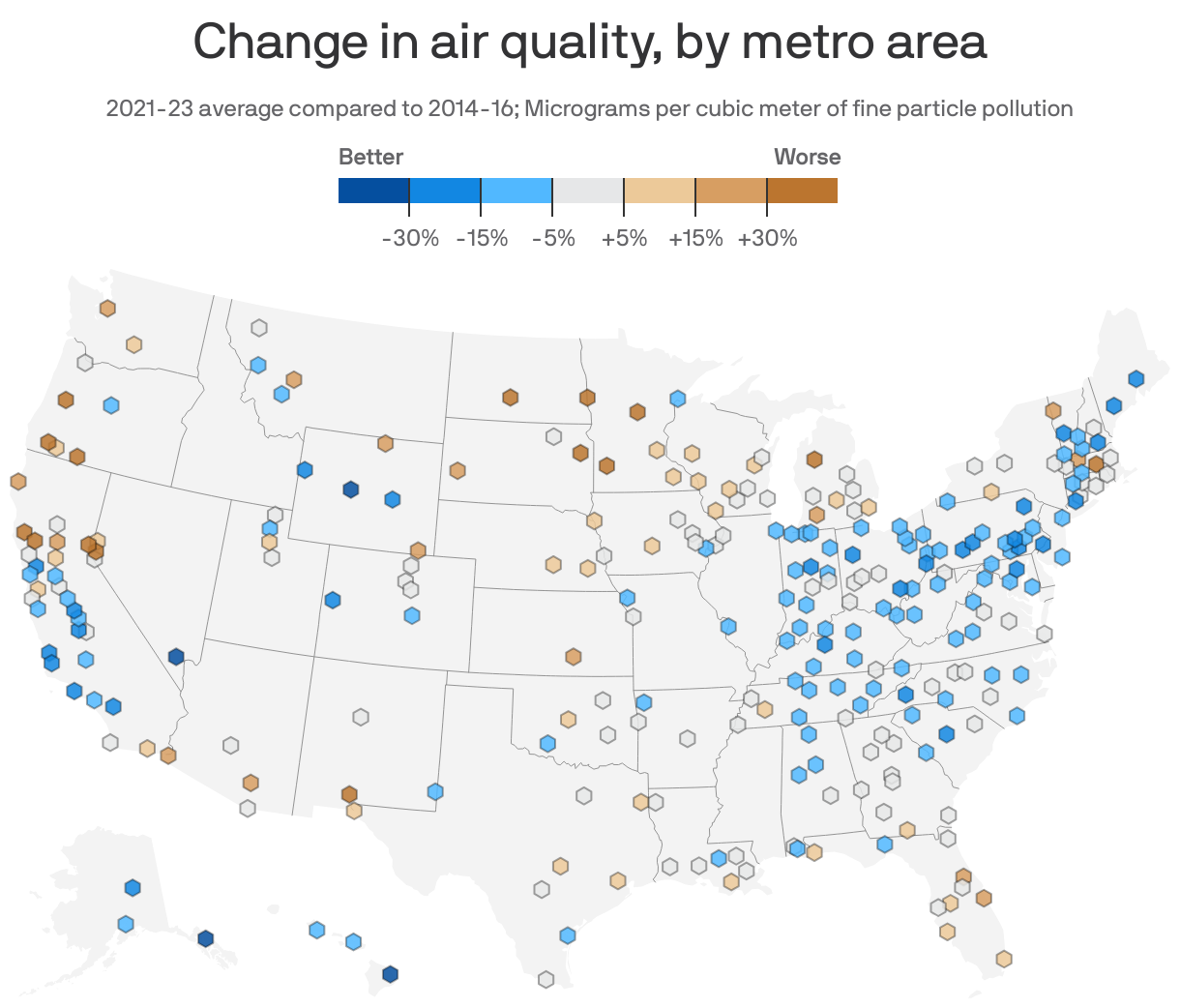
Air quality in the Twin Cities is getting worse, according to year-over-year data.
Why it matters: Long-term exposure to poor air quality is harmful to your health.
By the numbers: The average percentage of fine particle pollution in the Twin Cities increased 12.3% from 2021-23, compared to 2014-16.
- In both periods, the metro's fine particle levels ranked in the middle of the pack for U.S. cities.
The big picture: Tracking fine particulate matter (PM2.5) is a helpful indicator, but it doesn't account for all variables in overall air quality — so pollution can be worse than it appears on your weather app.
- Overall, the American Lung Association gives the Twin Cities a "passing" grade for annual particle pollution levels, but a "C" for high ozone days.