Cities tighten belts amid property tax sticker shock

Add Axios as your preferred source to
see more of our stories on Google.
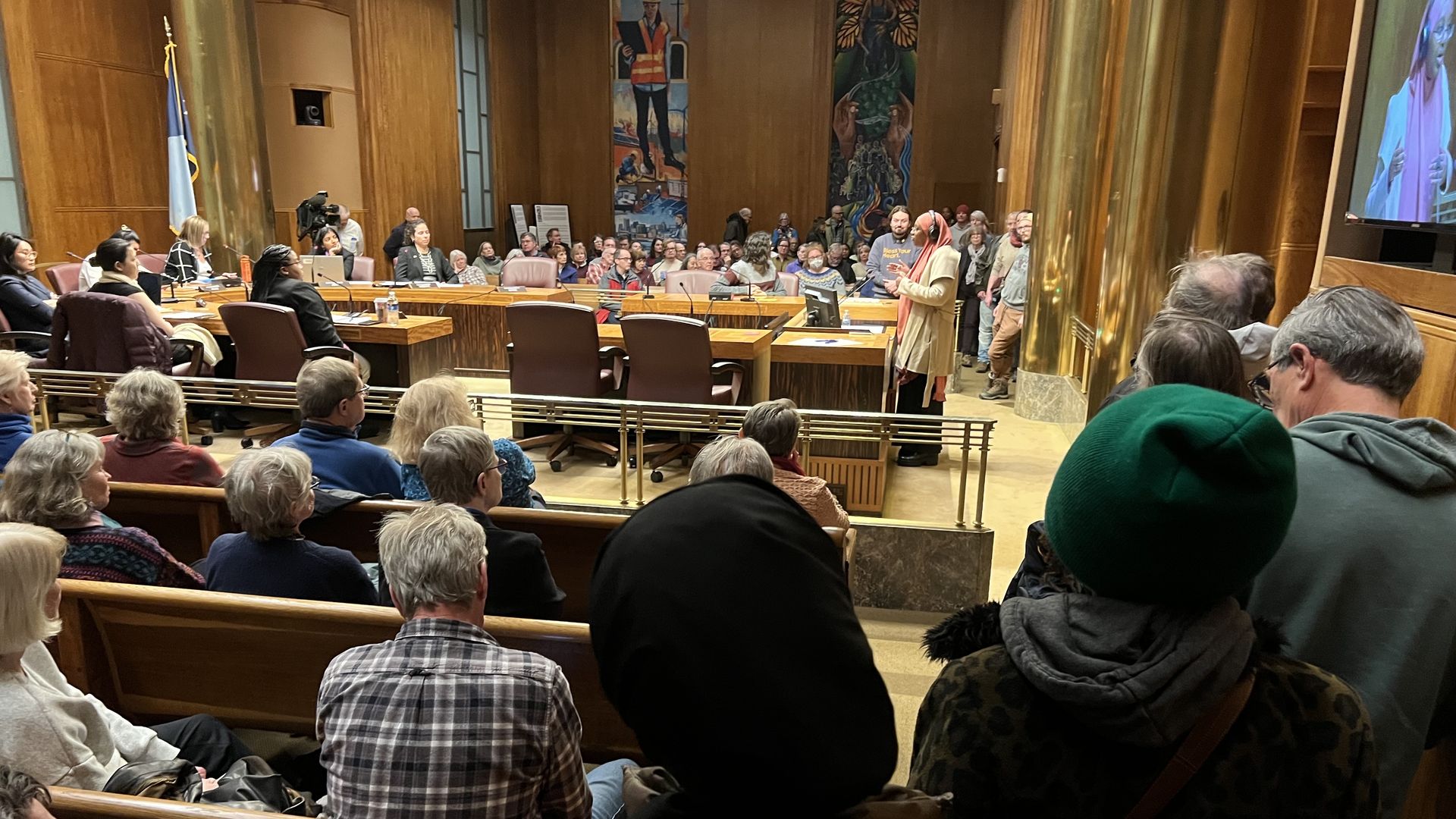
Property owners packed a recent St. Paul City Council hearing on the proposed city budget. Photo: Kyle Stokes/Axios
With year-end budget deadlines looming, some elected officials in Minneapolis and St. Paul are pushing to limit this year's property tax levy increases.
Why it matters: Across the Twin Cities, tax bills are giving many homeowners sticker shock.
- The adjustment to slowing development and a declining office market both spell more pain for residential property owners.
The big picture: Many cities, counties and school districts are navigating these pressures. Anoka County recently hiked its levy by nearly 17%. Dakota County could raise its levy by as much as 9.9%, according to the Pioneer Press.
What they're saying: "We are the valve for all of the frustration that everyone is feeling: the national mood, the economy, inflation … I understand the stress people are under," St. Paul City Council President Mitra Jalali told Axios, referring to a recent public hearing on the budget.
In Minneapolis, the city council voted Friday on a series of amendments that reduce a proposed levy increase from 8.3% — which would've been the city's largest in more than a decade — to roughly 6.9%.
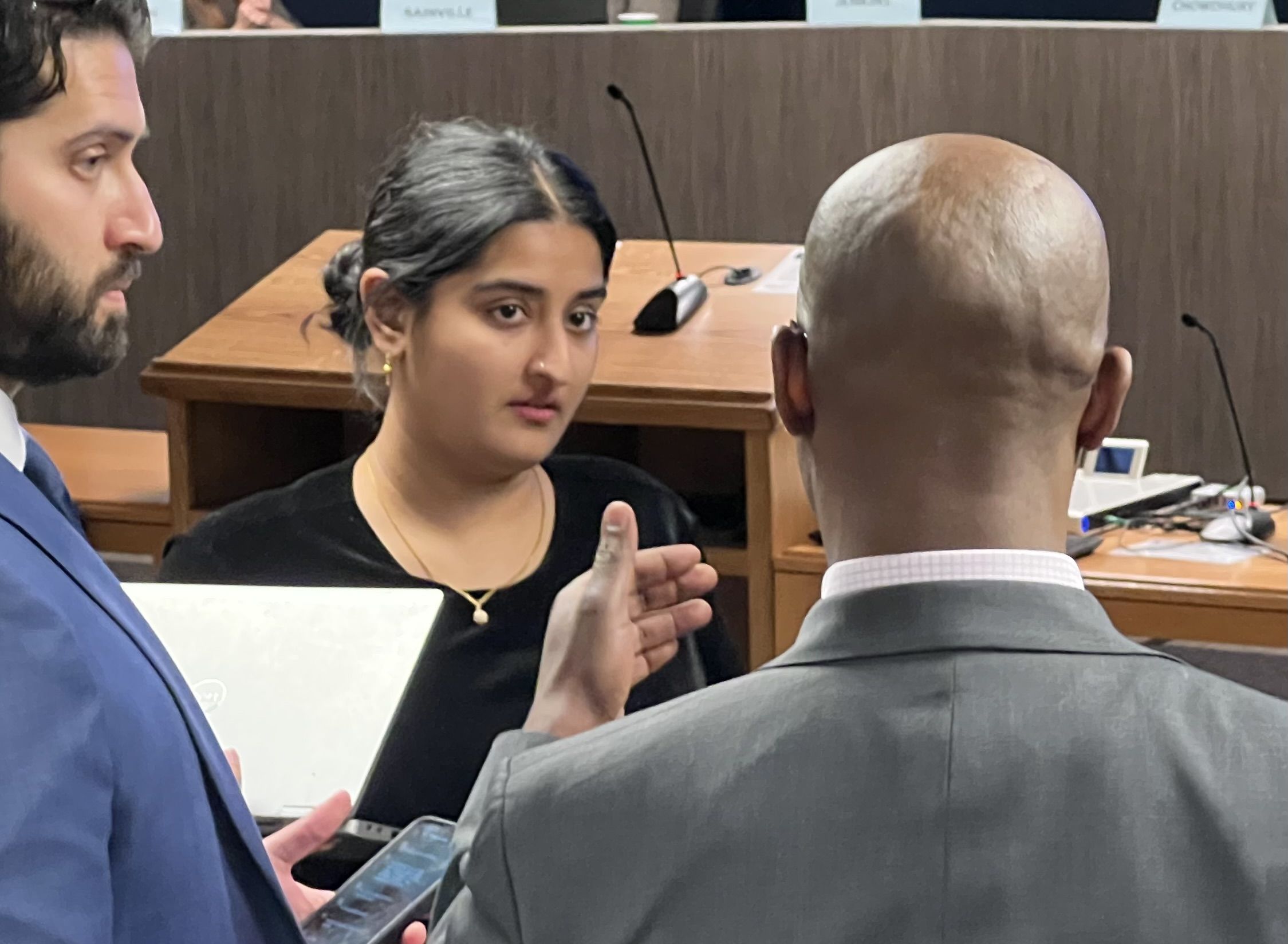
State of play: Mayor Jacob Frey told council members he would support bringing the increase down further, to 6.2%.
- Council members voted down the mayor's proposal, which relied on a modest across-the-board cut to 24 city departments. Council Vice President Aisha Chughtai said it would've also eliminated funding for projects council members wanted.
- Instead, the council voted 7-5 to deny cost-of-living raises to around 160 top employees in Frey's administration, reasoning that they were among the city's highest-paid employees.
In St. Paul, many city council members have pushed back on Mayor Melvin Carter's proposal for a 7.9% levy hike, which he later reduced to 7.2%.
- Last month, the council countered with a 5.7% increase, proposing to close vacant positions and trim some departments' budgets.
The latest: "The Mayor and the Council are making progress," Carter spokesperson Jennifer Lor told Axios in a statement. The final vote is Dec. 11 and Lor said "We don't expect a standstill" before then.
- Jalali also said she's "optimistic" and that tensions between the mayor and council have eased in recent days.
Friction point: With city employee salaries rising and inflation driving up costs, critics have argued limiting levy increases would lead to only modest savings for homeowners in exchange for harsh cuts or limits to services.
- Carter criticized the council's proposed cut of $2.3 million from the police overtime budget, which he said was the equivalent of 16 full-time positions. The mayor said it could also jeopardize a new approach to snow emergencies and reduce hours at park rec centers — all to save the median homeowner just $45 per year.
- In Minneapolis, council members voted 9-3 to delay replacement of a key software system despite concerns the program is outdated.
Between the lines: Some of these levy reductions are part of the normal push-and-pull of city budget-writing.
- Local governments vote early in the year to set a "maximum" possible levy, but can — and often do — trim their budgets to avoid charging up to the levy limit.
Editor's note: This story has been updated with new details from Carter clarifying his view of the implications of the council's budget cut