Why Minneapolis workers support a labor standards board — and why businesses oppose it

Add Axios as your preferred source to
see more of our stories on Google.
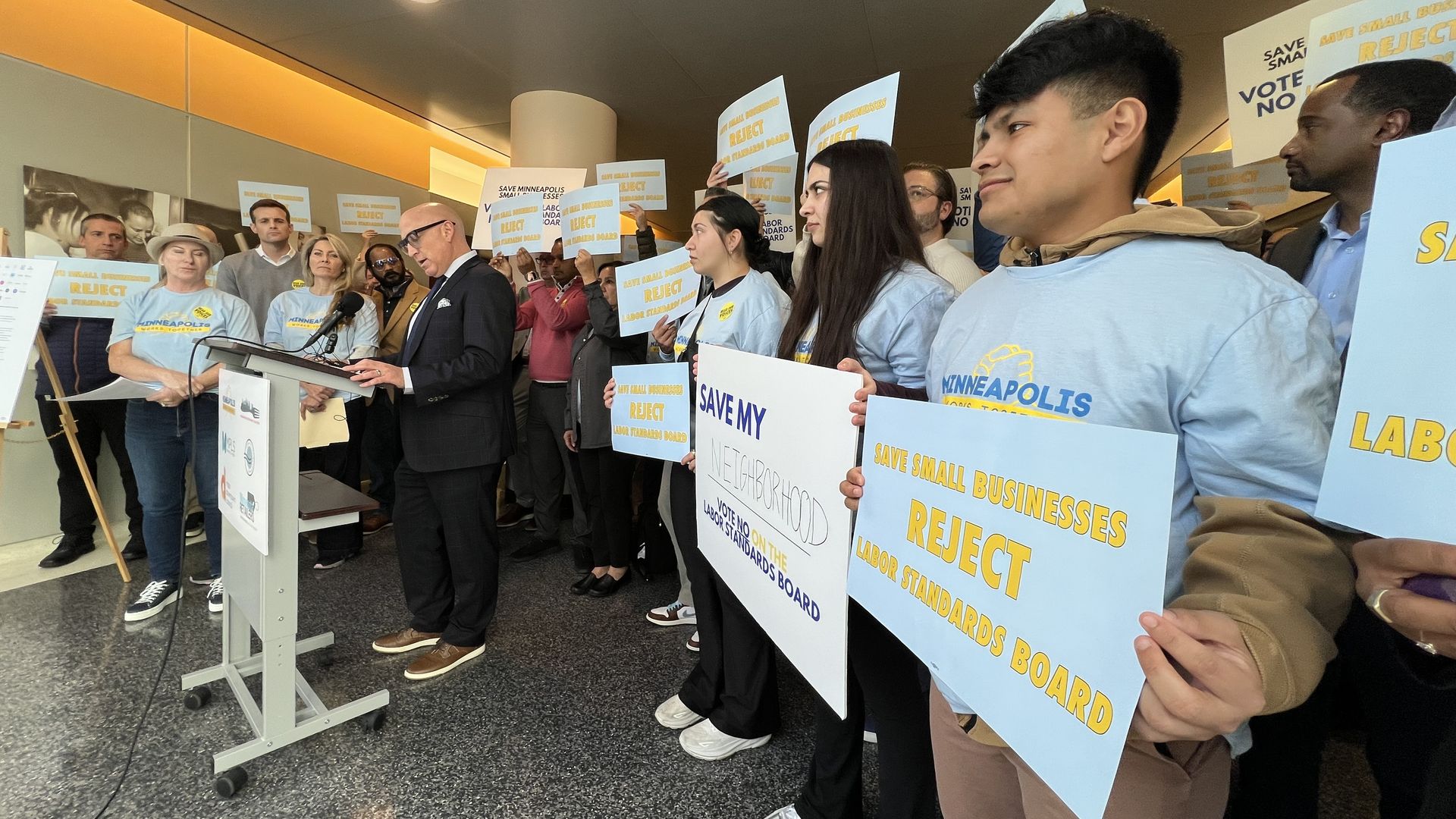
Opponents of Minneapolis' proposed labor standards board hold a press conference outside the city council's offices. Photo: Kyle Stokes/Axios
Labor union allies believe they'll score a big win for the city's most vulnerable workers on Thursday when the Minneapolis City Council votes on creating a labor standards board.
The big picture: The proposal has sparked backlash from Minneapolis' most influential industry groups, who say the board foreshadows a wave of new regulatory burdens on the city's businesses.
How it works: If created, the city would empower a board of 15 appointees — five employers, five employees, and five "community stakeholders" — to advise the council on labor regulations.
- The board could suggest new rules for wages and working conditions in up to two specific industries every year.
Zoom in: Council members have pointed to condo workers as a group that could benefit from a labor standards board.
- Front desk worker Lev Roth told Axios that many of their colleagues in other condos face the same challenges, including "terrible" benefits and a lack of security training.
- Roth said citywide regulations would be the most effective way to solve these problems. Addressing them by unionizing workers across multiple buildings and companies has proved challenging.
Zoom out: To advance a new regulation, the labor standards board would need the votes of at least one employee, one employer and one community stakeholder.
- Supporters say that requirement will help the board make a workable policy without steamrolling one group.
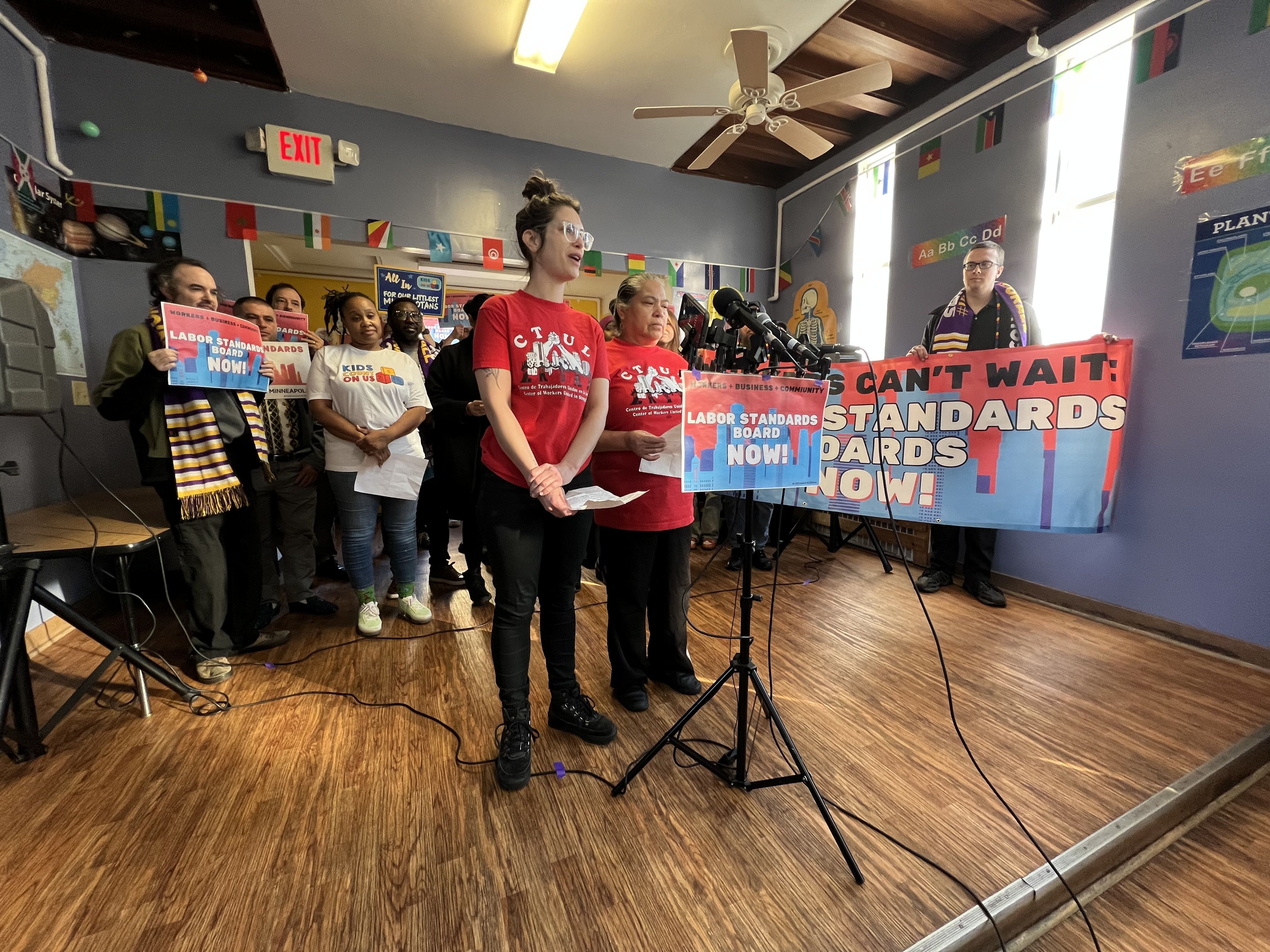
- "The whole purpose is to engage with all of the stakeholders" to make workable policies, SEIU Minnesota executive director Brian Elliott told Axios.
The other side: Minneapolis Downtown Council CEO Adam Duininck told Axios that industry groups don't believe the board will require consensus.
- Minnesota Retailers Association president Bruce Nustad told Axios that business groups expect to be out-voted 2-to-1 by labor and community stakeholder representatives. "That's still not a true partnership," he said.
- Another illustration of the board's potential impact: Duininck worries that if a union fails to win a concession in contract negotiations, it will appeal to the labor standards board for help — getting "a second bite at the apple."
The intrigue: Though the board wouldn't have lawmaking powers, industry groups fear its recommendations could become too politically influential for the council to ignore.
- That motivated four business advocacy groups — the Minneapolis Regional Chamber, Hospitality Minnesota, the Retailers Association, and the Downtown Council — to announce last week that if the council creates the board, their members will not serve as appointees.
- "We don't want to give tacit approval to something we see as illegitimate," the chamber's interim president Mike Logan told Axios.
Yes, but: Elliott called that response "short-sighted," noting that the union can still lobby city leaders directly.
- The city council is stacked with labor allies.
What we're watching: Mayor Jacob Frey has supported the concept but also called for changes requiring a supermajority vote and an even split between business and labor appointees.