How the I-35W collapse spurred Minnesota to get serious about bridge safety


Add Axios as your preferred source to
see more of our stories on Google.
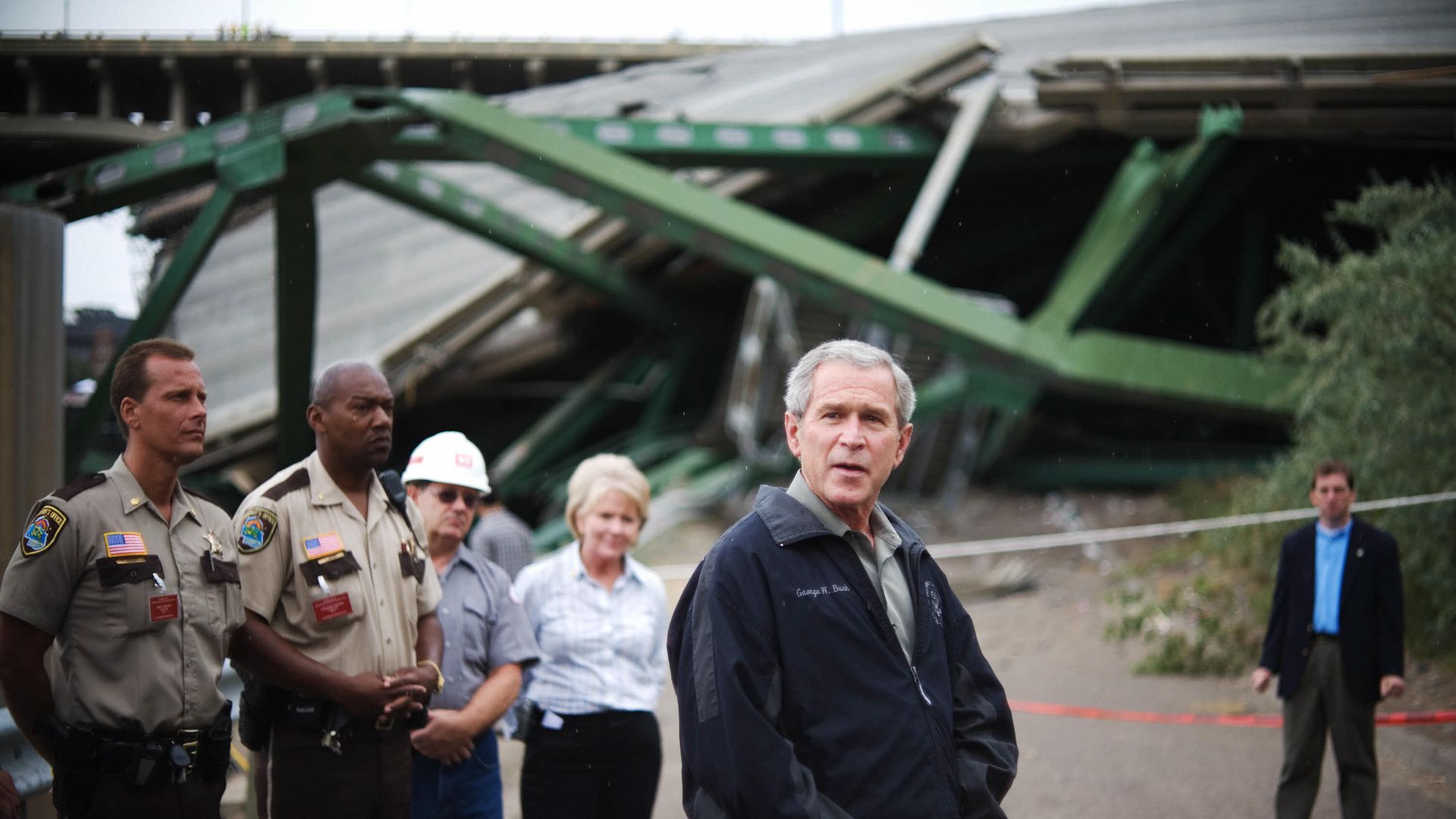
President George W. Bush with the collapsed I-35W bridge in August 2007. Photo: Mandel Ngan/AFP via Getty Images
Minnesota's count of 582 bridges with serious safety or design defects is fewer than most other states, in part because of aggressive investments after the I-35W bridge collapse in 2007.
The big picture: While Baltimore's recent bridge collapse was due to an unlikely accident, the incident has put renewed focus on the vulnerability of bridges across the U.S.
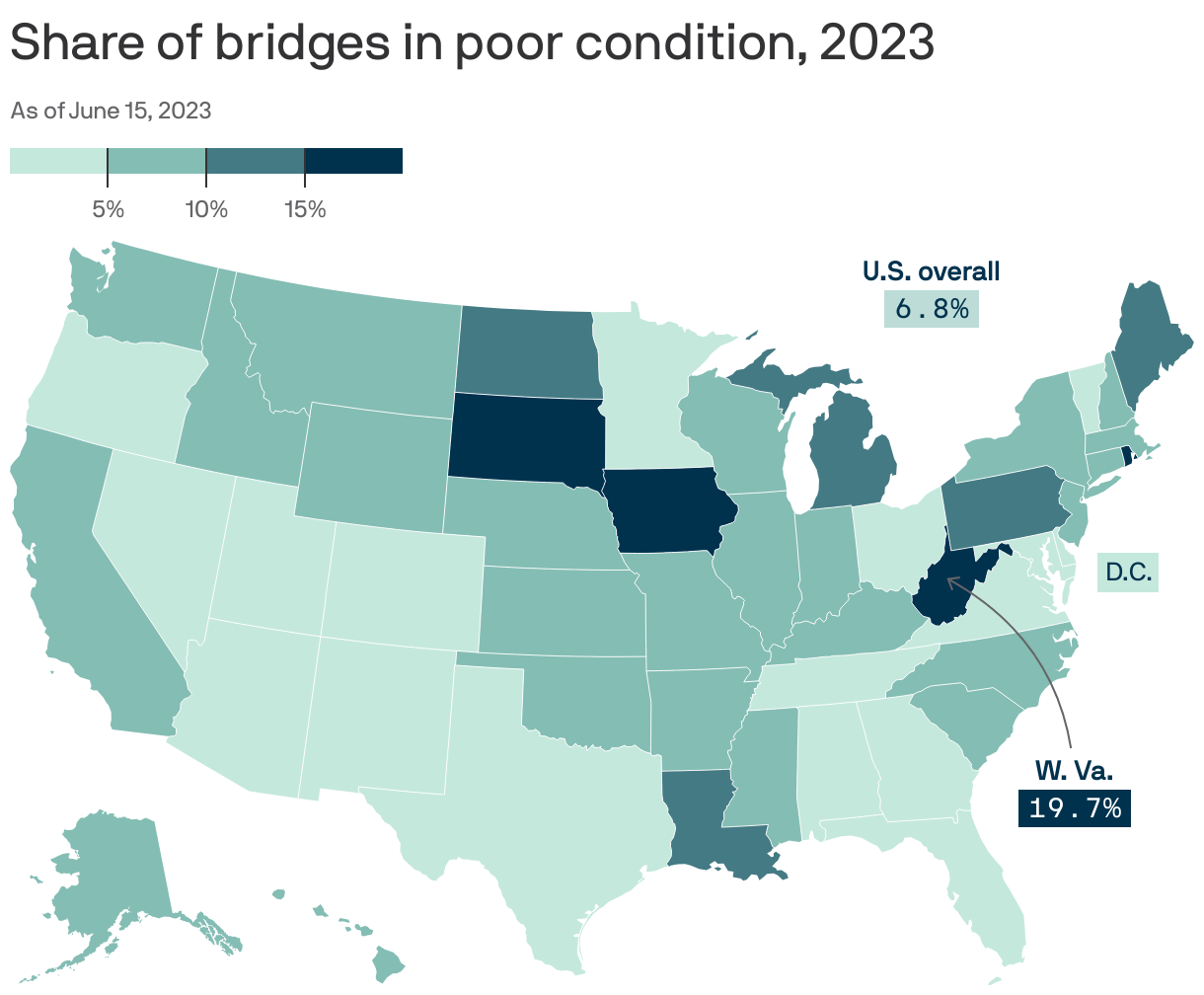
By the numbers: The U.S. Department of Transportation considers 4.3% of Minnesota's 13,000-plus bridges to be in "poor" condition.
- Nationwide, 6.8% of bridges are in poor shape. West Virginia has the highest rate at nearly 20% of its bridges.
Catch up quick: In 2007, Minnesota became the poster child for the nation's crumbling infrastructure when the 35W bridge crumpled into the Mississippi River at rush hour killing 13 people and injuring 145 more.
- In response, state lawmakers enacted the first gas tax hike since 1988, helping fund a 10-year, $2.5 billion program to rebuild or rehab 172 problematic bridges.
- More roads were repaired, too. In 2007, Minnesota's pavement condition ranked closer to the U.S. average. By 2020, the state ranked in the top five.
Between the lines: "It was a huge deal … There was a huge backlog of work which needed to be done," said Adeel Lari, a former MnDOT official and transportation finance researcher at the University of Minnesota's Humphrey School of Public Affairs.
- In the mid-'90s, Lari recalled the state so desperate for transportation revenue that MnDOT even attempted to build Highway 212 in the southwest metro as a toll road.
- In the years before the tragedy, state highway funding had been declining. The new money from the tax hike reversed that trend.
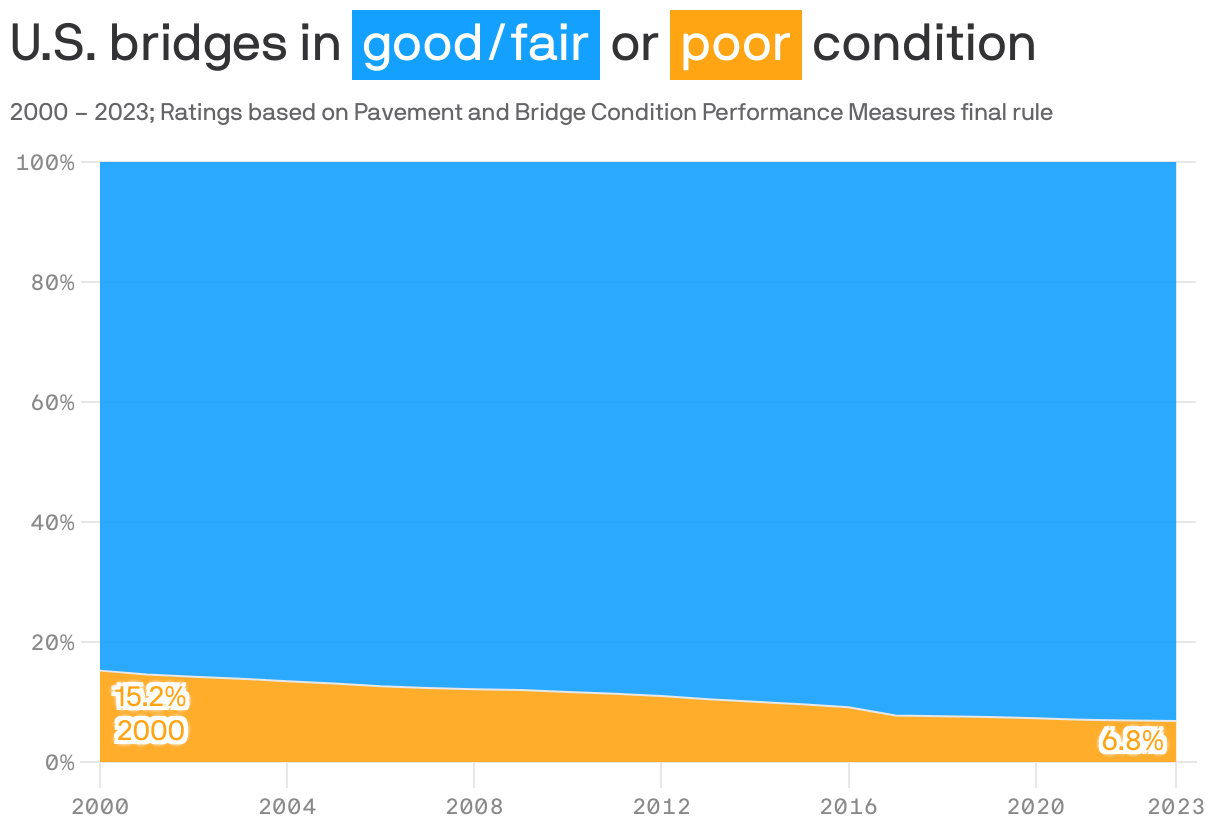
Zoom out: Federal data also shows a positive trend nationwide.
- The percentage of bridges in poor condition has been halved from 15.2% in 2000 to 6.8% currently.
Yes, but: While Minnesota has fewer bridges in "poor" condition, more bridges' ratings are slipping from "good" to "fair." The percentage of bridges receiving middling scores rose to 38% last year — up from 33% in 2018.
- The increase shows the challenge of keeping up with maintenance and modernization as bridges age.
What to watch: At the federal level, the bipartisan infrastructure law sets aside $40 billion to repair and rebuild the nation's bridges but that investment will take years to go from ink to concrete.
- Lari noted that DFL lawmakers also recently enacted a 0.75% sales tax increase in the Twin Cities metro area that will fund public transportation.
Bottom line: Lari is "confident" in the safety of Minnesota bridges. MnDOT "does more inspections now than we used to do before," and is aggressive about closing or limiting weight on an at-risk bridge.
Go deeper: Biden wants federal funds to rebuild Baltimore bridge