How cottage food laws shape Minnesota's small-batch hot sauce scene

Add Axios as your preferred source to
see more of our stories on Google.
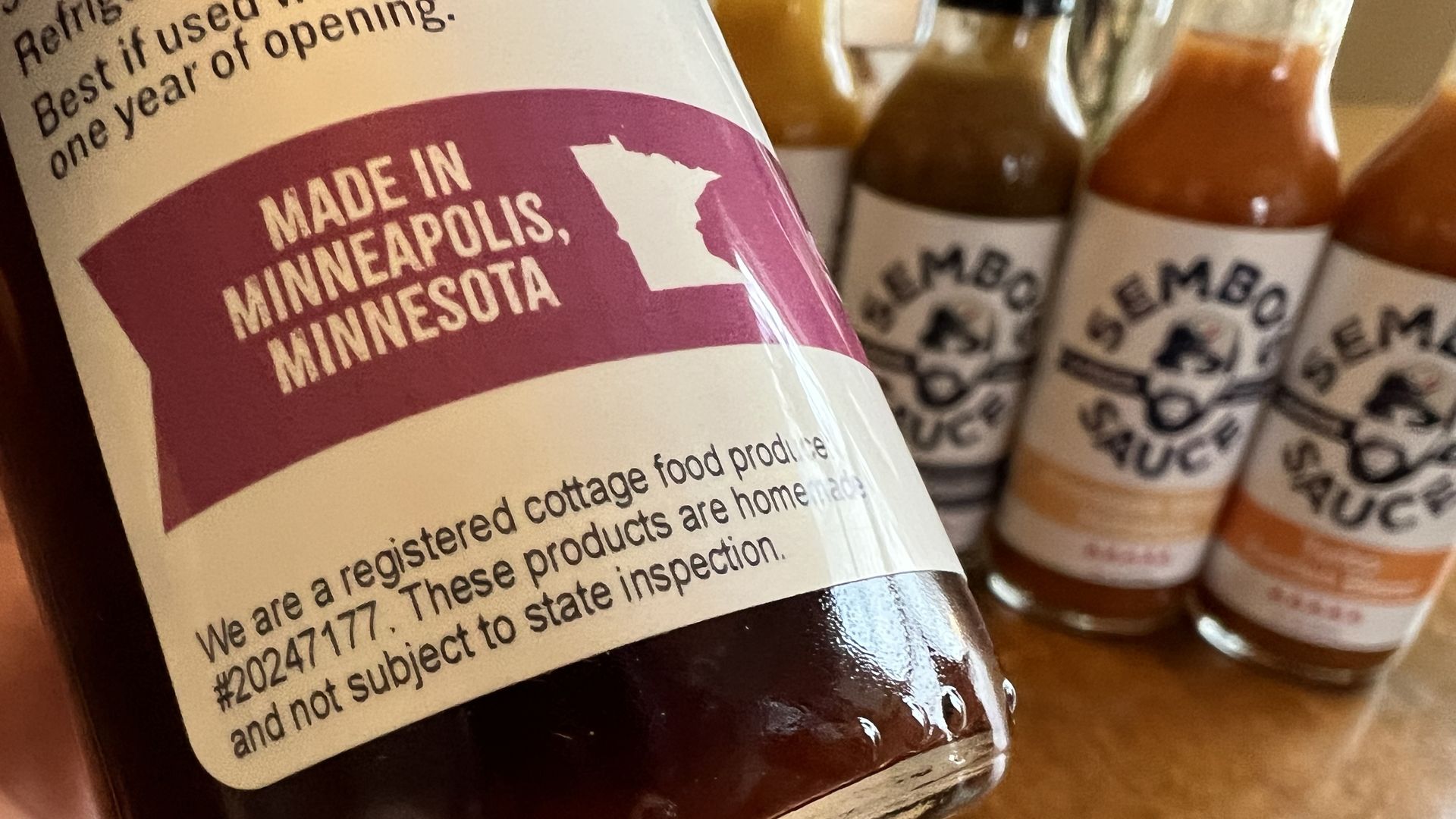
The label of Eric Semborski's hot sauce, produced under Minnesota's cottage foods law. Photo: Kyle Stokes/Axios
A relatively new Minnesota law has created a legal way for a growing community of small-batch hot sauce makers to turn their hobby into small businesses.
The big picture: The state's 2015 cottage food law replaced outdated statutes that made it really hard to legally sell most homemade food. It has since helped more than 8,900 small, homemade-food businesses get legit.
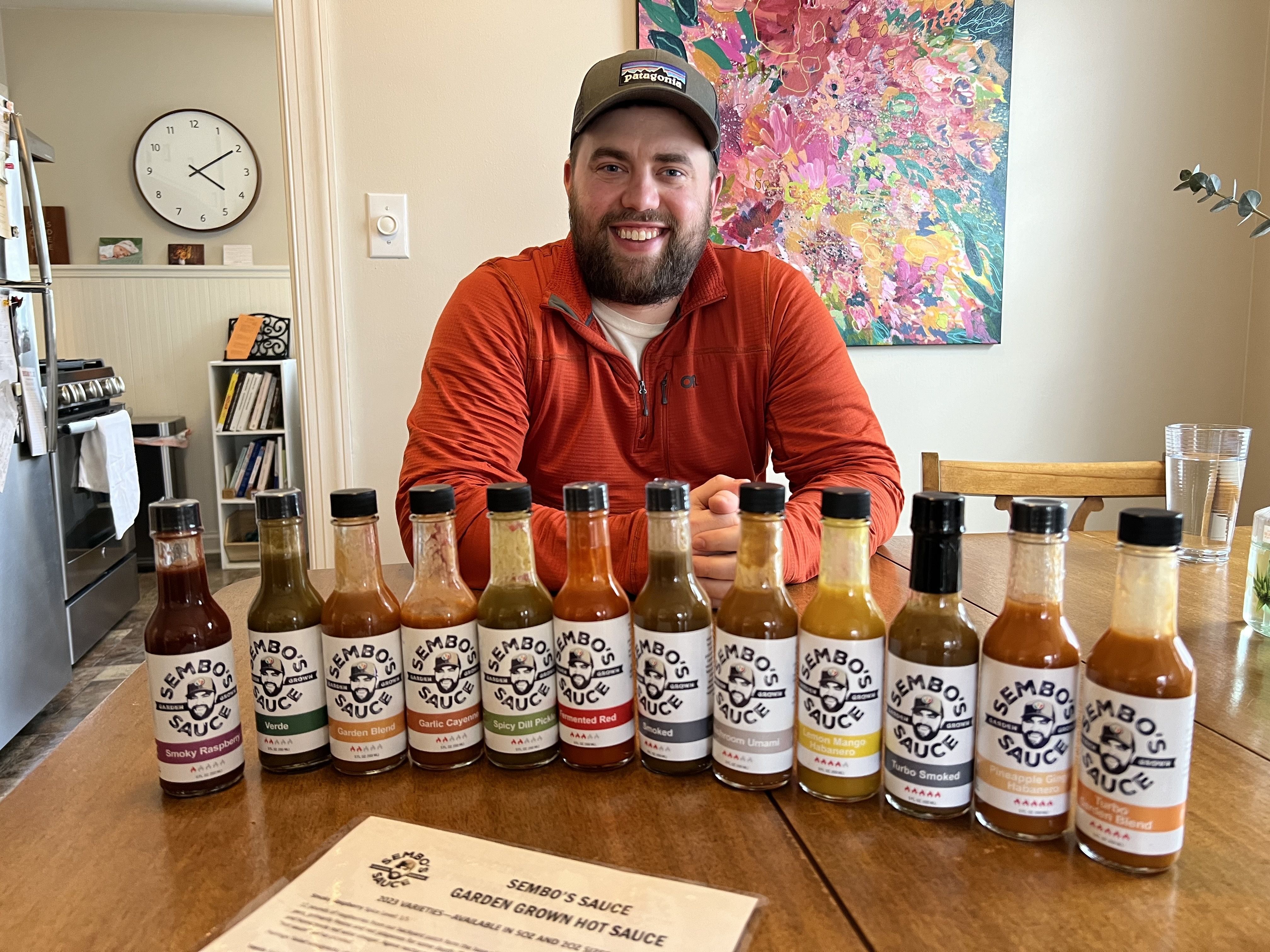
Zoom in: Eric Semborski has turned his love of gardening, cooking and a home-brew setup in his south Minneapolis house into a cottage food enterprise, Sembo's Sauce.
- It's a full-blown side hustle for Semborski, who works in transportation logistics at Best Buy. He started by sharing his sauces with family and friends, gathering feedback and "pretending to be a little business."
- "And now this year," he says, "I kind of am a little business." Last fall, he made around 2,000 bottles of hot sauce in 12 flavors — and officially registered as a cottage food producer.
How it works: In exchange for registering and passing an online food-safety course, Minnesota law allows people to sell "shelf-stable" foods.
- They can only sell person-to-person, either out of their home or at an event like a farmers market. Online sales are allowed, but third-party delivery is not (except for certain dog treats, of all things).
What they're saying: Making hot sauce is "definitely more of a labor of love than a true money maker" for Cali Torell, whose Saint City Chili is rooted in a bumper crop of ghost peppers five years ago.
- Both Torell's and Semborski's free registrations allow for $7,665 in annual gross sales. Registrants who pay a fee and pass a food-handling course can sell more — up to $78,000 each year under a 2021 update to the law.
Fun fact: Torell, who works full time in public relations, named Saint City's first sauce in honor of her late cat.
- But she named it Gigi's Ghost before the elderly cat died.
The spicy intrigue: Jennifer Carriveau of the Minnesota Cottage Food Producers Association said the 2015 law is intended as a steppingstone to a fully licensed food business — but that's still a big leap since commercial kitchen space isn't cheap.
- Carriveau's association is pushing for a new law allowing state inspectors to license a home kitchen. That could help open the door for cottage food makers to get licensed to sell in a retail setting, she said.
The bottom line: Advocates suspect the law has helped grow — or at least add legal legitimacy — to Minnesota's small-batch hot sauce scene.