Riding the Blue Line with the Metro Transit police chief

Add Axios as your preferred source to
see more of our stories on Google.
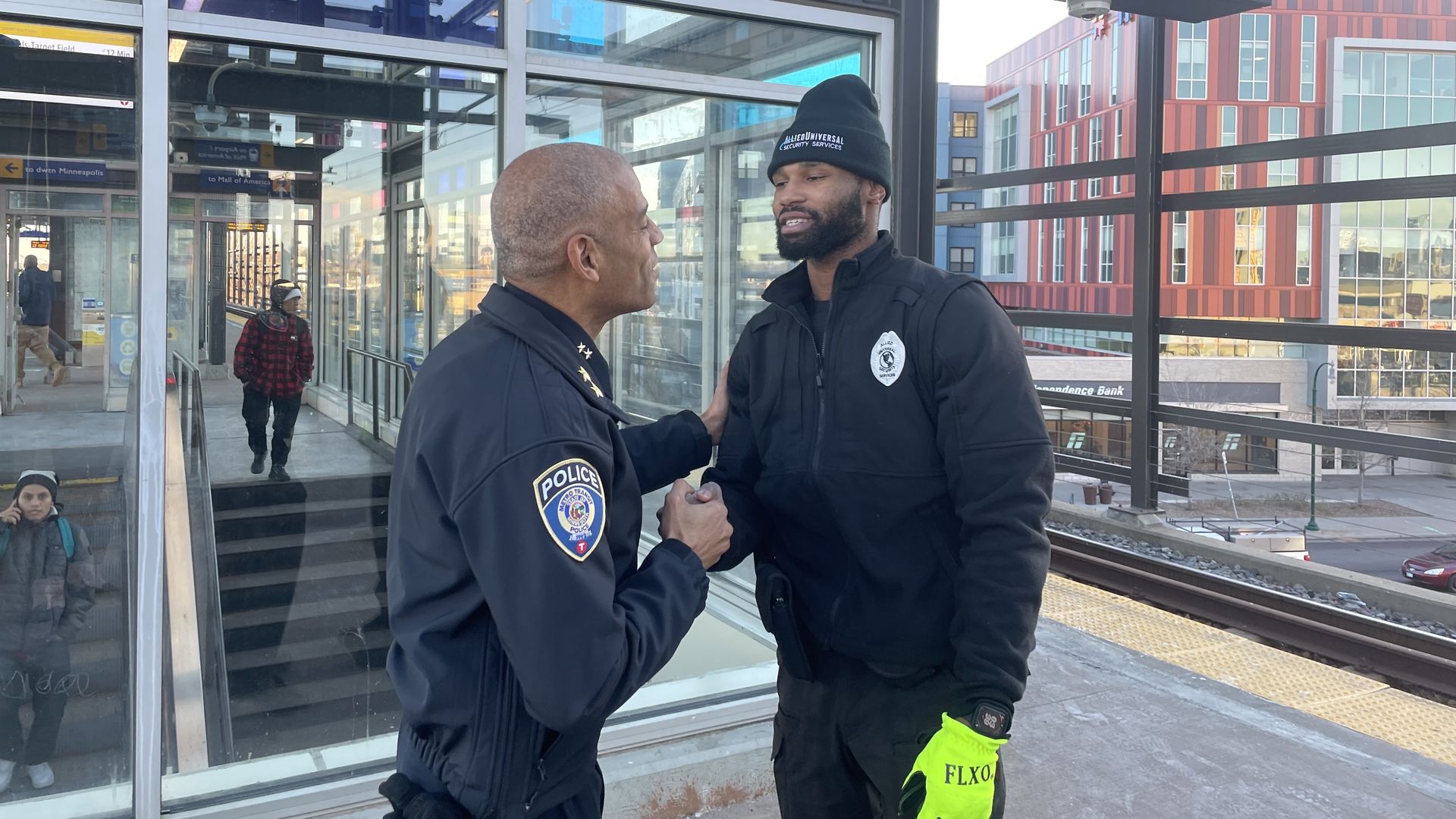
Several stations, including Lake Street, now have supplemental private security. Some riders say it isn't enough. Photo: Torey Van Oot
To get a sense of how his campaign to improve the public perception of public safety on Twin Cities transit is going, Metro Transit police chief Ernest Morales can simply board the train.
State of play: While riding the Blue Line with Axios earlier in December, the chief heard praise about progress, concerns about drug dealers congregating near stops, and calls for more fare checks on the trains.
What they're saying: At Lake Street, a woman who rides every day said things have gotten a lot better. She thanked Morales for the kindness of his officers, saying being arrested in the fall helped her get sober.
- But she said she still wouldn't bring her young daughter on the train, based on her own past drug use on board.
As the train rolled through downtown, a daily commuter who takes the Northstar to the Blue Line complained of "rough mornings" and a lack of fare checks.
- "Thank you for that, that's honest," the chief said. "I want everybody to hold me accountable, hold my feet to the fire."
- Another commuter told the chief that she rarely sees a transit police presence at the U.S. Bank Stadium stop in the morning — "once in a while there may be a police car on the platform."
What he's saying: Morales, for his part, isn't shy about sharing his critiques about his partners in the community.
- He told the passenger concerned about the stadium that issues spill over from the nearby common, so he needs help from other agencies and private entities to clean it up. "I'm a fully committed partner, but everybody has to carry their own weight."
The big picture: The chief, who doesn't mince words, sees transit's challenges as a "small window" into the big issues facing society, from homelessness to the public perception of police.
- To address those, he says he needs "more support from our partners within the cities and the counties."
Driving the news: While waiting for the Blue Line at Lake Street, he pointed to a group who appeared to be homeless congregating under the neighboring overpass.
- "Because the city does not address that, that bleeds into the station, and then we have people coming up here and taking advantage of the convenience of our station," he said.
- When asked about a recent fatal stabbing near an Edina bus stop, he questioned whether it's fair to note proximity to stations regardless of whether a crime originated on or because of transit.
Yes, but: His most pointed frustration is for local prosecutors, who he says have created a "vicious cycle ... [of] catch and release."
- "We are arresting the same people time and time again and they aren't being held accountable for their actions."
But, but but: The Hennepin County Attorney's Office disputed Morales' characterization of both examples.
- In one, they said Metro Transit never submitted a case based on the evidence the chief described. Another suspect did have a history of misdemeanors, but those aren't handled by the office.
"Prosecutors can't charge a case they don't receive," a spokesperson said.
The office pressed charges in two-thirds of felony-level cases referred to its office by Metro Transit this year, a figure consistent with the past two years.
- About 85% of gun-related cases referred by the agency resulted in charges, an increase from 2021 and 2022.
A spokesperson for Minneapolis Mayor Jacob Frey said the city has "been working closely with local jurisdictions and partners to address crime and safety concerns throughout the city, Metro Transit included."
Read more: Meet the man behind Metro Transit's latest public safety push