Twin Cities Metro Transit launches social services, safety push

Add Axios as your preferred source to
see more of our stories on Google.
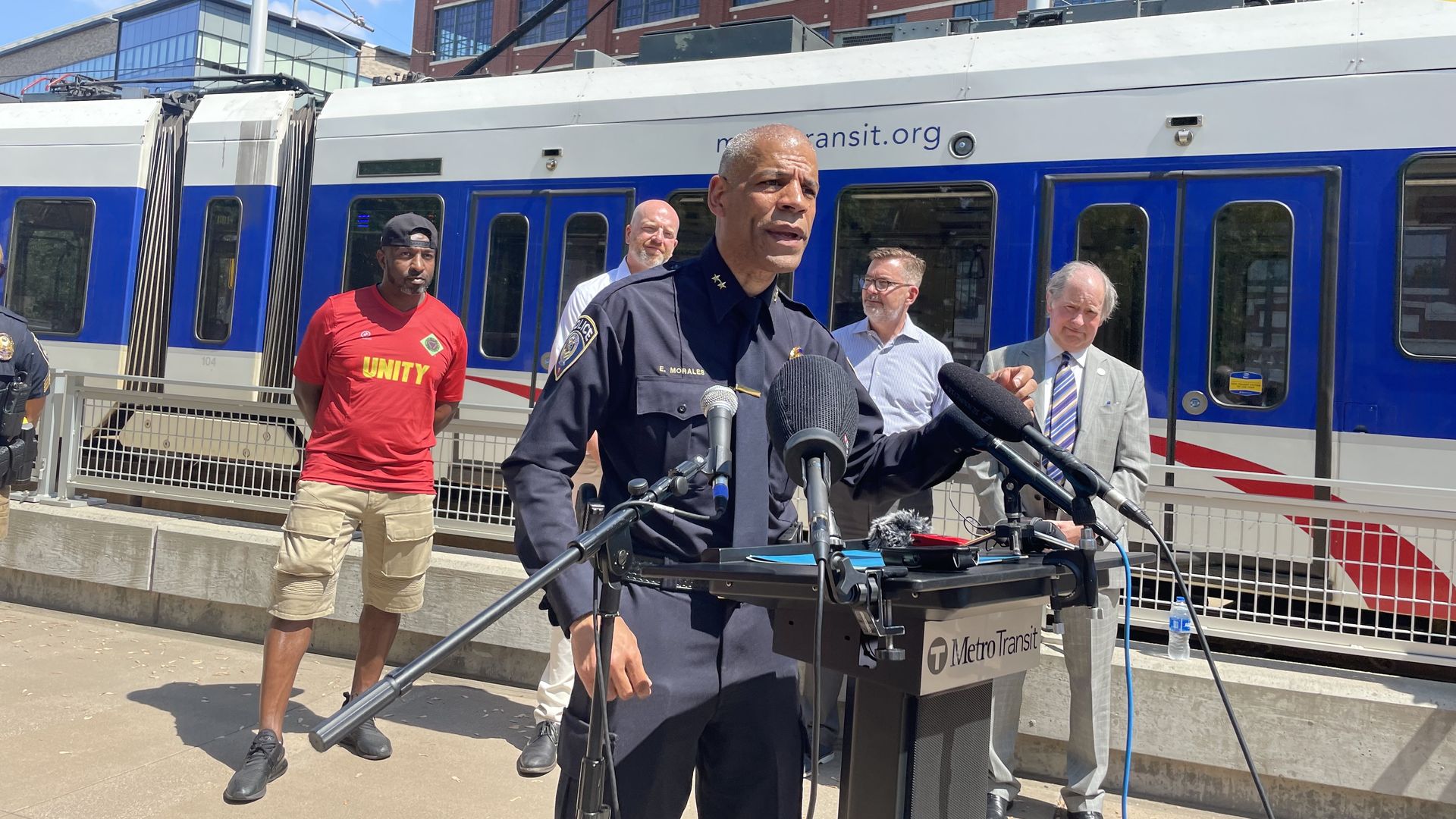
Metro Transit Police chief Ernest Morales. Photo: Torey Van Oot/Axios
A renewed public safety push will bring more fare checks, social services outreach and an enhanced 24/7 security presence to the Twin Cities' Metro Transit system this summer.
Driving the news: A $2 million yearlong Transit Safety Intervention Project aimed at helping riders experiencing homelessness, substance abuse disorders and mental health challenges kicked off Thursday.
Plus: Unarmed security staff contracted via a private firm are now assigned to the Franklin and Lake Street light rail stations in Minneapolis, with plans to roll out additional staff at several more sites.
Why it matters: Concerns about safety, drug use and other unwanted behavior on trains and at stations have hampered public transit's post-pandemic rebound.
- Crime on Metro Transit was up 66% over the previous year in the first quarter of 2023, per the Star Tribune.
What they're saying: "What we hope and believe this will do is to increase the number of folks who are riding transit on a day-to-day basis," said state Rep. Brad Tabke, who sponsored the legislation that paved the way for more funding. "The way we have the safest possible transit ... [is] by having more riders there every single day."
How it works: Metro Transit's Homeless Action Team and community groups hired using the new state funding will provide the social services outreach.
Zoom in: Leaders of A Mother's Love, one of the first grassroots groups contracted for the social service blitz, said groups of six to seven trained members will fan out during peak afternoon and evening hours to engage troubled youth and adults with a "soft touch" approach.
- Members will remind riders of transit rules and collect contact information so staff can follow up within 24 to 48 hours with resources on housing, drug treatment and job opportunities.
- On Thursday, the group set up a table outside the Target Field station to distribute bags of snacks, water and feminine hygiene products.
What to expect: In addition to the social services outreach, Metro Transit Police chief Ernest Morales said riders will see a bigger presence from cops cracking down on fare evasions and other behavior that violates the system's code of conduct.
- "When we see a violation taking place, we are going to immediately enforce it," he said. People who have not paid a fare will be instructed how to do so and asked to get off and pay.
What's next: The agency is in the process of hiring more than two dozen new non-police personnel to write tickets for riders who fail to pay fares and help others navigate the system, freeing up police to focus on more serious issues.
- While the exact fine amount hasn't been set, legislation enacting the change sets a range of $30-$100. The goal is to have the "ambassadors" in place this summer.
- Conversations with other potential social service partners, including Hennepin and Ramsey counties, are ongoing, officials said.
The bottom line: While the shift to hybrid and remote work will likely continue to keep ridership below pre-pandemic levels, leaders are hopeful that their recent efforts will lure more people back to the system.
- "We want all our customers to return because we're safer in numbers," Morales said.