Minnesota Democrats vie for earlier 2024 primary date

Add Axios as your preferred source to
see more of our stories on Google.
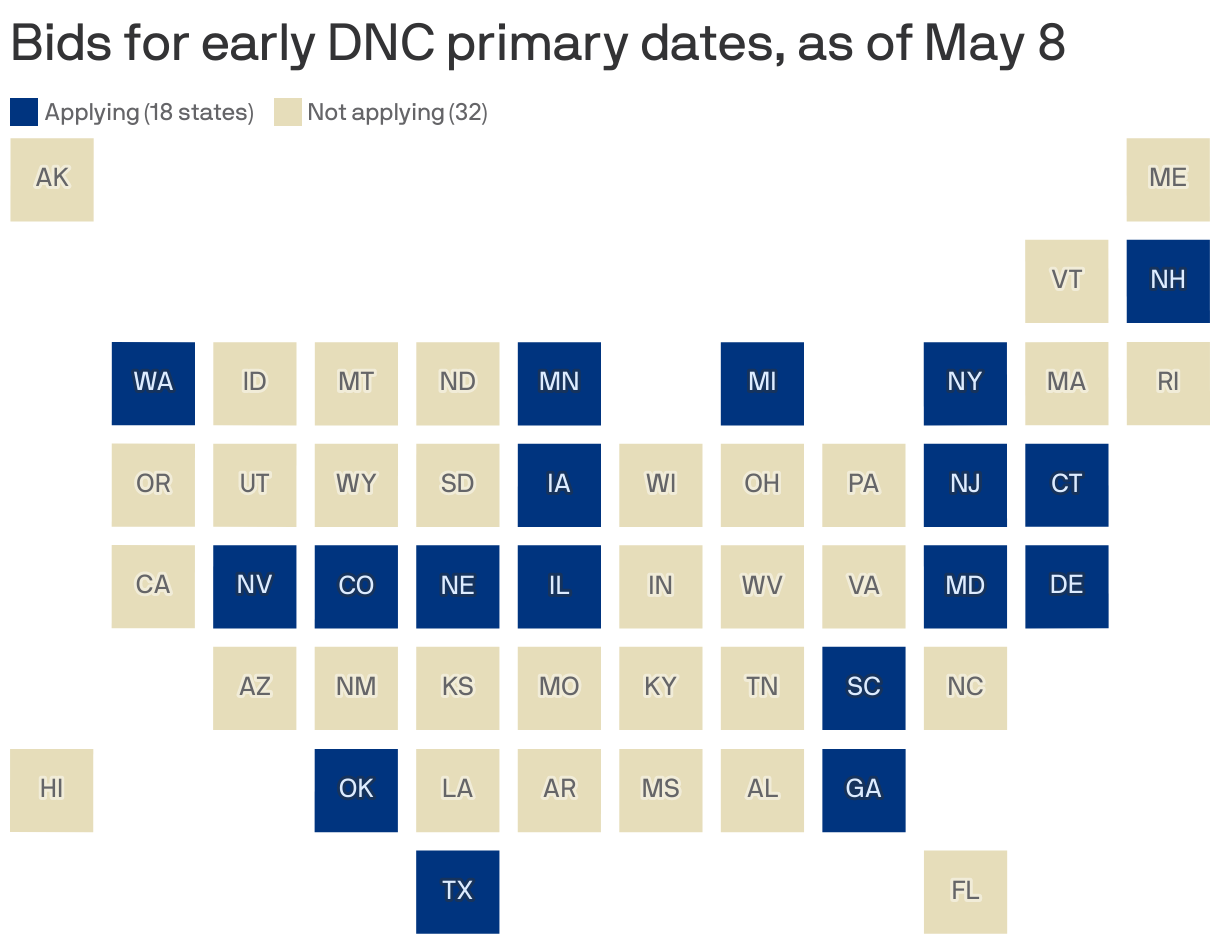
A push is underway to make Minnesota an early primary state for the 2024 presidential nominating process.
Driving the news: The state DFL Party plans to vie for one of up to five early voting day slots as part of a Democratic National Committee plan to shake up the longstanding tradition of letting Iowa and New Hampshire go first.
Why it matters: Early wins are crucial for building momentum toward the nomination.
- Supporters argue going to the polls sooner would give Minnesota voters on both sides of the aisle more sway in choosing a frontrunner — and result in more interest, investments and on-the-ground visits from the candidates themselves.
Between the lines: The DNC is looking to prioritize states that are more diverse than the current first-in-the-nation destinations and competitive in the general, Axios' Andrew Solender and Alexi McCammond report.
- "Folks are zeroing in on Michigan and Minnesota as probably the two leading contenders if they choose to replace Iowa [as an early Midwest contest]," DFL Party chairman Ken Martin told Axios, adding that our high turnout could be a draw.
The catch: A shift to Minnesota isn't a sure thing, even if the DNC approves. Moving the state's primary from the first Tuesday in March requires sign-off from leaders of both the DFL and Republican Party under state law.
- A spokesperson for MNGOP declined to comment on whether chairman David Hann would support a date change.
- Martin said he hasn't reached out to Hann yet, but thinks the proposition would benefit both parties.
Of note: The return of the presidential primary is new for Minnesota, which switched over in 2020 after decades as a caucus state.
What's next: Declared rivals for one of the slots in the Midwest so far include Iowa, Michigan and Nebraska. The DNC votes on the calendar in August.
- Hann and Martin, meanwhile, have until next March to let the secretary of state know if they have a deal to change the date.
Axios' Andrew Solender contributed to this report.