Both sides of San Diego County's Measure B debate

Add Axios as your preferred source to
see more of our stories on Google.
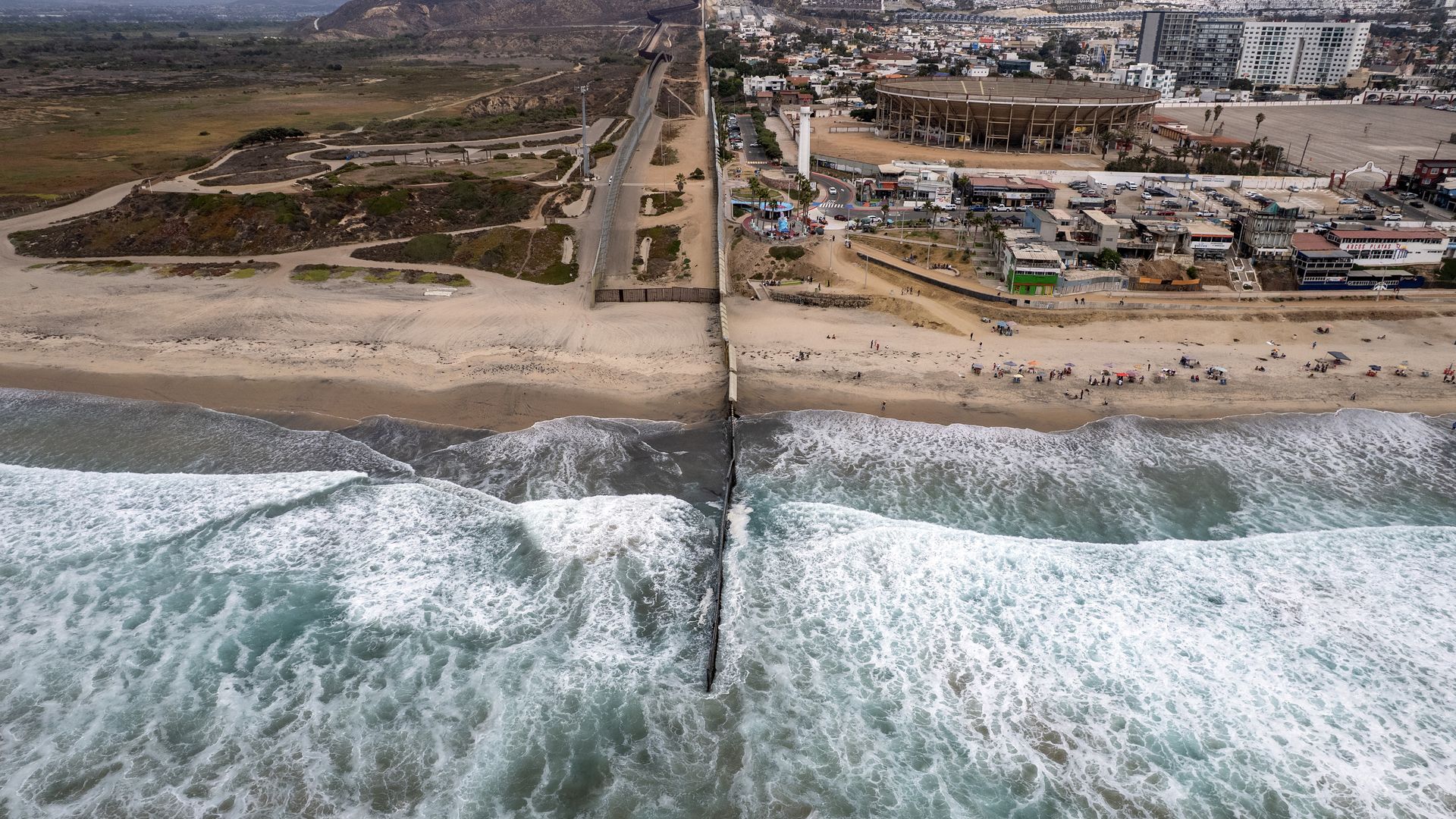
The Tijuana River sewage crisis would get more funding under Measure B. Photo: Guillermo Arias/AFP via Getty Images
Your mailboxes and social media feeds are likely filled right now with ads about Measure B, a ballot measure to raise the county's sales tax by a half-cent to fund child care, the Tijuana River sewage crisis and other services.
Catch up quick: If it passes, advocates say the measure would bring in:
🏥 $161.5 million a year for health care programs
🌊 $96 million a year for the Tijuana River crisis
🧒 $93.5 million a year for child care and children's health and safety programs
🔥 $68 million a year for wildfire prevention and public safety
The big picture: Supporters say the measure would inject much-needed funds the county lost in federal funding cuts, while opponents say it would create a "forever tax" with no end, even if those federal cuts are reversed.
Arguments in favor: This funding is needed because the Trump administration's "Big Beautiful Bill" made massive cuts to the county's budget for funding these programs, Alex Wilcox, campaign manager for the Yes on B campaign, told Axios.
- Measure B originally started as an idea to fund just child care, but expanded when federal funding cuts made needs so dire, Wilcox said.
- "Families are losing health care and delaying care, our already strained front-line health care workers are bracing themselves for crowded ERs and staff layoffs," she said. "On top of that, we are falling behind on wildfire prevention, and the Tijuana River sewage crisis continues to escalate."
The other side: The measure's funding won't be needed if Democrats take control of the House this fall and the presidency in two years, Mark Kersey, president of the San Diego County Taxpayers Association, told Axios, raising questions of what will become of that revenue.
- "One of the top priorities will be to restore those federal cuts to social services spending, so then what happens to all this money generated by Measure B that's earmarked for those same programs in perpetuity?" he said.
People are angry and don't want to give the government more money, Kersey said.
- "Taxing people who can least afford it so that they can then hope to receive government subsidies paid for by that same tax increase is just bad policy," he said.
Measure B is a "forever tax" with no sunset clause, so there's no opportunity for future voters to weigh in on keeping it around, he added.
- He said he'd be more likely to support it if it came up for another vote in 10 years.
Yes, but: Allowing the measure to sunset in 10 years would stand in the way of its goals, Wilcox said.
- "Because Measure B targets long-term crises, such as ramping up wildfire prevention, protecting 911 response times, safeguarding community hospitals, increasing access to childcare, and solving the Tijuana River sewage crisis, including a sunset clause would be counterproductive," she said.
- And, she added, groceries, rent, utilities, prescription drugs and baby diapers are exempt from the tax.
Follow the money: Local unions and the San Diego County Democratic Party are heavily backing the measure, which had raised more than $2 million as of the end of September, per campaign finance reports. It's largely being used on advertising to bolster the measure.
- Opponents had raised a little less than $150,000.
Context: San Diego County voters have a mixed record recently on sales taxes.
- Measure G to fund transportation failed in 2024.
- Measure A got more than half the vote in 2016, but failed because it was government-sponsored, so it needed a two-thirds majority to pass.
- Measure B only needs 50% of the vote because it's a citizens' initiative.