California's wildfires are driving insurance costs up fast


Add Axios as your preferred source to
see more of our stories on Google.
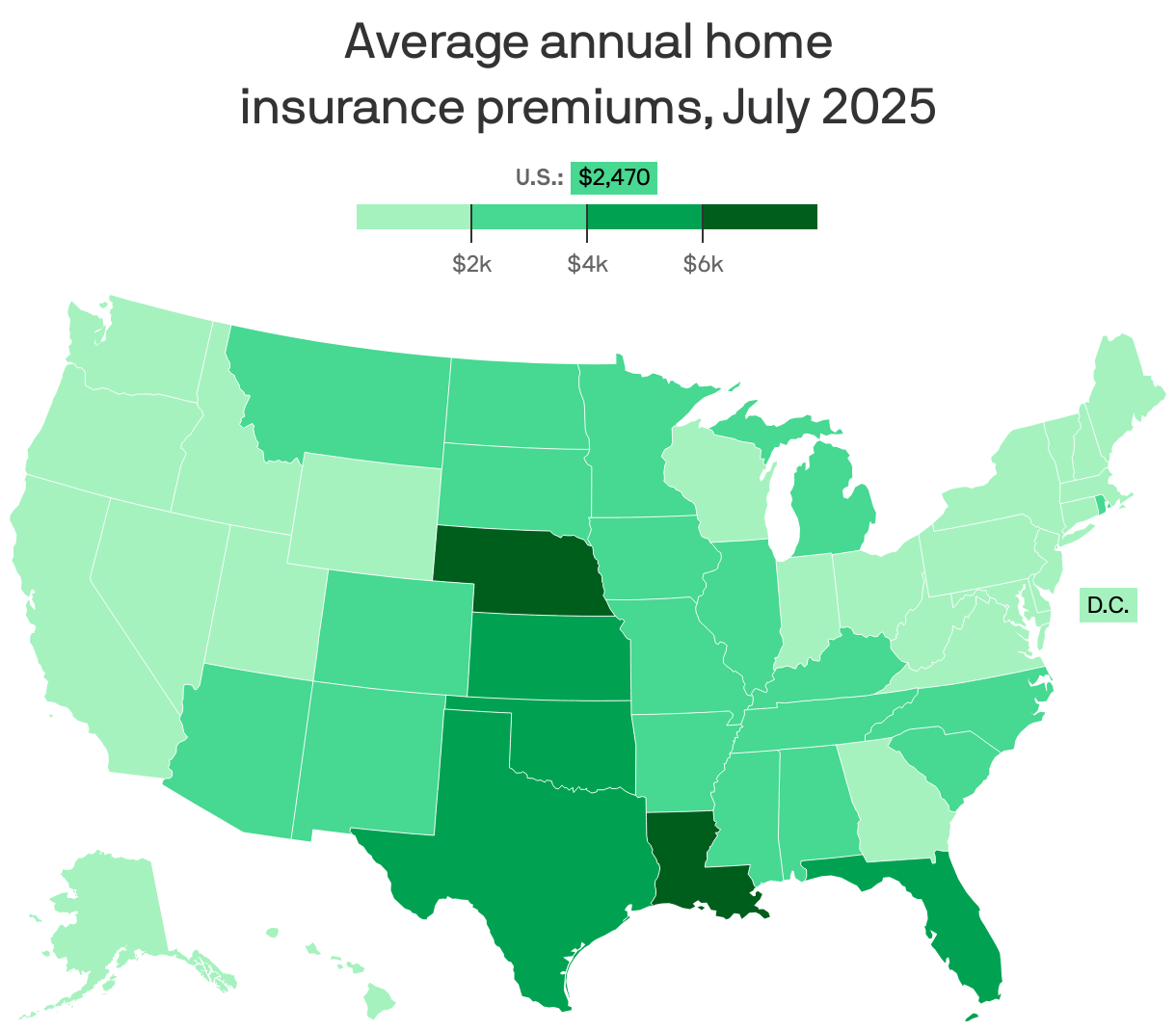
Extreme weather is driving sky-high home insurance prices in some especially storm-prone parts of the country — and costs are surging quickest in California, a new analysis finds.
Why it matters: Climate change is supercharging extreme weather events like hurricanes and wildfires, increasing the odds of losses and claims and driving up insurance premiums.
Driving the news: The national average for annual home insurance premiums is up 9% since 2023, per a new Bankrate breakdown, hitting $2,470 in July.
- Home insurance rates rose the fastest in California from 2023 to 2025, with the average cost of a policy jumping 41%. The average annual premium was $1,976 in July.
Zoom in: San Diego had one of the biggest hikes among the 34 metros Bankrate analyzed.
- The average annual premium in July was $1,714, a 27% increase year over year.
Caveat: Those are based on quotes for married male-female homeowners with an 8-year-old $300,000 home, a clean claim history, and good credit.
- The current median home price in San Diego County is over $900,000, so new homeowners can expect the rates to be even higher.
Between the lines: The concentration of homes with moderate or higher wildfire risk in California and San Diego County is driving prices up and insurers out of the market, making coverage harder to secure.
- State Farm, the largest insurer in the state, raised rates 17% this summer and the FAIR plan added fees to homeowners' insurance bills in the aftermath of the costly Los Angeles wildfires.
- With fewer options, more homeowners are turning to non-admitted or surplus carriers, whose prices aren't regulated by the state.
- Local homeowners can get insurance discounts and improved coverage eligibility by "hardening" their homes to make their properties more fire-resistant.
Zoom out: Nebraska ($6,425), Louisiana ($6,274) and Florida ($5,735) have shockingly higher-than-average premiums, Bankrate found.
- All three are vulnerable to extreme weather, including hurricanes, tornadoes, wind and hail.
- Yes, but: Florida lawmakers' attempts to address the climate-driven insurance crisis there appear to be working, as home insurance costs dropped 9% from 2023 to 2025.
The bottom line: "Premiums are skyrocketing, insurers are non-renewing customers or pulling out of risky markets altogether. As climate change gets worse, insurance availability and affordability will also get worse," a Dec. 2024 Senate Budget Committee report says.