Why San Diego's growing shark population needn't scare us

Add Axios as your preferred source to
see more of our stories on Google.
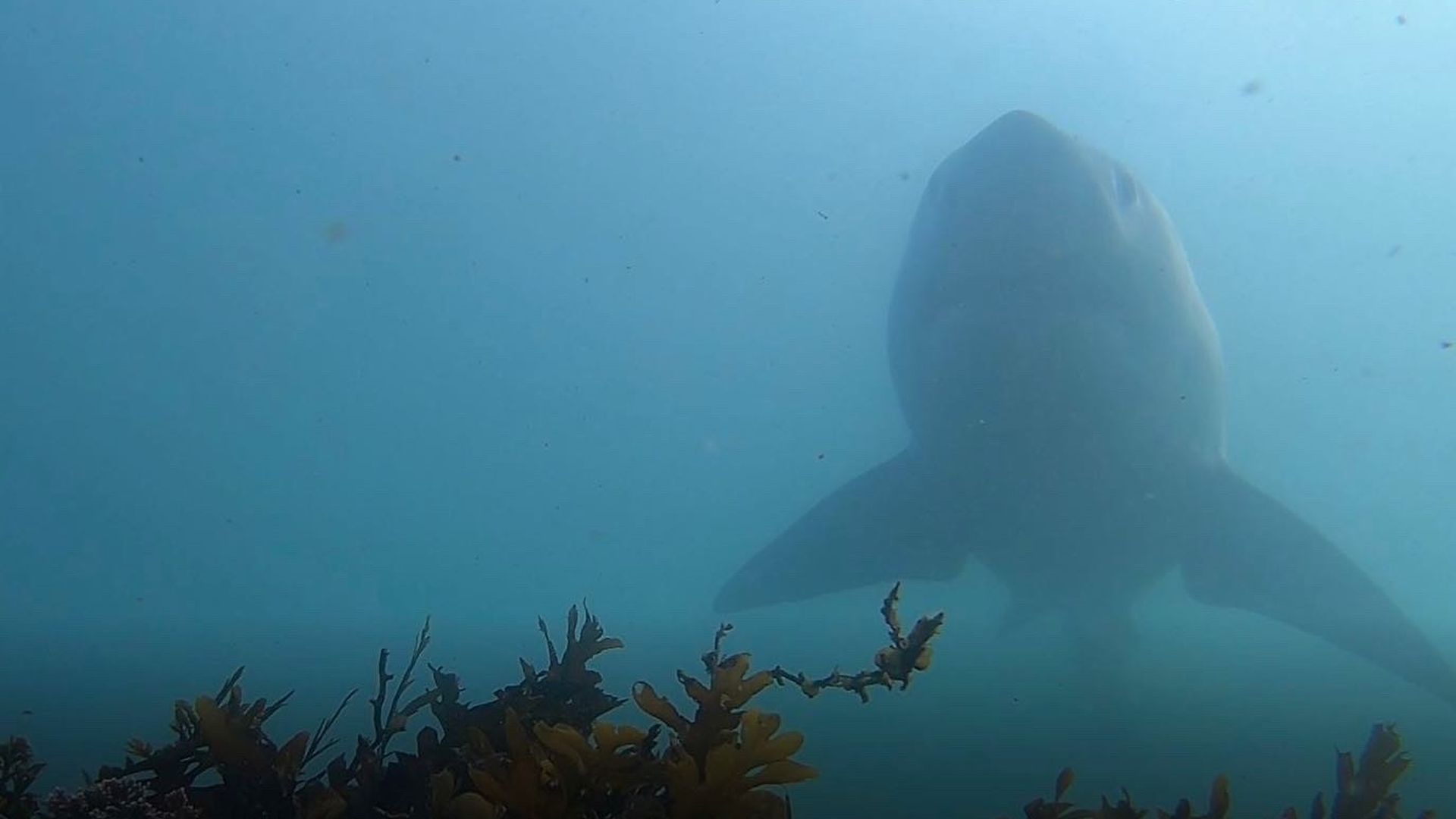
Great white shark lurking. Photo: Courtesy of CSU Long Beach's Shark Lab
Shark populations are surging along San Diego's coast, but that shouldn't scare us, according to new research.
Why it matters: CSU Long Beach researchers are studying whether fear of sharks is innate or learned and whether reducing sharks' bad rap could make it easier to protect them.
- Sharks' bad press is generally unearned, the researchers say. There were just 29 unprovoked great white shark bites in California in the last 10 years, two of which were fatal, according to the International Shark Attack File.
Driving the news: The goal is to combine research on psychology and sharks to create guidance for how people should behave if they see a shark that won't breed irrational fear of the creatures, psychology professor Gabriella Hancock told Axios.
Threat level: Research suggests babies aren't innately afraid of sharks, Hancock said. Instead, our fear of them is learned through all their bad press.
- There's "Jaws," of course, and "Shark Week," "The Meg" and "The Shallows," plus who could forget "Sharknado."
- Meanwhile, wasps, lightning and vending machines aren't usually villains in movies, Hancock said, even though they kill more people than sharks do.
Though a killer vending machine movie would be pretty amazing.
- "If people don't understand the true threat that sharks pose to them, that vacuum gets filled with fiction, and there's more than enough fiction to go around that greatly exaggerates the threat that sharks actually pose," Hancock said.
Yes, and: News media also contributes, because people will remember the one shark bite they see on TV, but every other day the news doesn't report, "No shark bites at the beach today."
Winners: If people have a positive experience with a shark, like petting a shark at an aquarium, they're 300 times more likely to be willing to go to a beach if they know a shark was at that beach the day before, CSU Long Beach Shark Lab director Chris Lowe told Axios.
- And the more people learn about sharks and how mostly uninterested they are in people, the less scary they seem.
The bottom line: Because we learn most of our fears after birth, Hancock and Lowe want to disrupt the negative press for sharks among kids (maybe "Baby Shark" has a purpose after all?) so they'll grow into adults who aren't scared of sharks.
- And hopefully convince their parents that sharks are worth protecting.