How to start open-water swimming at La Jolla Cove

Add Axios as your preferred source to
see more of our stories on Google.
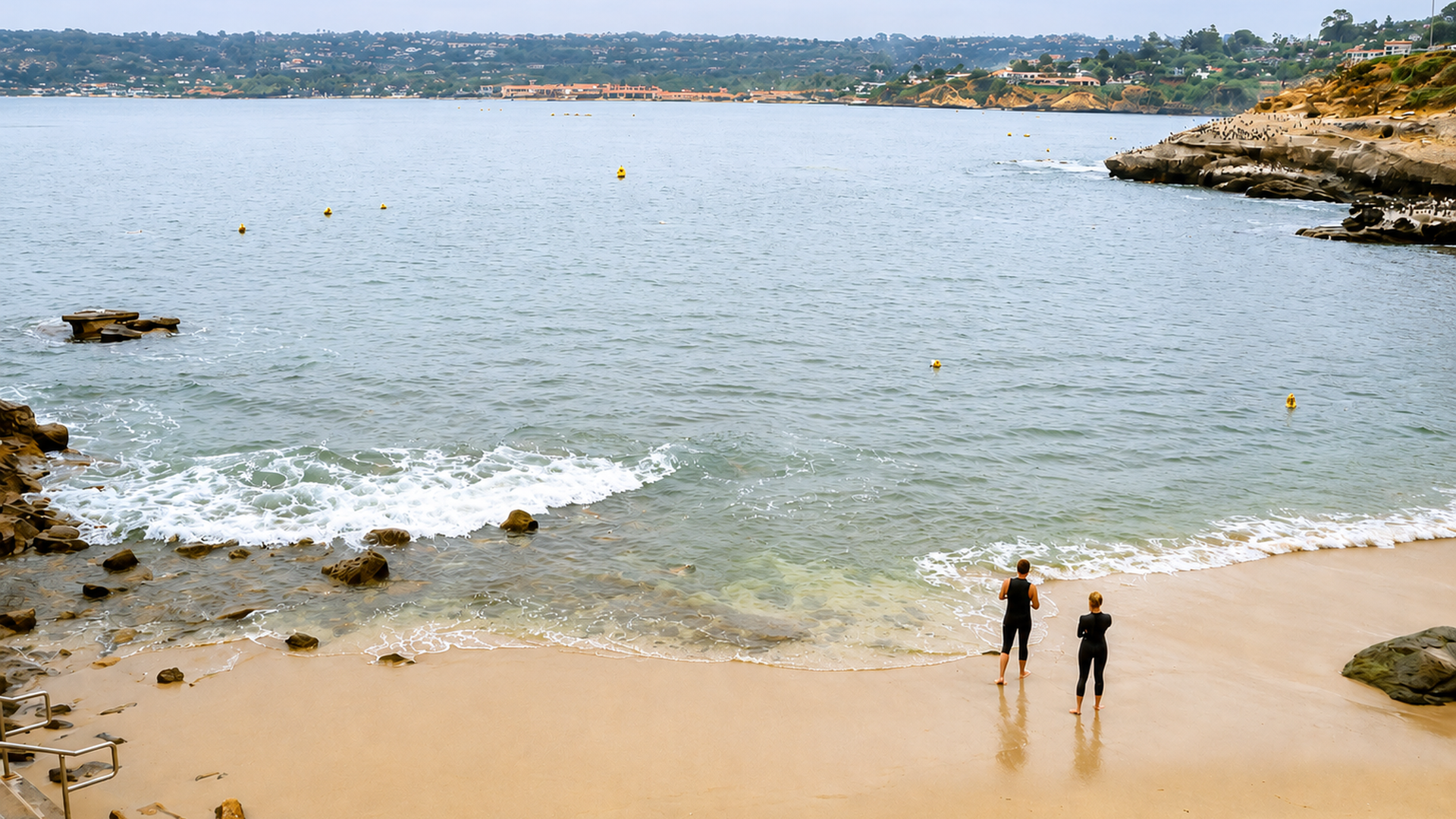
Claire and her husband getting ready to swim. Photo: Courtesy of Mary Lang
Open water swimming at spots like La Jolla Cove has seen a surge in popularity since COVID-19, and it's much less intimidating than it looks.
The big picture: Swimming in open water gives you a natural breath work practice you won't find in yoga class.
- It's mainly about controlling your breathing, but when you're out in the ocean, that might be easier said than done.
How it works: Swimmers start at La Jolla Cove and can swim to the ¼ mile buoy, the ½ mile buoy, or if they're really ambitious, all the way to La Jolla Shores (and back).
Flashback: Swimmer Dan Simonelli remembers hearing people say again and again that they wished they could swim at La Jolla Cove.
- "They would say, 'Oh, I'm too scared,' or 'I'm just not used to swimming in the ocean,'" he told Axios.
- So he started Open Water Swim Academy in 2012 to help. They charge $150 for an hourlong session and have discounts for multiple sessions.
And it's addictive, he said.
- "It gets under people's skin, and you just keep on going back," he said. "I often use a term called moving meditation, so you're just cruising along and really enjoying the experience."
- Plus, you're swimming in an ecological reserve, so with good visibility it's like swimming through an aquarium, he said.
How to start: With true beginner swimmers, Simonelli advises practicing in a pool for a month or two.
- But if you can swim, you can be cruising through the cove in a few sessions, he said.
- "It's all about the breathing, relaxing and getting your breathing under control, because you could swim 500 meters in a pool, but in the ocean the nerves are up," he said.
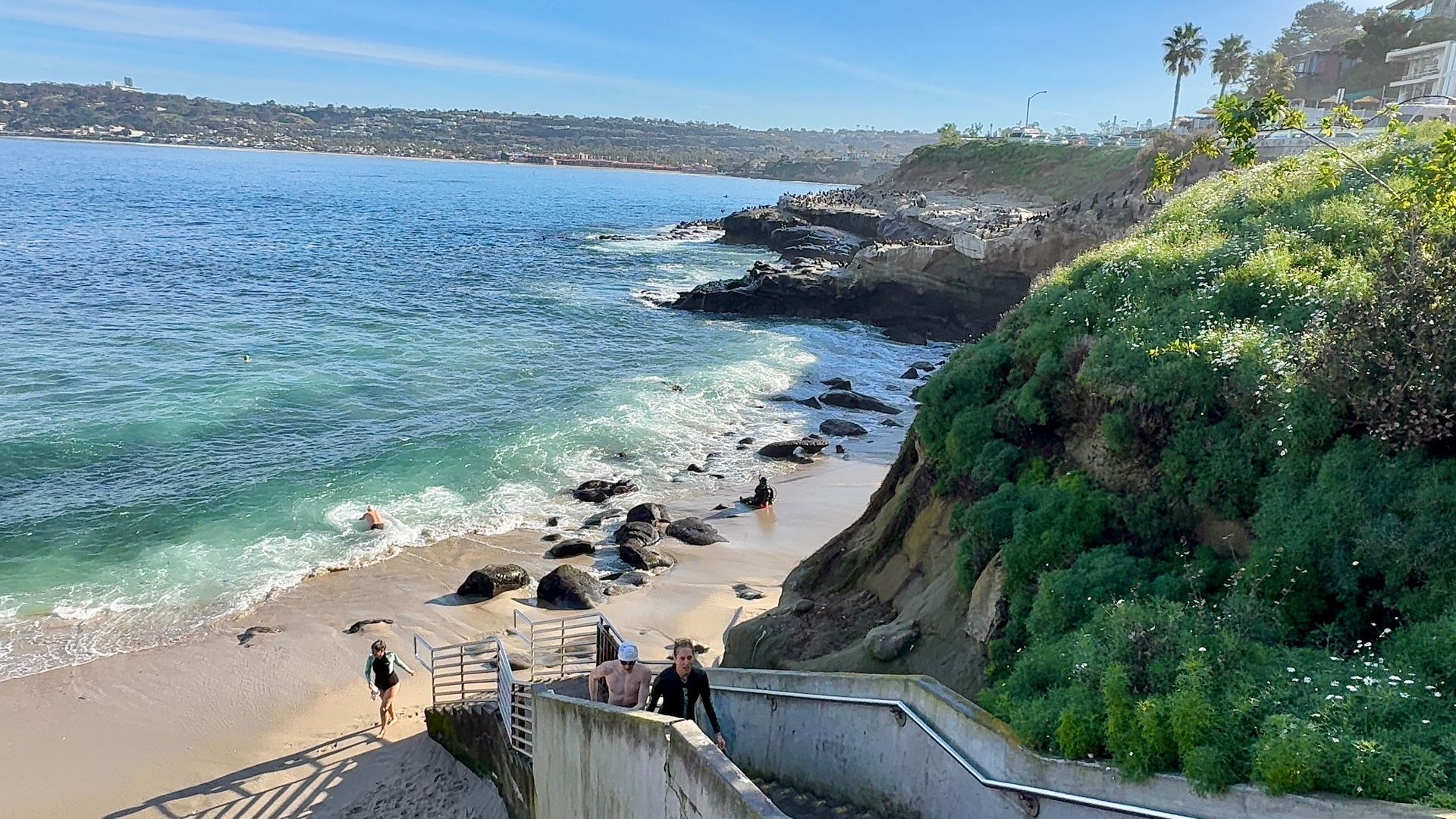
💭 Claire's thought bubble: This has always been my exact experience. I can swim a mile in a pool (though I may die of boredom). But as soon as I get in at the cove, I'm breathing so fast that I immediately exhaust myself.
- I'm not exactly sure why. Rationally, I know a shark isn't going to attack me, and the fish I swim by are harmless.
- But being out among ocean life with the depths of water beneath me sends me into panic mode.
I got to meet up with coach Karianne Scheevel to try out the academy's techniques.
- She taught me to focus on my exhale, to feel the bubbles on my face when I breathed out, and to swim calmly and slowly.
- It made a huge difference, and I quickly learned to calm myself down and keep breathing and swimming.
My breath would quicken when I saw something (like a small fish, so scary) or when the swell pushed me around, but then I calmed down and was able to recover quickly.
- She and I swam together to the ¼ mile buoy, which I frequently try and fail to reach, and it felt so easy.
Open Water Swim Academy's tips for safe swimming in the ocean:
🤿 Duck dive when entering surf.
👀 Exiting surf: check behind you every few strokes for waves; in bigger surf, stop, duck under, and let it pass before continuing in.
↔️ If you're caught in a rip current, swim parallel to shore, then angle in. More guidance here.
⚠️ To spot a rip current, look for more turbulent, murkier water and then watch for a "widow's peak" of foam heading offshore.
🎯 Practice sighting in the pool and ocean. Here's a video guide.
Before you go:
🌐 Check surf reports like surf-forecast.com.
📏 Wave height and interval timing show you how powerful the swell will be.
⚡ If wave energy is anything over 600/700 kJ, be extra careful.
💨 Higher wind means choppier water.
🌊 High tide usually means stronger waves.
🧴 Use Bodyglide, Aquaphor, or Vaseline (even without a wetsuit, salt water can chafe under a swimsuit).
🥽 Anti-fog goggles with Frog Spit or a drop of baby shampoo.
🥶 Neoprene cap over your latex cap for warmth if the water's cold.
👂 Earplugs help with warmth and equilibrium.
💨 Enter cold water on an exhale to train your body past the shock response.
Technique tips:
🫁 Breathe every stroke to stay relaxed and get enough air.
👄 Exhale forcefully through your mouth and nose so you're not holding air, and go right into your inhale as your head clears the water.
🩱 To put on a wetsuit, start at mid-calf, smooth out rolls from inside, pull up in small increments to your hips, then use that tension to help get your arms in.