San Diego's electric bills are up 50% since 2021



Add Axios as your preferred source to
see more of our stories on Google.
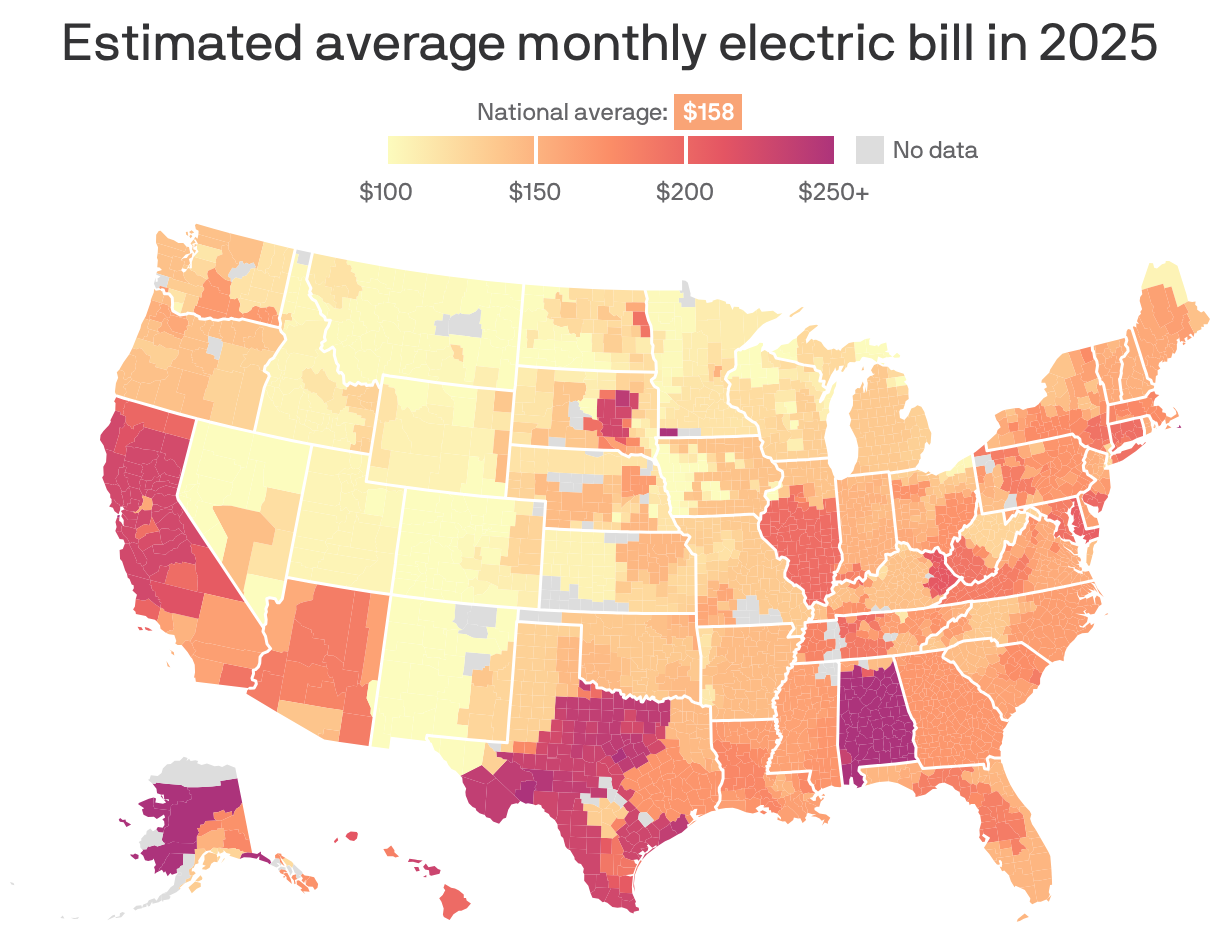
San Diego's electric bills went up 50% over the last five years, per a new Axios analysis of data collected and shared by climate newsroom Heatmap News.
Why it matters: Utility bills are just one more cost that's rising rapidly for locals.
By the numbers: The average San Diego Gas & Electric bill was $147.07 a month in March, up from $97.04 a month in March 2021.
- Critics say that higher rates signal a money grab by the utility, while SDG&E officials argue the hikes reflect necessary expenditures.
Between the lines: SDG&E and other utilities can't make money buying the electricity they use to supply our homes, but they do make money on the infrastructure and equipment used to deliver electricity, Nicole Capretz, environmental attorney and director of the nonprofit Climate Action Campaign, told Axios.
- That incentivizes SDG&E to spend as much money as possible on building things, because then it can charge ratepayers more, she said.
"Their job is to make profit for shareholders, not to protect families in San Diego from escalating rates," she said.
The other side: SDG&E needs to spend on infrastructure to reduce wildfire risk, spokesperson Anthony Wagner said.
- "And I think the proof is in the pudding; we are proud that we believe because of our investments, our equipment has not been the impetus of a catastrophic wildfire similar to what you've seen in other parts of the country," he said.
- He added that the California Public Utilities Commission oversees the utility's spending and that the state Legislature has "been quite prescriptive about how to reduce risk."
State of play: California allows utilities to make a nearly 10% profit on such infrastructure spending, but a new bill from San Diego Assemblymember Tasha Boerner would cap that profit at 8.7%.
- A second bill would require audits of how utilities spend money on wildfire mitigation.
- SDG&E previously spent $323 million on technology and equipment to prevent wildfires, which contributed to higher rates, a 2021 government audit found.
Another reason rates are higher is because people are using less energy, Wagner said, and fixed costs get spread over fewer kilowatt-hours.
- "Think of it as going out to dinner with all your girlfriends, and then two people leave early," he said. "The cost per person goes up because those two friends left early."
What's next: SDG&E hopes customer bills will drop through federal tax credits from battery storage and cutting about $330 million in energy efficiency programs, Wagner said.
- Customers will also see savings when a temporary cost surcharge expires in August, he said.