What lower interest rates mean for San Diego housing

Add Axios as your preferred source to
see more of our stories on Google.
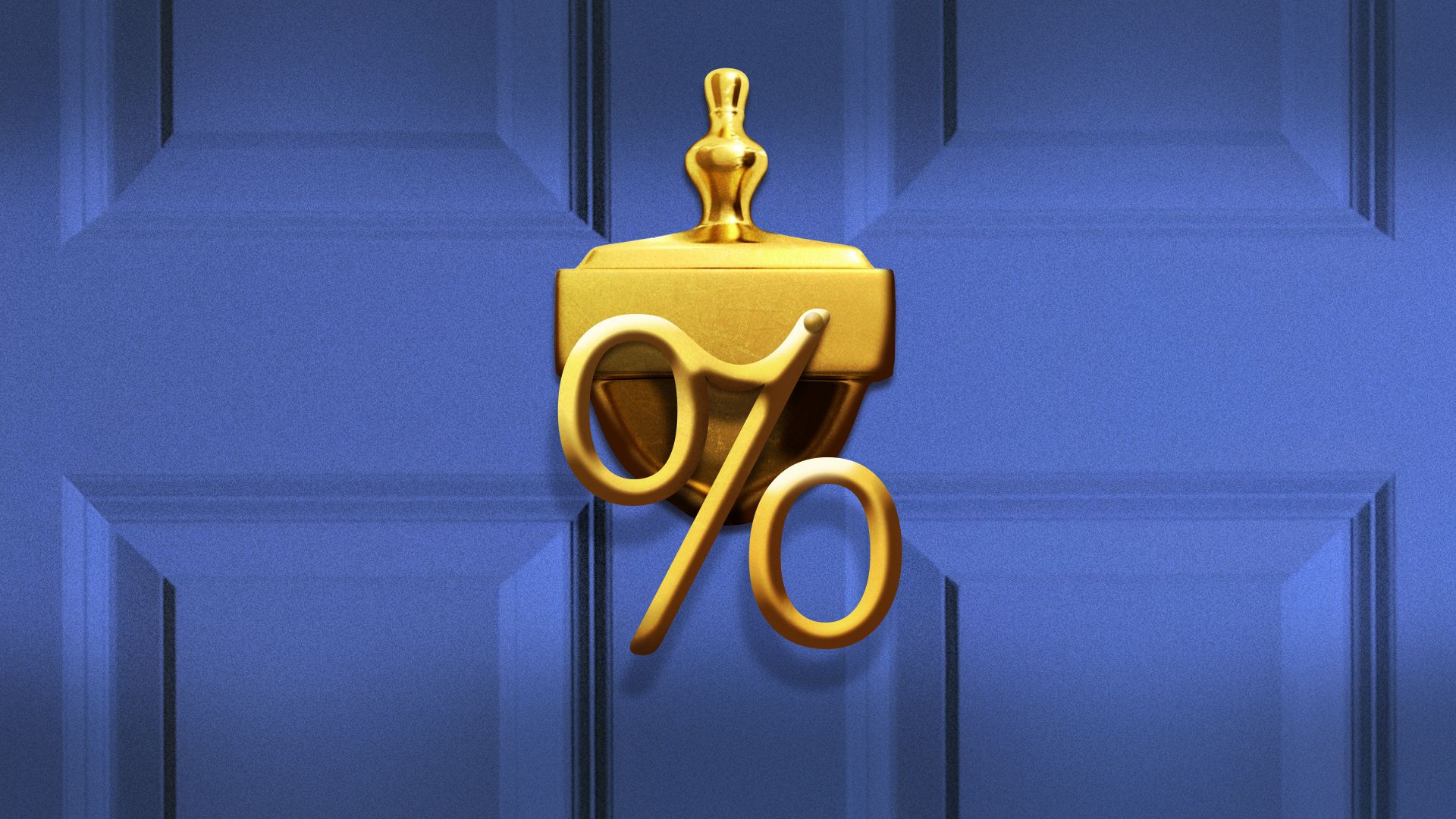
Illustration: Sarah Grillo/Axios
Mortgage interest rates dipping slightly lower will likely have big impacts on San Diego's housing market, possibly bringing more buyers and raising prices.
Why it matters: San Diego is one of the most expensive cities in the country, with the median home price sitting at just under $1 million, and lower interest rates could drive those prices higher, industry experts tell Axios.
The big picture: As interest rates tick down, more buyers come to the market, but there isn't enough housing inventory to meet demand, and that drives prices up, Justin Clark, a sales manager with CrossCountry Mortgage, told Axios.
- Prices are down slightly now from their COVID highs.
- The average age of a first-time home buyer increased from 33 to 40 years old, which creates more pent-up demand, he said.
By the numbers: The average rate today is around 6.1%. The analysis firm MBS Highway predicts rates could drop to 5.5% this year, but other predictions keep them above 6%.
- When they do go below 6%, it's like a "psychological barrier" has been broken, Clark said.
- "It sounds a lot better to people, it's a lot easier to stomach, and it will bring a lot more people back to the market," he said. "We've seen huge spikes in mortgage applications every time there's a posted average rate at 5.99% or lower."
What they're saying: "The idea would be to get into the housing market now before the masses come back and drive up prices," Clark said.
Buyers also don't feel as rushed and can be pickier now, Caitlin Thill, a real estate agent with O'Byrne Team, told Axios.
- "They're not settling anymore, because they're not trying to rush into getting a home before interest rates go up," she said.
Yes, but: Buying a home is still out of reach for many San Diegans.
- Fewer than 1 in 50 homes for sale were attainable to the typical household, according to a December Bankrate analysis.
State of play: Sellers are beginning to free themselves from their "golden handcuffs"—historically low interest rates that made it hard to think about moving to a bigger house, Thill said. That would open more inventory.
Case in point: Imagine a family who bought a home in 2020 or 2021 when rates were at their lowest, but now their family has grown, and they feel stuck in a smaller house, Clark said.
- Their low interest rate and high home prices stymied such a family's moves.
- "But they can sell the home, use that equity, borrow less on the new purchase, and even though the interest rates are higher, their payment doesn't go up a significant amount," Clark said.
The bottom line: Date the rate, marry the home, Clark said.
- "You have an opportunity to get in before everybody else does and have some negotiating power," he said. "Ultimately, you'll be able to lower your interest rate in the future when rates do come down."