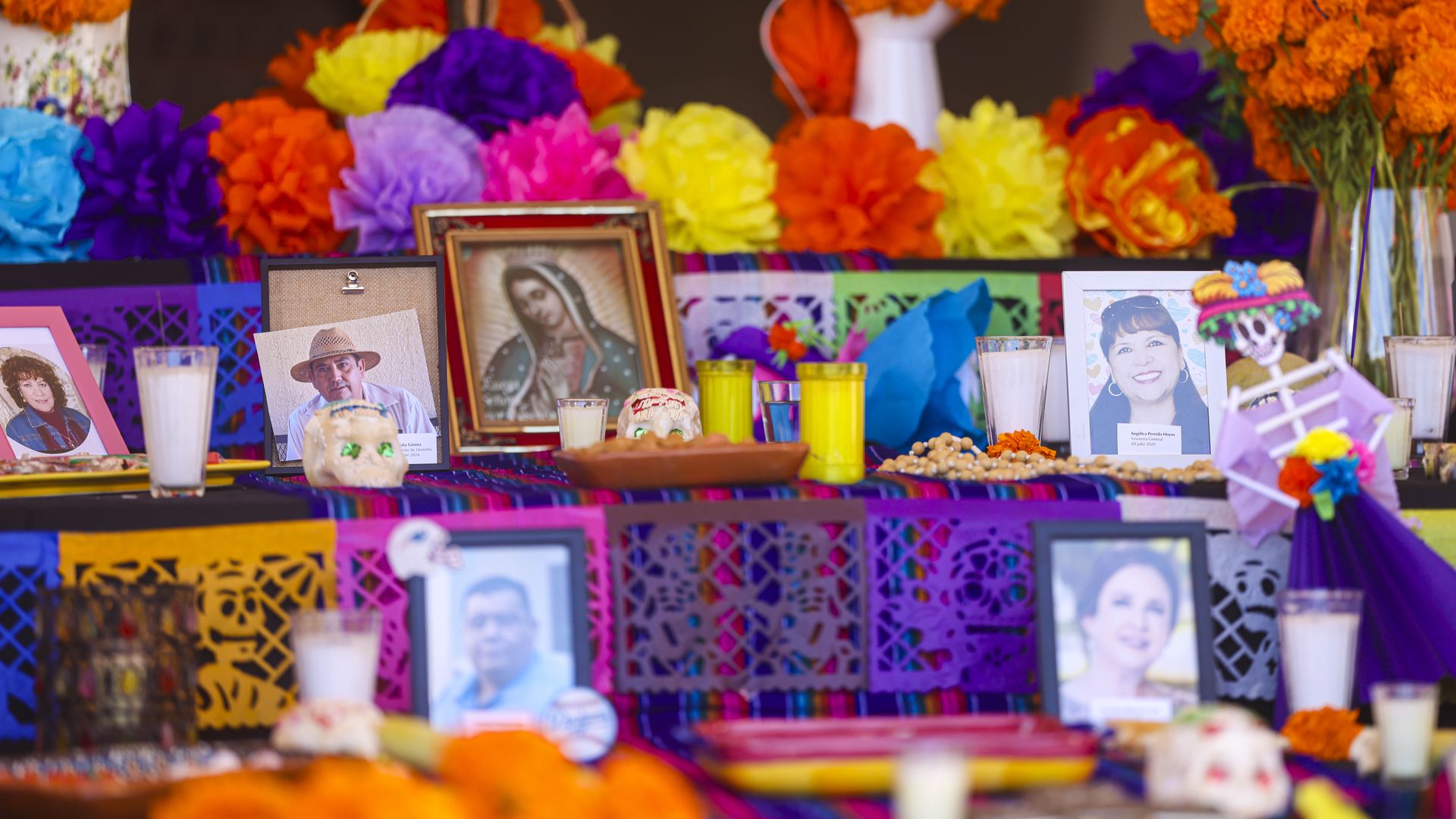
Colorful accents, portraits of the deceased, candles and pictures of La Virgen de Guadalupe are typically found on an ofrenda. Photo: Luis Gutierrez/Norte Photo/Getty Images
Día de los Muertos — or Day of the Dead — celebrates the enduring ties between the living and the dead over two days that honor those who have passed away.
The big picture: On Nov. 1–2, Mexican families mark the holiday with colorful "ofrendas" — altars filled with offerings — to welcome the spirits of loved ones back home.
How it works: Ofrendas welcome the souls of loved ones and are marked by four elements.
Fire: Represented by candles. The flames guide spirits back to the realm of the living.
Water: Placed on the altar in a glass or pitcher to quench the thirst of the returning spirits.
Wind: Represented by "papel picado" — sheets of colorful tissue paper cut into intricate designs. Their flutter in the breeze signals that the spirits have arrived.
Earth: Represented through food, especially "pan de muerto," a sweet bread made with orange zest and anise that nourishes the spirits after their long journey.
Between the lines: Ofrendas are often multi-tiered and adorned with colorful tapestries, photos of the deceased, cempasúchils (marigolds), copal or incense, sugar skulls and the ancestor's cherished items and favorite foods — anything that recalls their essence.
Zoom in: The Bazaar Del Mundo and Fiesta del Reyes shops in Old Town will have nearly everything you need for your own ofrenda. Their courtyards are filled with vibrant and elaborate altars, marigolds, Catrinas and music to celebrate Día de los Muertos.
Get pan de muertos from La Concha Bakery in Chula Vista or Panchitas Bakery, which has locations in Barrio Logan, South Park, North Park and City Heights.