How Prop 50 could change elections in San Diego


Add Axios as your preferred source to
see more of our stories on Google.
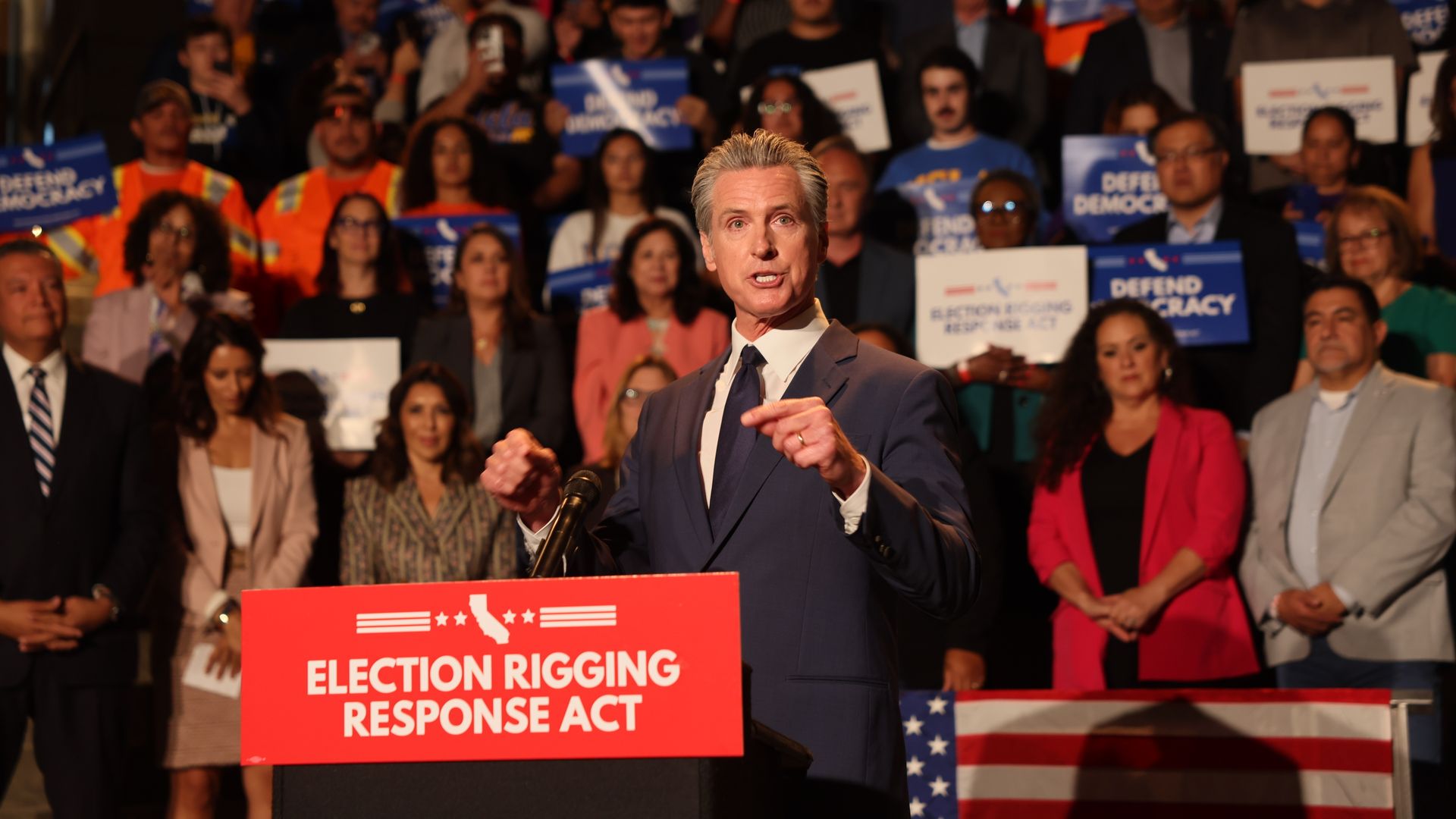
California voters began receiving ballots in their mailboxes this week for a Nov. 4 special election that could reshape the balance of power in Congress.
Why it matters: This vote could ripple into the 2026 midterms — and even the 2028 presidential race.
State of play: Proposition 50 — or the Election Rigging Response Act — would let lawmakers redraw the state's congressional map, shifting as many as five GOP-held seats into Democrat-leaning districts.
Catch up quick: Led by Gov. Gavin Newsom, California's latest ballot measure responds to a redistricting push sparked by President Trump.
- In July, the president urged Texas Republicans to redraw their congressional maps to gain seats — with other Republican-led states quickly following suit.
- Newsom retaliated by proposing a "trigger" ballot measure in August.
How it works: If approved, the proposal would amend a 2008 law that created California's independent redistricting commission.
- The Legislature would temporarily take over mapmaking for the next three election cycles — 2026, 2028 and 2030 — before power returns to the commission. Because redistricting is written into the state constitution, the measure needs a simple majority to pass.
Zoom in: The most substantial change for San Diego County would be in the 48th district, where Republican Rep. Darrell Issa holds one of five seats Newsom hopes to flip.
- The proposed map carves out Republican-leaning areas of East County, changing the balance of voter registrations to strongly favor Democrats, KPBS reported.
- San Diego City Councilmember Marni von Wilpert is one of a dozen candidates planning to challenge Issa in the redrawn district 48 if Prop. 50 passes.
- The 50th district seat, held by Democrat Scott Peters, would become more competitive, while districts 51 and 52, represented by Democrats Sara Jacobs and Juan Vargas respectively, would remain safely blue.
- Explore this map to see how your district could change.
What they're saying: Supporters — including top Democrats and major donors like billionaire George Soros — frame the measure as a defensive "fighting fire with fire" move against GOP gerrymandering, arguing California must act to protect national representation and counteract an uneven playing field.
- Opponents — including Republicans and former Gov. Arnold Schwarzenegger — say it would undo voter-approved reforms, politicize mapmaking and set a dangerous precedent.
What's next: Attorney General Rob Bonta is urging Californians to mail their ballots early because new U.S. Postal Service policies could delay postmarks, leaving ballots dropped off on Election Day uncounted.