San Diego's new apartment construction can't keep up


Add Axios as your preferred source to
see more of our stories on Google.
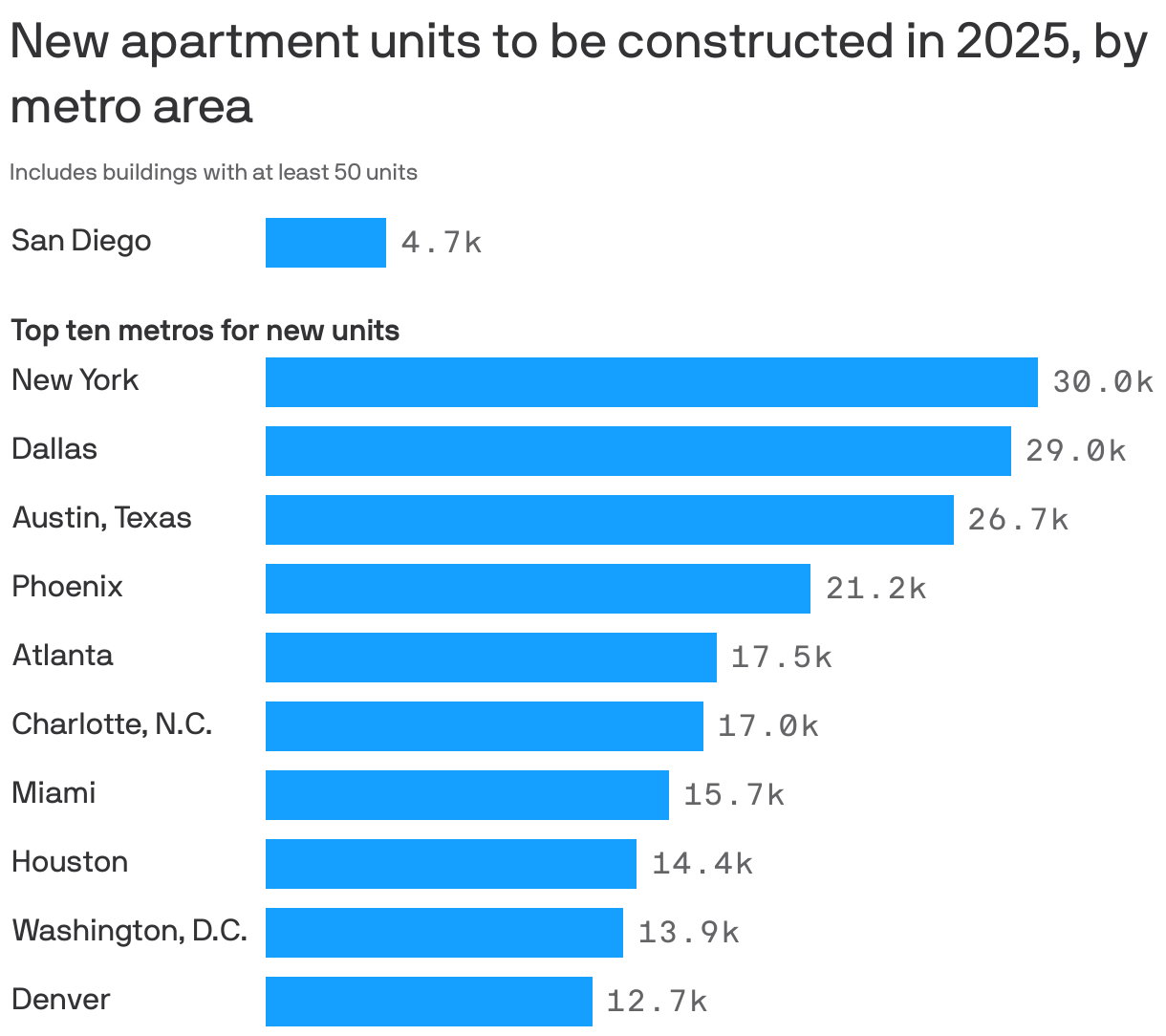
San Diego is trailing other major U.S. cities in new apartment construction this year, even after a surge in housing production.
Why it matters: More housing can drive down the cost of living in the city.
State of play: San Diego is ahead of California's other big cities in housing production per capita, according to the city's 2025 Annual Report on Homes released last week.
- The city permitted an average of 9,200 homes over the past two years — more than 40% above the pace at the start of the current state housing cycle.
- Uptown neighborhoods — including Hillcrest, Mission Hills, Bankers Hill and University Heights — led the way for new home permits in 2024.
Zoom in: Multiple-unit developments were the largest source of "affordable" housing, mostly near transit stations.
- The city is building that supply through an expedited permitting process.
Reality check: San Diego still struggles to meet demand or hit state-mandated housing goals of about 13,500 new housing units per year.
By the numbers: About 4,700 new apartment units are in the construction pipeline in the San Diego metro for 2025, according to a recent RentCafe report.
- That's nowhere near the total new units being built in other major metros, like New York (30,000), Austin (27,000), Phoenix (21,000), Charlotte, North Carolina (17,000) and Denver (13,000).
The big picture: Nationwide, more than half a million new apartment units are expected to be completed this year — down roughly 21% from last year's record.
- That's still above the annual average for this decade, but the pipeline is slowing as rising construction costs, higher interest rates and oversupply in some markets make developers more cautious about starting new projects.
The intrigue: Over half of the new units on track to go on the open market before year's end are in the South, per RentCafe.
- The region's "business-friendly environment, relative affordability and less restrictive zoning laws … stand in sharp contrast" to more restrictive coastal areas, Doug Ressler of data provider Yardi said in the report.
Between the lines: More people are renting because homebuying is out of reach, keeping rents high even as price increases slow.
- And apartments that are built are usually luxury, not the affordable options many renters are searching for.
What we're watching: How California's rolled-back environmental regulations could make way for quicker development.