
San Diego hopes microtransit can patch its transportation system

Add Axios as your preferred source to
see more of our stories on Google.
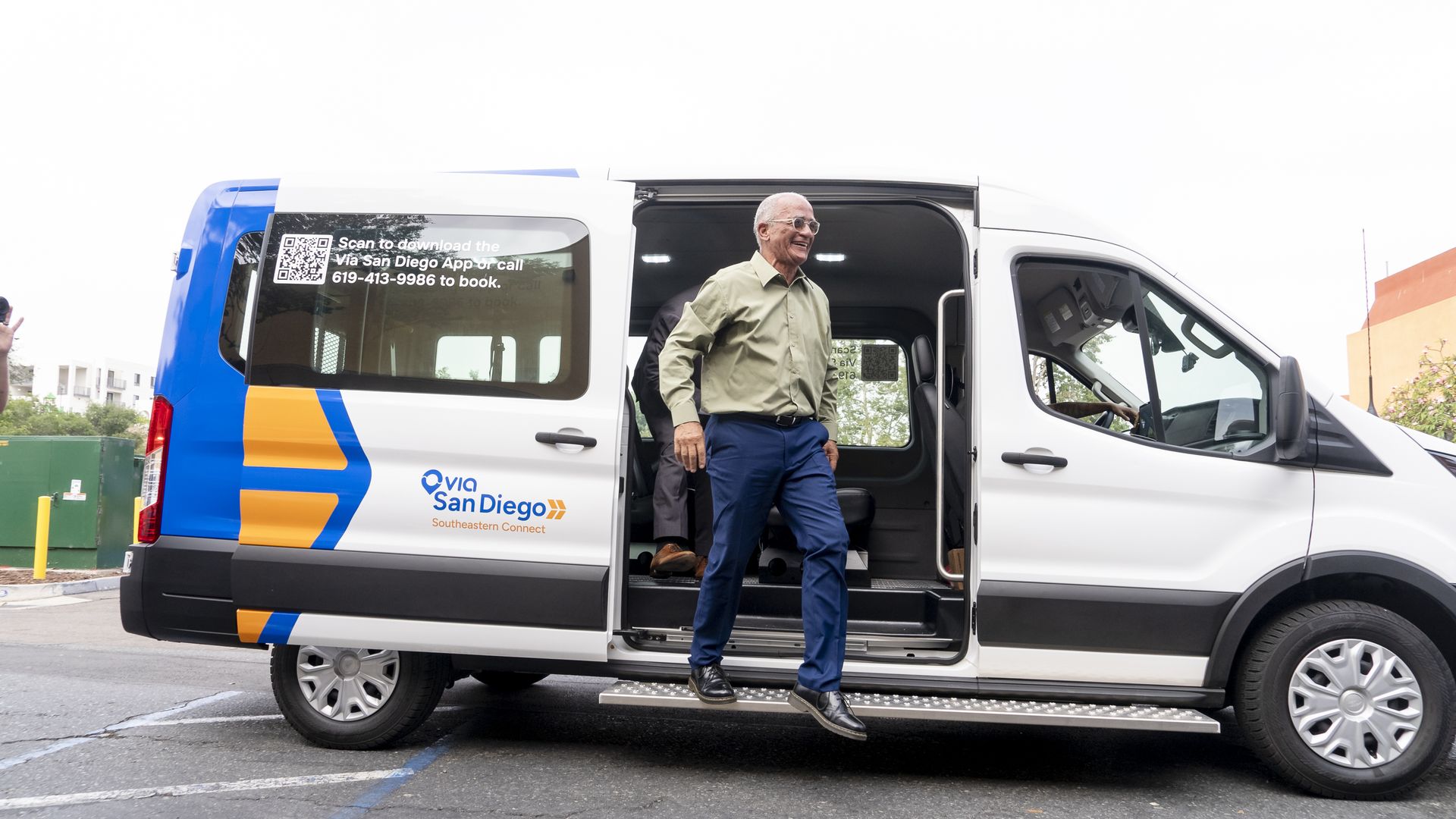
A wheelchair-accessible van that's part of the Southeastern Connect fleet. Photo: Courtesy of SANDAG
San Diego is again trying to improve its transit system with small, neighborhood-focused shuttles, this time in the southeastern part of the city.
Why it matters: The region's cash-strapped transit network is hard-pressed to expand through big, infrastructure-intensive projects, so it has instead turned to "microtransit" to fill gaps in the system.
State of play: The San Diego Association of Governments last week launched Southeastern Connect, an on-demand shuttle offering point-to-point rides in the Mt. Hope, Chollas View, Emerald Hills, Valencia Park and Lincoln Park neighborhoods.
- It's meant as a link to the trolley's Orange Line and the rest of the regional transit system.
- Passengers hail electric vans or cars by phone or the Via San Diego app, run by the service's private operator. It can serve four passengers at a time.
- Rides are free through November
The four-year pilot project cost $3.8 million, funded by SANDAG, the city and state grant programs.
The big picture: Southeastern Connect is one of nine regional microtransit projects either operating or launching soon. Services launched in El Cajon, Vista and Mid-City this year.
- A Barrio Logan shuttle is planned for 2026.
Yes, but: Neighborhood shuttles in Pacific Beach, Carlsbad, Coronado and downtown San Diego have already been launched and killed in the last 10 years.
- Downtown's service, launched in 2016, shuttered this summer as part of the city's budget crunch. It gave 78,000 rides last year.
- The Beach Bug in Pacific Beach lasted a little more than a year.
What they're saying: SANDAG planner Khalisa Bolling said the early lesson is not to launch services without long-term funding in place.
- "We want a better solution in place before they end," she said. "We don't want them to start, get people excited, and they get shot down."
- A strength, she said, is the variety of potential funders, including large employers or other private partners.
The intrigue: A hurdle for microtransit's long-term sustainability is a basic math problem presented by the concept.
- Taking riders from point to point in vehicles that fit a few riders at a time prevents the efficiency and scale provided by traditional fixed-route bus or rail lines.
- That's why the downtown shuttle — despite the neighborhood's density — cost twice as much per rider as a typical MTS trip.