New tool forecasts sewage risk at San Diego beaches

Add Axios as your preferred source to
see more of our stories on Google.
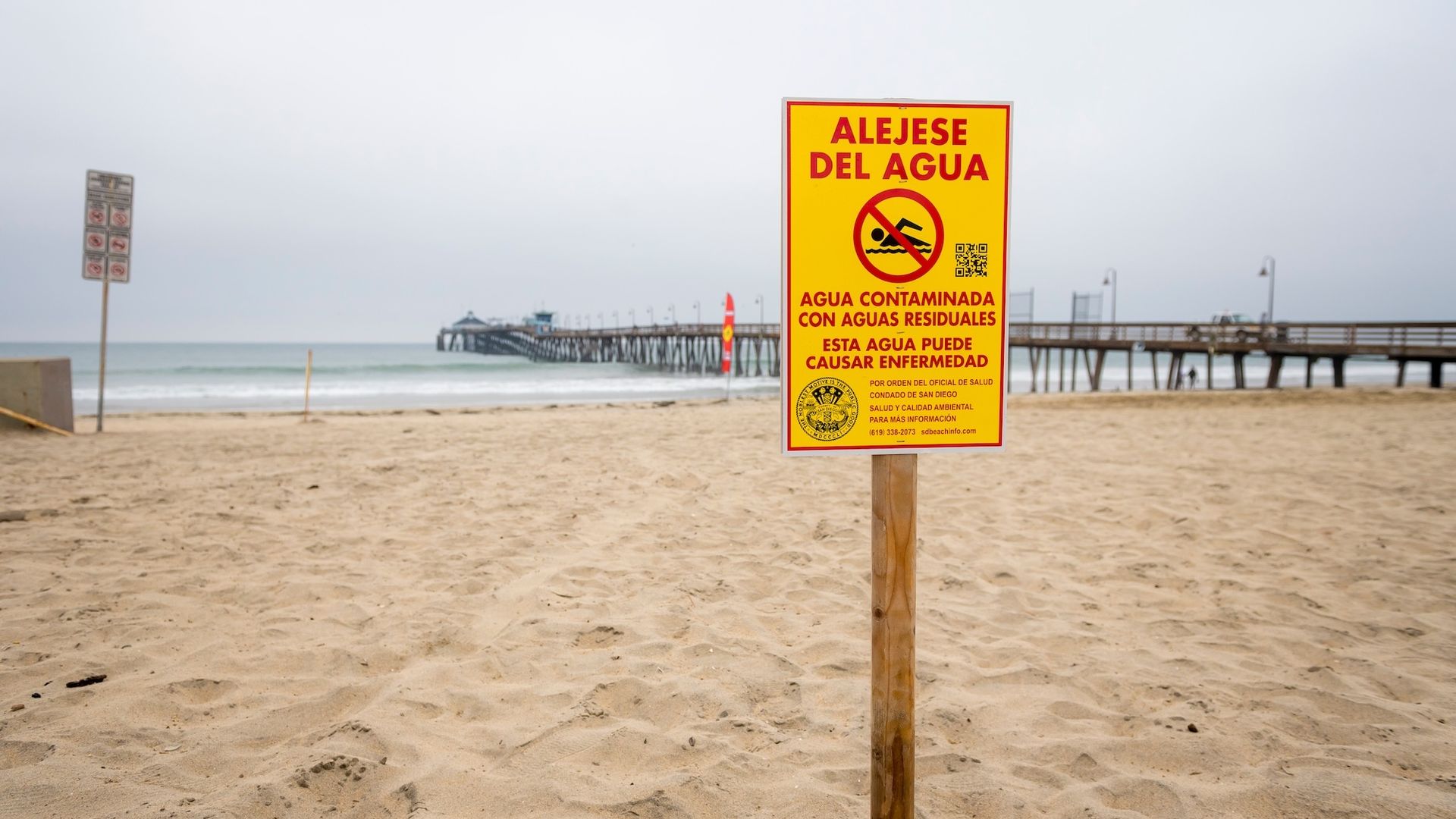
Imperial Beach has faced ongoing beach closures for years due to sewage contamination from the Tijuana River. Photo: Erik Jepsen/UC San Diego
UC San Diego scientists built a new tool that predicts the risk of sewage-contaminated water at local beaches up to five days in advance.
Why it matters: Similar to a weather forecast, families can use it to decide whether to plan a beach day, and where it will be safe to swim for the upcoming weekend.
Zoom in: The Pathogen Forecast Model, developed by Scripps Institution of Oceanography researchers, shows the sewage concentration along Coronado, Silver Strand, Imperial Beach and Playas de Tijuana shorelines.
- It uses forecasts of winds, tides, offshore currents, waves and river flow to estimate contamination levels and the risk of illness for swimmers.
- Color-coordinated indicators show the likelihood of getting sick: green is low (less than 1%), yellow is moderate (1%-10%) and red is high (10%+).
Threat level: Swimming in the bacteria-contaminated water can make people sick with norovirus — a highly contagious stomach bug that can cause vomiting, diarrhea and severe gastrointestinal problems.
Caveat: Just like with weather, "no forecast is perfect," Scripps oceanographer Falk Feddersen told Axios.
Between the lines: San Diego County currently monitors beach water quality conditions and updates daily advisories, warnings and closures.
- This model can predict those beach advisories with 82% accuracy, according to Feddersen.
State of play: This new tool, funded by the state, was created in response to the cross-border sewage crisis that's plagued San Diego for decades.
- Millions of gallons of untreated sewage from Mexico flows into the Pacific Ocean daily, forcing beach closures up the coast, harming public health and damaging the local economy.
- Scripps oceanographers have been leading the research on how polluted water travels across the border — and how to reduce it — that informs politicians and policymakers aiming to fix the issue.
What's next: Scripps researchers are currently measuring norovirus in the ocean to develop an enhanced risk assessment for swimmers for next summer.
- Congress is also considering an appropriations bill this week that would provide more funding to expand and continue operating the tool, according to UCSD.