UC San Diego researchers test new cancer drug in space

Add Axios as your preferred source to
see more of our stories on Google.
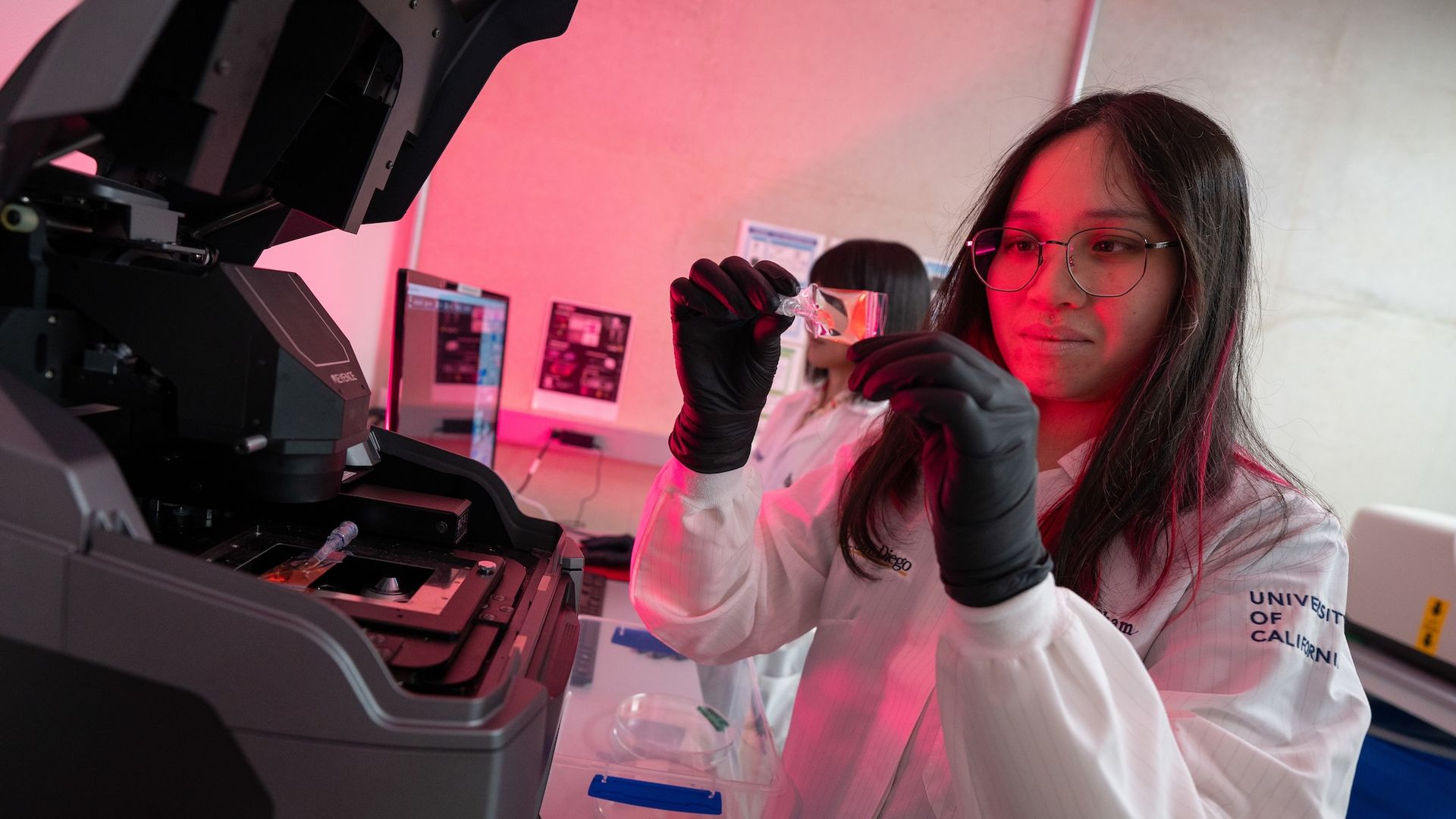
UC San Diego researchers prepare the cancerous tumor samples being sent to space. Photo: Kyle Dykes/UC San Diego Health Sciences
UC San Diego scientists are testing a new potential cancer treatment in space.
Why it matters: The NASA-funded mission will analyze whether the drug rebecsinib works on ovarian cancer, metastatic breast cancer, leukemia and glioblastoma multiforme (an aggressive brain tumor).
Driving the news: Last week, a SpaceX rocket launched a collection of cancerous tumor samples donated by patients for testing aboard the International Space Station.
- Axiom Space astronauts are conducting the research on board, marking UCSD's 16th successful mission to study stem cells in space.
What they're saying: "We can accelerate the development of drugs that target cancer" by working in microgravity, Catriona Jamieson, director of UCSD's Sanford Stem Cell Institute, told Axios.
Zoom in: The drug, discovered by UCSD researchers and developed by Aspera Biomedicines, showed in previous space missions that it could stop the growth of some cancerous cells.
- Dubbed a "cancer kill switch," rebecsinib works by targeting a specific gene that fuels cancer's development and resistance to drugs.
- The hope is that it could help fight 20 different types of cancer involving that gene by blocking the disease from recurring and metastasizing.
- Clinical trials are set to begin this fall for patients with blood cancer.
Between the lines: Doing this lab work in space provides a time advantage because microgravity activates and accelerates the stressful environment that triggers cancer's growth.
- Tumors triple in size in 10 days on the space station compared to 10 years on Earth, according to Jamieson.
Follow the money: These experiments are funded through state and federal grants, including from NASA.
- The drug is named after philanthropist Rebecca "Becky" Moores, whose donations have been critical for UCSD cancer research.
The bottom line: The findings from the two-week mission could help guide future clinical trials.
What we're watching: Future planned launches will look into how scientists can make the drug cheaper and more accessible, like in a pill form instead of through an IV.