New cancer cases expected to rise in California


Add Axios as your preferred source to
see more of our stories on Google.
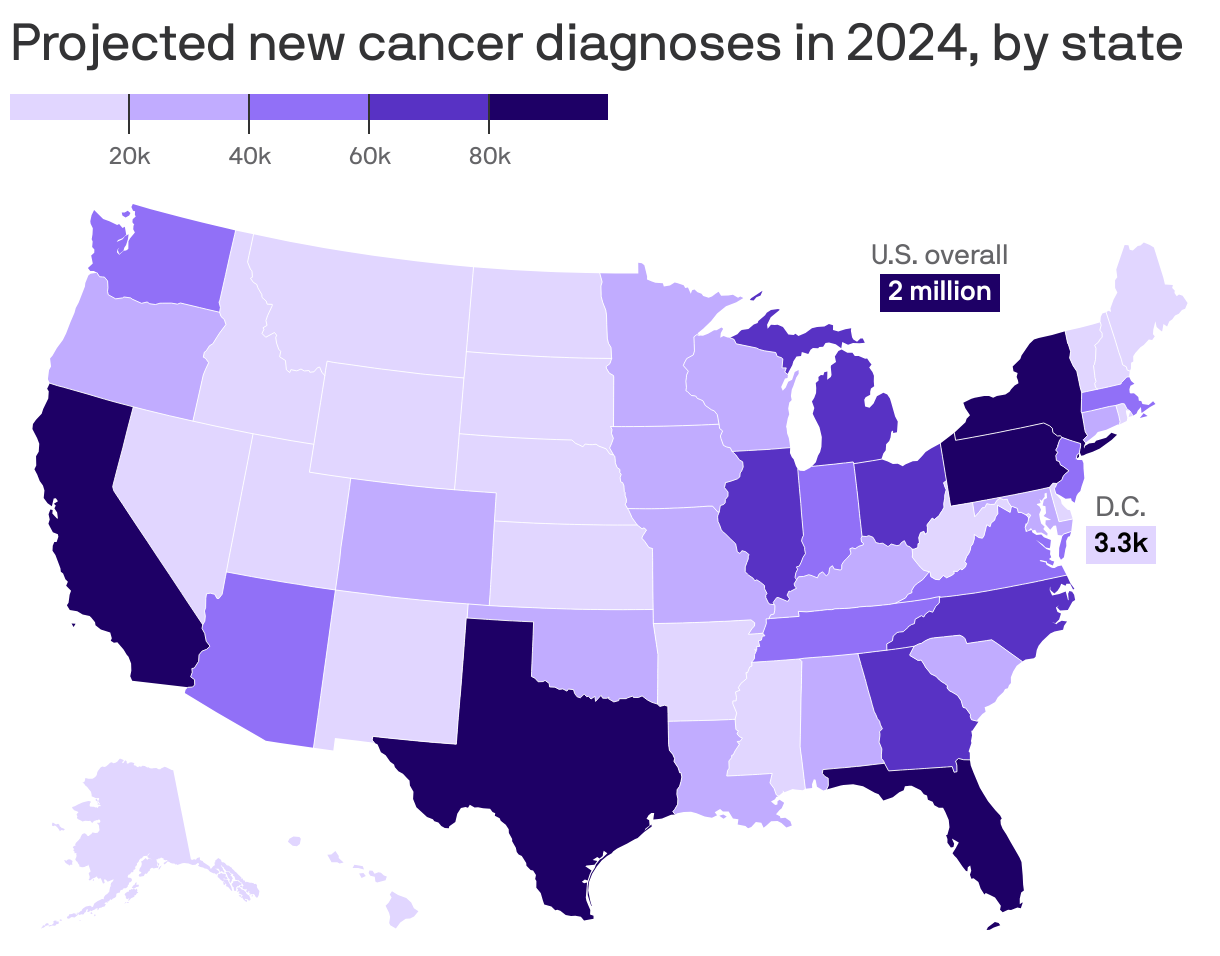
New cancer diagnoses in the U.S. are expected to top 2 million in 2024 for the first time, with the highest number of cases in California.
What's happening: The rise is driven, in large part, by an alarming increase in cancer among younger Americans, according to new American Cancer Society data.
Why it matters: Major improvements have been made in survival rates, but doctors are trying to figure out why they're seeing more young cancer patients, Axios' Tina Reed writes.
- This demographic shift comes with psychological, physical and financial burdens that are less common in older patients, experts say.
Zoom in: California is expected to see 193,880 new cases this year, according to the study.
- That's about 1,000 more than projected in 2023, with slight increases in female breast cancer and leukemia cases, and decreases in prostate and lung cancer.
By the numbers: Female breast cancer makes up the largest segment, with 32,660 cases expected in California in 2024. Other estimates include:
- 26,350 prostate cancer cases.
- 16,920 lung and bronchus cancer cases.
- 59,930 estimated cancer deaths overall.
- 9,320 lung and bronchus cancer deaths.
- 4,570 breast cancer deaths.
Zoom out: Nationally, the proportion of people ages 50 and younger diagnosed with cancer increased in the last 30 years, and doctors can't explain the uptick.
- Meanwhile, those 65 and older saw a decrease in overall cancer incidence; for people ages 50-64, it stayed roughly the same.
Between the lines: The U.S. cancer death rate has been cut by one-third in the last 30 years, partly due to improved screening, a sharp drop in smoking and more effective treatments against certain cancers.
- Nevertheless, diagnoses continue to rise for some strains, and there are also significant racial and ethnic disparities in cancer deaths.
The bottom line: The study highlights the importance of timely screening, particularly among people with a family history of cancer or who are experiencing cancer-like symptoms.
Go deeper: New cancer diagnoses expected to hit record high this year