San Diego's park system rises in the rankings among major cities

Add Axios as your preferred source to
see more of our stories on Google.
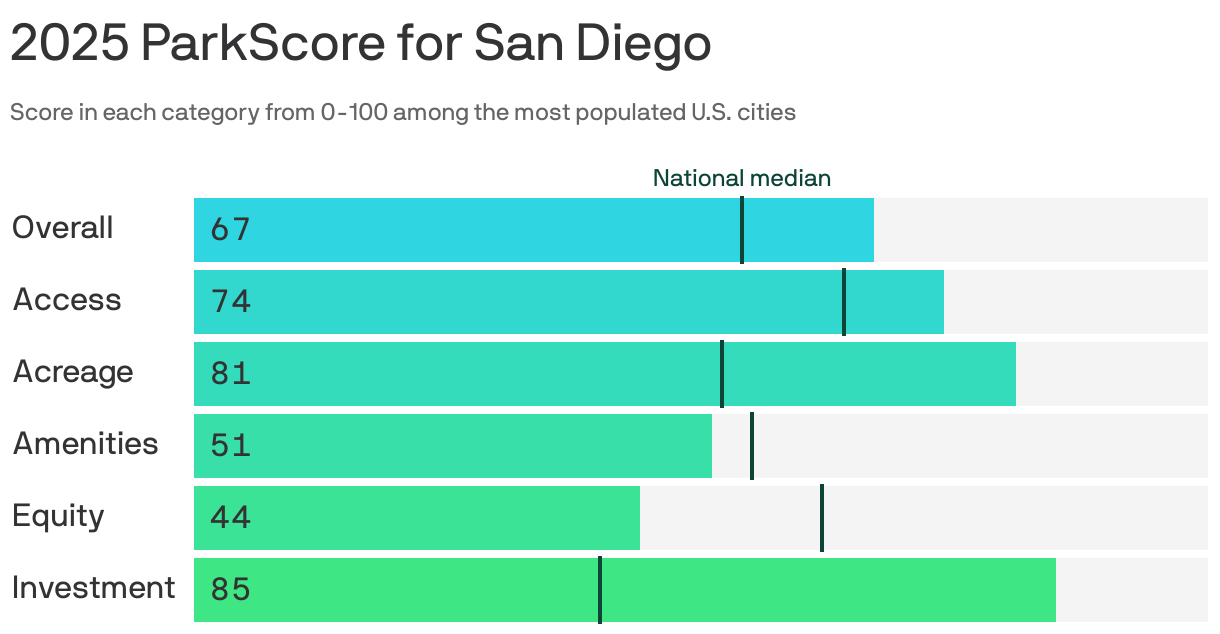
San Diego's park system ranks 22nd among the country's 100 biggest cities, according to a new report by the nonprofit Trust for Public Land (TPL).
Why it matters: America's best parks serve as community meeting spots and civic spaces, promote exercise and play, and can attract new residents — but they require continued investment, and city budget cuts put that at risk.
Driving the news: San Diego moved up four spots from last year, largely driven by an increased investment in public parks and recreation sites and more amenities like sport courts, playgrounds and activities.
- But the city is still lagging behind in equity, with low-income neighborhoods and neighborhoods of color having less park space than wealthier, whiter neighborhoods.
By the numbers: The city spends about $232 per capita each year on parks, per the report. That's up from $173 the previous year and higher than the national median ($133), but there's still room to grow.
- 81% of San Diego residents live within a 10-minute walk of a park, which is also above the national average.
- More than 560 parks on 43,216 acres of land account for about 21% of the entire city.
Between the lines: People living in neighborhoods with more minority races have 69% less park space than those in white neighborhoods.
- Residents in low-income neighborhoods have access to 79% less than those in high-income neighborhoods.
- But the majority of people have parks close to home, regardless of age, income or race.
Friction point: The city's budget crisis is hitting parks with proposed staffing cuts, limited hours at recreation centers and bathroom closures that would worsen disparities and reduce the quality of parks.
- San Diego's City Council is expected to vote on the final draft of the budget in June.
The big picture: TPL's annual ParkScore index ranks the 100 most populous U.S. cities' park systems relative to one another based on five categories: acreage, access, amenities, investment and equity.
- Washington, D.C., remained at the top with high access and investment scores, followed by Irvine, California, and Minneapolis.
- Chula Vista slipped in the rankings from 80th down to 84th largely due to a lack of investment and park access in low-income neighborhoods.
What we're watching: The city has been upgrading local parks in underserved areas and working on a "park needs index" to target investments in particular neighborhoods.