Alzheimer's research at risk as diagnoses rise


Add Axios as your preferred source to
see more of our stories on Google.
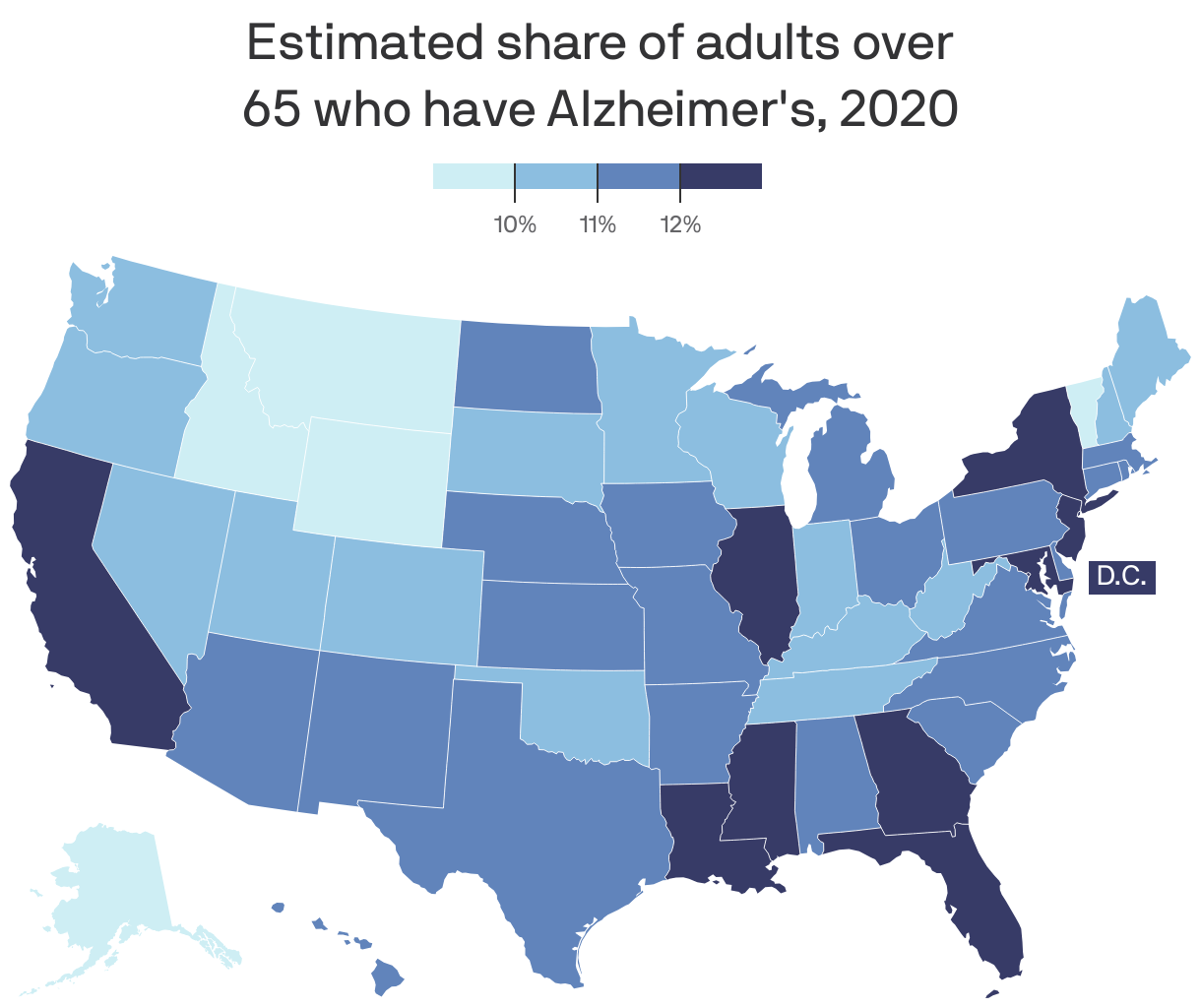
More than 7 million American seniors now live with Alzheimer's disease — the highest number ever recorded, according to 2025 data shared in a new Alzheimer's Association report.
Why it matters: As Alzheimer's diagnoses rise, the federal funding for medical research that's critical to preventing and treating it is at risk of being cut.
State of play: Over 17,300 Californians die from Alzheimer's every year, but addressing cognitive decline early can help stave off the disease.
- That's especially important with San Diego County's growing senior population — about 16% of residents.
Zoom in: The odds of being diagnosed with Alzheimer's is higher in San Diego than many other parts of the country, at least in part because of the local hospital system.
- That doesn't necessarily mean more people have the disease, but more thorough diagnosing can lead to more cases, better care, new tests and treatments.
Between the lines: UC San Diego has the top NIH-funded neuroscience department in the country, and the university's Alzheimer's Disease Research Center is developing potential treatments, monitoring drug safety and running clinical trials aimed at prevention.
- That federal funding is at risk of being pulled, which center director Jim Brewer has said would "absolutely cut the knees out" and could delay progress in addressing the disease, particularly through clinical trials.
The latest: The FDA on Friday cleared the first blood test to help diagnose the disease, which could help with early detection.
By the numbers: About 12% of Californians over 65 are living with Alzheimer's, per 2020 data in the report.
- That's almost 720,000 people.
- At 15%, Imperial County had the ninth-highest prevalence in the country.
Zoom out: The highest rates of seniors with Alzheimer's are in D.C. (16.8%), Maryland (12.9%) and New York (12.7%), according to the association.
- Nearly two-thirds of all Americans diagnosed with the disease are women, per data cited in the report. UCSD researchers are currently trying to figure out why.
Warning signs to watch for in high-risk age groups:
- Trouble finding the right word.
- Difficulty judging distances.
- Misplacing things and struggling to retrace steps.
Be smart: Keeping your brain on its toes, so to speak, can help prevent dementia.
- That means learning new things and staying social.
- For example, doing a word puzzle and talking through clues with a friend checks two boxes for brain health: mental stimulation and social connection.
- And don't skimp on sleep. It's a myth that older adults need fewer Zs.
Go deeper: Take a short quiz to assess brain health
Editor's note: This story has been updated with new information about the FDA's blood test approval.