San Diego has a higher-than-expected Alzheimer's diagnosis rate


Add Axios as your preferred source to
see more of our stories on Google.
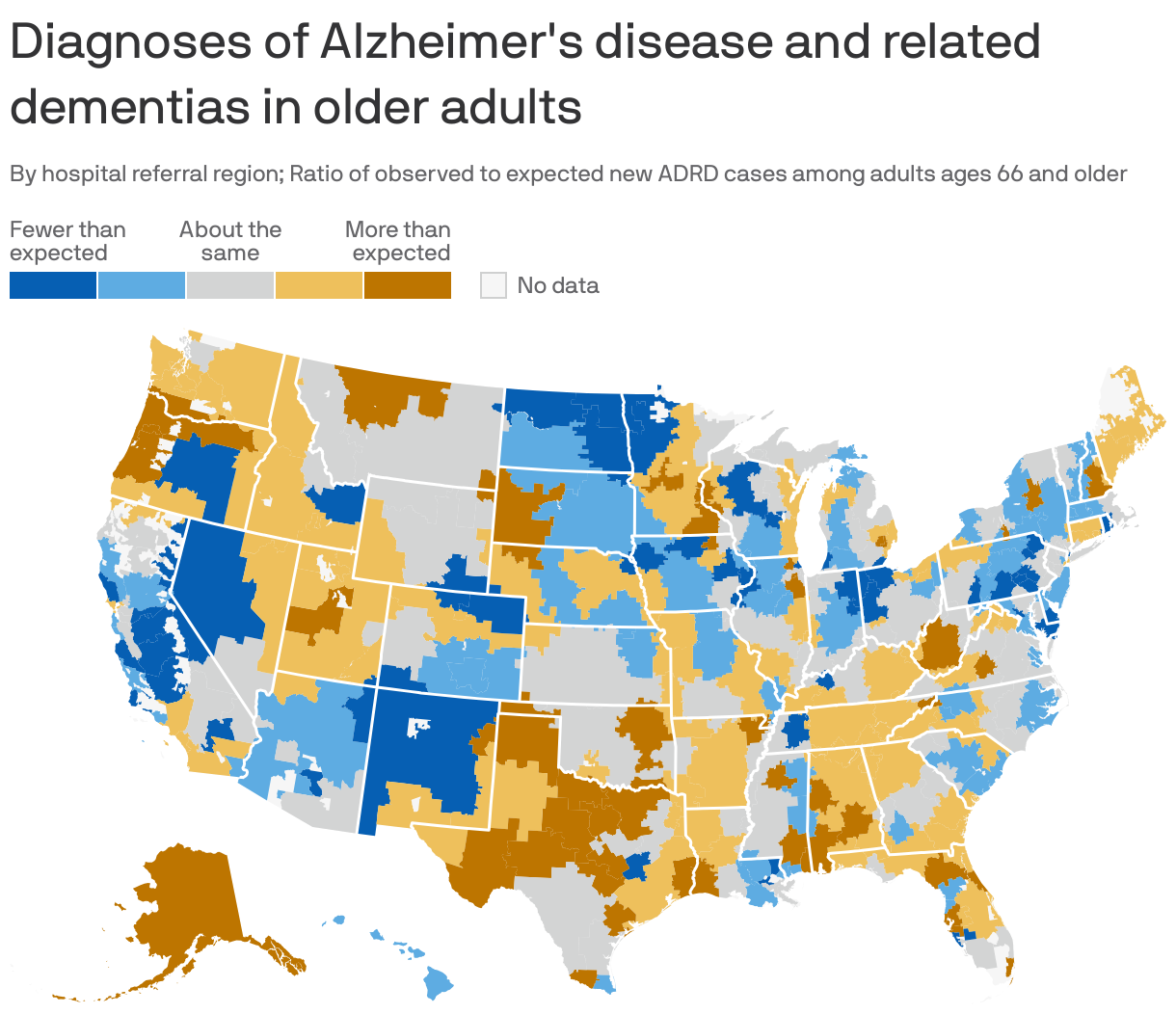
The odds of being diagnosed with Alzheimer's is higher in San Diego than many other parts of the country, a new study finds.
Why it matters: That doesn't necessarily mean more people have the disease. But if our hospital systems are more thoroughly diagnosing it, patients could be likelier to get needed services and care.
How it works: Researchers from the University of Michigan counted Medicare claims showing existing and new dementia diagnoses in 2019 for each "hospital referral region" — the area where patients are sent to a given hospital for certain major surgeries, Axios Salt Lake City's Erin Alberty writes.
- Researchers used population data for those areas to calculate the expected rate of dementia based on known risk factors, such as age, sex, race, education level, rates of other illnesses and smoking prevalence.
- The ratio of expected cases to diagnoses was an area's "diagnosis intensity."
What they found: Southern California diagnoses were more numerous than expected, based on the population's risk level, researchers wrote this week in Alzheimer's & Dementia.
- The San Diego area logged about 4% more diagnoses than expected.
Zoom out: Nationally, the highest rates of diagnoses were in the South and Midwest, while the biggest differences in expected cases were spread throughout different geographic pockets around the country.
- The variation in diagnoses intensity was especially pronounced among Medicare beneficiaries ages 66-74, as well as Blacks and Hispanics.
The intrigue: Researchers suggest the number of diagnoses may be more about the local health system, provider practices and individual patients' knowledge and behavior, than about individual factors that affect dementia risk.
Zoom in: Diagnoses are key to driving new tests and treatments at National Institute on Aging-funded Alzheimer's Disease Research Centers, including the one at UC San Diego.
- There are currently 16 ongoing Alzheimer's clinical trials at UCSD, with eight open to eligible patients.
The latest: UCSD scientists were recently granted $6.9 million to shepherd a potential treatment they found through the drug-development process, including future clinical trials.
The big picture: The number of Americans with Alzheimer's and related dementias is expected to jump from 6.7 million in 2023 to 13 million by 2060.
- Up to 60% of those living with dementia haven't been diagnosed — a problem that may be attributed to stigma or believing that symptoms are part of normal aging.
- Variations in diagnoses partly hinge on the skill of clinicians making or communicating them, the authors said.
The bottom line: Improving the ability to diagnose the disease early can provide more patients the opportunity for advanced-care planning, care coordination and access to new treatments.