How San Diego's housing wars helped Peter Navarro shape Trump's trade wars

Add Axios as your preferred source to
see more of our stories on Google.
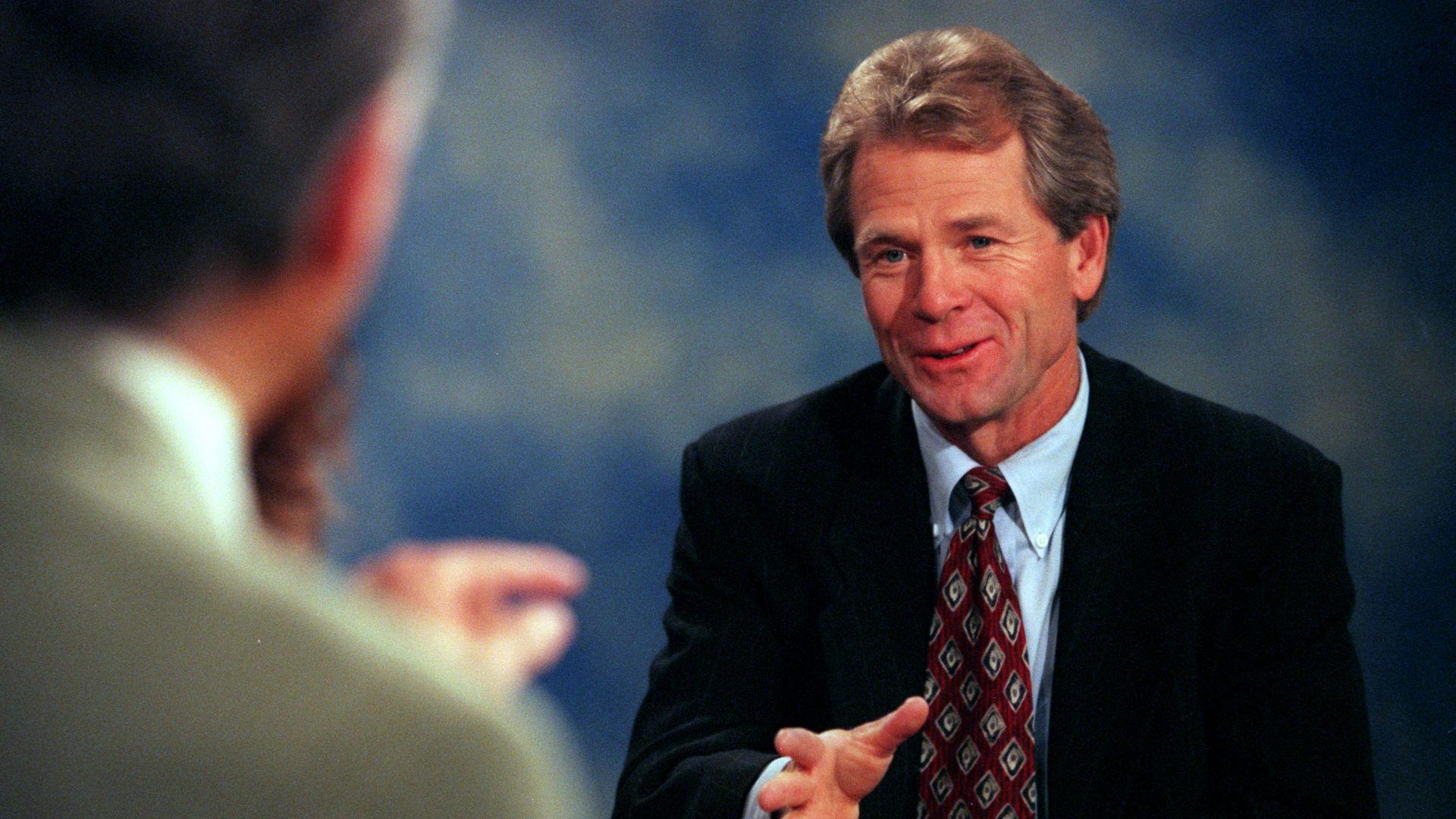
Peter Navarro on the Real Orange Show at KOCE. Photo: Richard Hartog/Los Angeles Times via Getty Images
Before Peter Navarro designed trade wars for President Trump, he orchestrated housing wars in San Diego across five unsuccessful bids for local office.
Why it matters: Navarro, then a UC Irvine economics professor, led San Diego's slow-growth movement in the 1990s, drawing battle lines that still define today's development fights.
- His zero-sum view on homebuilding then reflects the zero-sum view on trade that animates the tariffs he helped design.
The latest: Navarro "played a central role" in hiking tariffs to levels not seen in decades, feuded with Elon Musk over their necessity, and insisted they were not a start of negotiations the same day the White House announced it was beginning negotiations over them.
- "This is not a negotiation," he wrote. "For the US, it is a national emergency triggered by trade deficits caused by a rigged system."
- Trump has both escalated and rolled back tariffs since announcing them April 2 and now says he will unveil tariffs on semiconductor chips soon.
State of play: Then a Democrat and head of the group "Prevent Los Angelization Now (PLAN)," Navarro ran for mayor in 1992, and took first place in the primary before narrowly losing to Republican Susan Golding in a runoff.
- He called for a moratorium on housing until the city could provide adequate services, increased fees on new development, and tied housing permits to new police hires.
- That campaign also proposed limiting immigration into the city to control population growth and ease the strain on housing.
The intrigue: Bill Fulton, the former head of San Diego planning who chronicled southern California urban growth politics in "Reluctant Metropolis," wrote that Navarro would have been a seminal figure in regional urban planning history if he had won that mayoral race.
- That era of slow-growthers, Fulton wrote, shared Trump's view of trade: "More development creates losers as well as winners, so you'd better box out the bad development or at least make those developers pay through the nose."
Instead, Navarro followed up his mayoral loss with losses for city council in 1993, county supervisor in 1994, Congress in 1996 and city council again in 2001.
- His unsuccessful congressional race included a fundraiser hosted by Hillary Clinton and, Navarro wrote, just one phone call (the day after his loss) from former Vice President Al Gore.
What they're saying: In his political tell-all for the San Diego Reader, Navarro argued that developers, without the tight planning controls he championed, "will leave air pollution, overcrowded schools, underpoliced streets, sewer systems bursting at their seams, and traffic jams that can (and often do in California) make grown men cry."
- One prescription was for developers to pay for all libraries, parks, roads, sewage systems, etc. "at the same time as the houses — not five years later (or never) like most of these punks in pinstripes prefer."
The big picture: Navarro's views on housing didn't just reflect his now-famous views on trade. As San Diego aimed to outgrow its reputation in 1991 as a sleepy Navy town, Navarro explicitly denounced its goal of becoming a trade hub.
- "Trade is not the answer to our problems," he said. "The Pacific Rim strategy is a false promise."
The bottom line: Tom Shepard, a political consultant who ran three campaigns against Navarro, told me in 2018 that Navarro's trade and development views were politically aligned.
- "They're both fundamentally populist messages that start from the presumption that someone is out to screw us and we have to do something drastic to right these wrongs," Shepard said.